Health & Medicine
Sold Like Snacks, Acting Like Opioids: What Families Need to Know About Kratom, 7-OH and the Fight in Washington
A 60 Minutes report on young men who died after using kratom puts a spotlight on a product legal in most states. Here is what it is, why concentrated 7-OH worries health officials, what Washington is doing and how parents can protect their kids.
By MAYA THOMPSONStaff Correspondent · WASHINGTON · Nov 15, 11:25 PM · 5 min. read
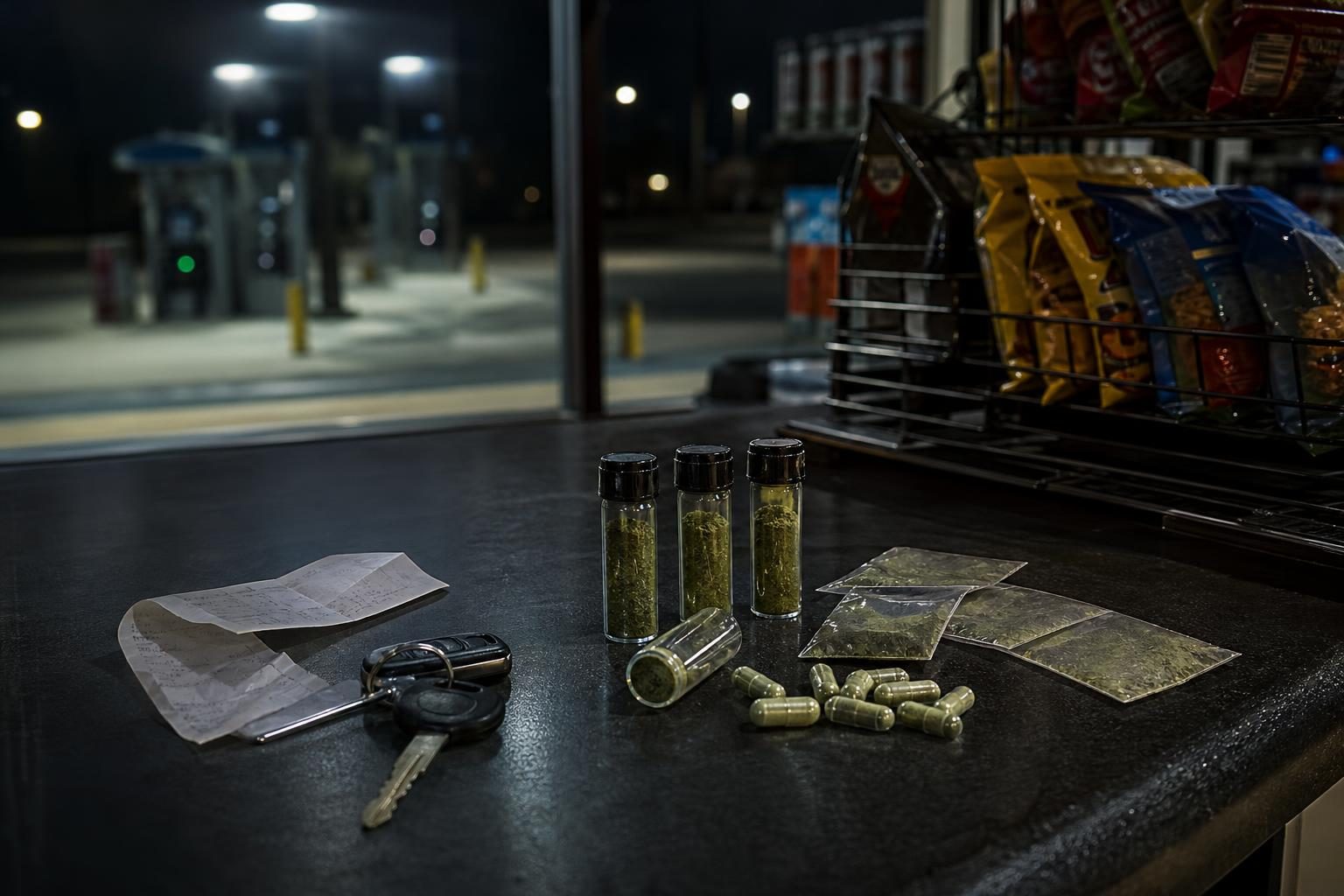
Illustration · Liberty Bell Report
Four families told 60 Minutes on Sunday about sons they lost after using kratom, a product sold in gas stations, smoke shops and online that many Americans still think of as a harmless herbal supplement, CBS News reported. Kratom remains legal in most states, and the program found that the industry has poured a steady stream of lobbying money into Washington over the past decade.
For parents, the questions are practical. What is this stuff? Is it really dangerous? Why can a teenager or a young adult buy it next to the chips and soda? And what is the government doing about it? Here is what the reporting and the official record show.
What Kratom Is
Kratom comes from the leaves of Mitragyna speciosa, a tree native to Southeast Asia, according to the Congressional Research Service. Its main active compound is mitragynine, and the leaf also contains a much smaller amount of a more potent compound called 7-hydroxymitragynine, usually shortened to 7-OH. Both act on the same receptors in the brain that opioid drugs target, which is why kratom can relieve pain, lift mood and, at higher doses, sedate users.
Kratom is sold as powders, capsules, liquid shots and tablets. In recent years, a newer category has taken off: so-called enhanced products in which 7-OH has been concentrated or chemically boosted far beyond what the natural leaf contains, according to the Department of Health and Human Services. Those are the products federal health officials now single out as the most dangerous.
Why Health Officials Are Worried
The concern is addiction and overdose. 60 Minutes described kratom as an opioid that can lead to addiction and death, and spoke with parents who said their sons had no idea what they were taking. City Journal has gone further, arguing that kratom is unsafe in any form and that states should ban it outright.
The heart of the worry is 7-OH. HHS has warned that enhanced products, in which the compound is concentrated far beyond natural levels, pose serious risks to the public and has made them the focus of federal action. A product built around concentrated 7-OH behaves less like a cup of strong tea and more like a prescription painkiller. Experts quoted by STAT agree that kratom and 7-OH should be regulated, even as they split on whether natural leaf products deserve the same treatment as concentrated 7-OH.
There is also no medicine label to rely on. These products are not approved drugs, and their strength can vary widely from package to package, which is part of why federal officials say the enhanced versions pose a special risk to the public.
What Washington Is Doing
Federal action has moved slowly, and in fits and starts. In 2016, the Drug Enforcement Administration moved to temporarily schedule kratom's main compounds and then pulled back after public opposition, the Congressional Research Service noted.
The current push targets 7-OH. The DEA has proposed placing 7-OH in Schedule I, the most restrictive category of controlled substances, STAT reported. HHS has recommended science-based thresholds to target enhanced kratom products containing 7-OH and a related compound called MGPI, and it said the approach is not meant to capture the natural kratom leaf.
That threshold is now at the center of the fight. 60 Minutes reported that a revised recommendation would allow more 7-OH in a product before it is treated as a Schedule I drug, and HHS told the program in a statement that "neither political contributions nor outside pressure influenced" that decision. Accounts of the size of the change differ: City Journal described the revision as doubling the amount allowed, while 60 Minutes reported a much larger increase. Families will want the final number spelled out plainly when the rule is published.
Kratom is also big business, and it has a well-funded lobby. 60 Minutes found public filings showing years of lobbying money, much of it from the American Kratom Association, aimed at the Food and Drug Administration, HHS, the White House and members of Congress. City Journal reported that the association has spent more than $440,000 on federal lobbying so far this year.
The industry's argument is that natural kratom is not the problem. The American Kratom Association told 60 Minutes that the real danger comes from chemically manipulated products, not the traditional leaf. That distinction matters to the adults who say kratom helped them step away from harder drugs or manage pain. But it is cold comfort to parents whose children bought a brightly packaged shot at a convenience store without understanding what was inside.
What the States Are Doing
With Washington slow to act, states have filled the gap. A handful, including Alabama, Arkansas, Indiana, Vermont and Wisconsin, have banned kratom's active compounds under state law, according to the Congressional Research Service. Other legislatures are weighing a mix of guardrails and bans, and Rhode Island now regulates kratom sales while prohibiting 7-OH products outright, the National Conference of State Legislatures reported.
That patchwork means a product that is illegal in one state may be sold openly across the border in the next. It also means that local action, by state lawmakers, county commissions and city councils, is often the fastest way communities can protect young people today.
What Parents Can Do
The families who spoke to 60 Minutes have a simple message: talk to your kids before someone else sells them a story about a "natural" high. A few practical steps can help.
Know what it looks like. Kratom is sold as green powder, capsules, small liquid shots and tablets, often with names that sound like energy drinks or wellness products. If you find them, ask questions.
Read the label, and distrust it. Products marketed as enhanced or extra strength may contain concentrated 7-OH, the form federal officials consider most dangerous.
Watch for the signs of dependence that come with any opioid-like substance: changes in sleep, mood and appetite, secretiveness, and money or possessions that go missing.
Get help early. Anyone struggling with kratom, or any substance, can reach the federal SAMHSA National Helpline at 1-800-662-4357, which is free, confidential and open around the clock. Pastors, family doctors and local recovery groups can be a lifeline too.
Do not go it alone. Across the country, churches and recovery ministries have spent years walking alongside families through the opioid crisis, and many of them now see kratom in their meeting rooms. Parents who are worried about a son or daughter do not have to carry that burden by themselves, and reaching out early, before a habit hardens into dependence, gives a young person the best chance at a full recovery.
The Bottom Line
Kratom sits in a gray zone that has lasted far too long. It is sold like a snack, it acts on the brain like an opioid, and its most potent forms are reaching young people before Washington has finished deciding what to do about them. Federal regulators are moving on 7-OH, states are moving on their own, and the industry is fighting to protect its market.
Families do not have to wait for the rulemaking to end. Knowing what kratom is, and talking about it at the kitchen table, may be the most important protection a parent can offer. We will keep following the federal decision on 7-OH and the states that act in the meantime.
Sources
- CBS News: Parents whose sons died from kratom use warn about the substance finding allies in Washington (link)
- Congressional Research Service: Kratom Regulation: Federal Status and State Approaches (link)
- U.S. Department of Health and Human Services: HHS Recommends Science-Based Thresholds to Target Dangerous Enhanced Kratom Products (link)
- STAT: Kratom and 7-OH should be regulated, experts agree. They're split on how (link)
- National Conference of State Legislatures: Lawmakers Weigh Guardrails, Bans on Kratom and 7-OH (link)
- City Journal: Kratom Is Unsafe in Any Form. States Should Act Now to Ban It. (link)
— 30 —