Autos & Transportation
Closing the Garage Door on Beijing: Congress Nears a Deal to Ban Chinese Cars Before the Lame Duck Runs Out
Auto-state lawmakers in both parties want a bill on the President's desk by year's end. The last snag: writing the rules so they stop China's carmakers without catching partly Chinese-owned Mercedes-Benz.
By FRANK KOWALSKIStaff Correspondent · WASHINGTON · Nov 20, 2:03 AM · 3 min. read
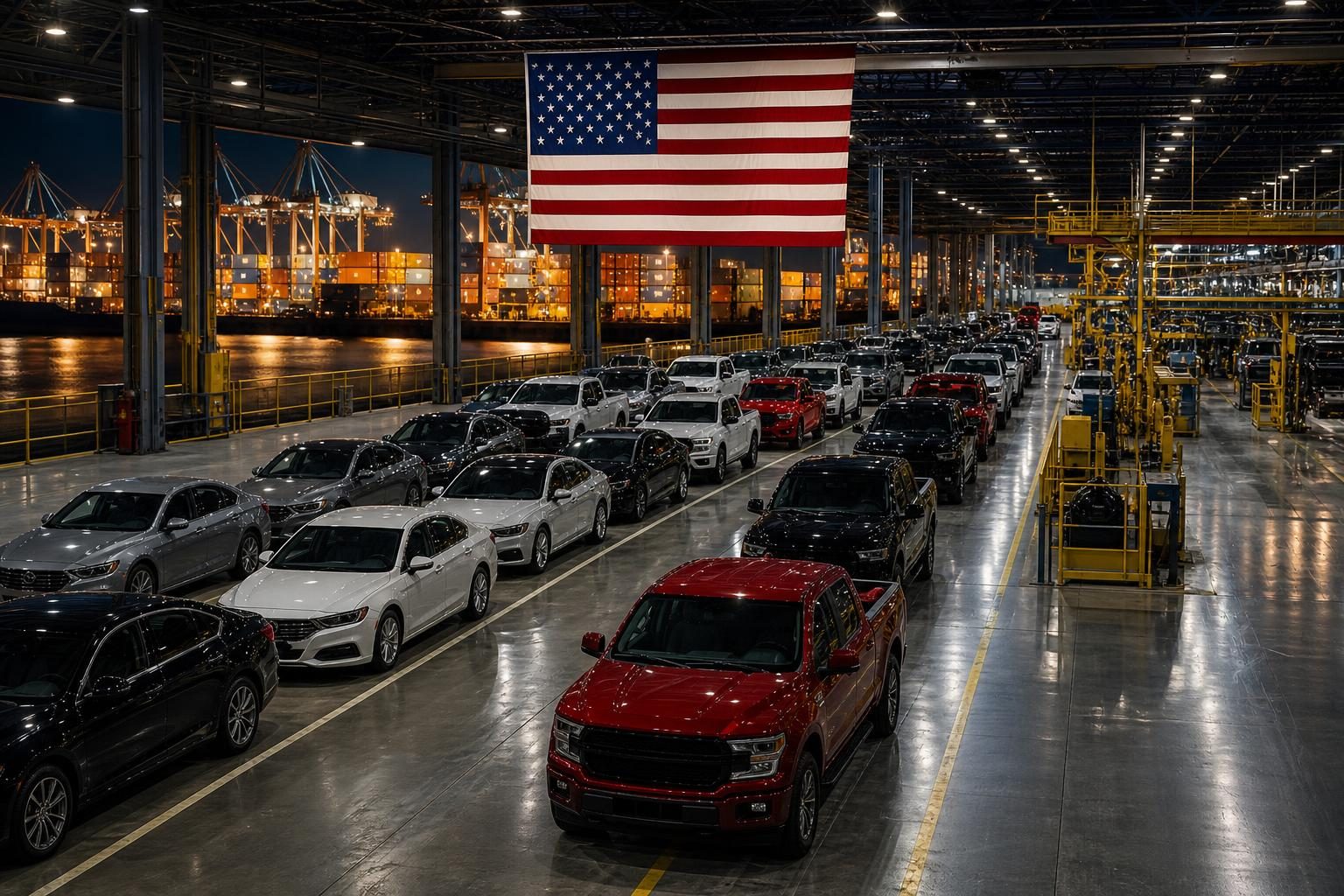
Illustration · Liberty Bell Report
Lawmakers in Washington are closing in on a deal to ban Chinese cars from the American market, with Republicans and Democrats from auto-producing states hoping to put a bill on President Trump's desk before the end of the year, Bloomberg reported in a story published by Yahoo Finance.
The talks have run into a last-minute snag that tells you a lot about how tangled the global auto industry has become: how to write the rules so they keep out China's state-backed carmakers without accidentally catching Mercedes-Benz, the German luxury brand that is partly owned by Chinese investors, according to Bloomberg and CnEVPost.
What Lawmakers Are Negotiating
According to the reports, negotiators are working through how to define Chinese ownership and control of an automaker, since a rule aimed squarely at Chinese companies could also reach brands headquartered elsewhere. Mercedes has been the focus of last-minute talks aimed in part at sparing it from the ban, Bloomberg reported.
The deal is not final. As of Thursday evening, none of the bill's sponsors had publicly announced an agreement, and the details could still change, according to Business Standard, which carried the Bloomberg report.
The effort builds on bipartisan legislation in both chambers. Tesla North reported on the push to reach a deal before the current Congress ends, and The Auto Wire described the Chinese car ban bill as racing a lame-duck deadline.
Why the Clock Matters
Congress has only a few working weeks left before the new Congress is sworn in on Jan. 3. Any bill that has not passed both the House and the Senate in identical form by then dies, and its supporters must start over in 2027.
That deadline matters more than usual this year. Democrats will take control of both chambers in January, and while the push to keep Chinese vehicles out has support in both parties, a new Congress means new committee chairs, new priorities and a fresh round of negotiations. The Western Journal described lawmakers as racing to pass the ban before the incoming Democratic majority takes office.
Why Chinese Cars Are a Security Question
Modern cars are rolling computers. They carry cameras, microphones, location trackers and wireless connections that send data back to the companies that build them. A car built by a company that answers to Beijing could, in principle, collect information about where Americans drive, what they say and even the layout of American roads and military bases. That is why lawmakers in both parties have described Chinese-connected vehicles as a national security risk.
There is also an economic side. China's automakers have grown at breathtaking speed, helped by heavy government support, and they now sell vehicles around the world at prices that Western companies struggle to match. American autoworkers in Michigan, Ohio, Tennessee and across the South have watched what happened in other industries, from steel to solar panels, when China flooded the market. They do not want to see the same thing happen to the car business.
Supporters of the ban argue that it is better to keep the door shut now than to try to close it after Chinese brands have built dealer networks and customer bases in the United States. Once a company is here, with American jobs and American buyers, it becomes much harder to remove.
The Mercedes Puzzle
The fight over Mercedes shows why writing this kind of law is hard. Mercedes-Benz is a German company with a long history and major factories in the United States, including its plant in Alabama. But Chinese investors hold significant stakes in it, and any rule based on Chinese ownership has to decide where to draw the line.
Draw the line too tightly, and the ban could hit a company that employs thousands of Americans and builds cars in American plants. Draw it too loosely, and Chinese companies could use partial ownership of foreign brands as a back door into the U.S. market. That is the balance the negotiators are trying to strike in the final days of talks.
What Comes Next
If the negotiators reach agreement, the bill will still need floor time in both chambers during a crowded lame-duck session that also includes spending bills, the farm bill and energy permitting. Supporters are betting that a bipartisan national security measure can move quickly.
For American drivers, the practical effect would be simple: no Chinese-brand cars on dealer lots. For American autoworkers, the bill would offer protection against a competitor that does not play by the same rules. And for the country, it would close a door that national security experts in both parties say should never have been left open.
Sources
- Yahoo Finance (Bloomberg): US Lawmakers Near Deal to Ban Chinese Cars in Lame Duck Session (link)
- CnEVPost: US lawmakers near deal to ban Chinese cars with carve-out for Mercedes, report says (link)
- Business Standard: US lawmakers near deal to ban Chinese cars, target bill by year-end (link)
- Tesla North: U.S. Lawmakers Near Deal to Ban Chinese Cars: Report (link)
- The Auto Wire: Chinese Car Ban Bill Races Lame-Duck Deadline (link)
- The Western Journal: Lawmakers Desperately Race to Ban 'National Security Risk' Chinese Cars Before Blue Wave Dems Take Office (link)
— 30 —