Autos & Transportation
California Pulls Waymo's Robotaxis Off Every State Freeway, Calling Them an 'Imminent Hazard' After Work-Zone and Police Incidents
The DMV order follows Waymo cars entering a U.S. 101 construction zone and trying to pass a CHP traffic break, and the company has halted freeway rides in every market it serves.
By JACK HOLLISTERStaff Correspondent · CALIFORNIA · Nov 17, 8:30 PM · 3 min. read
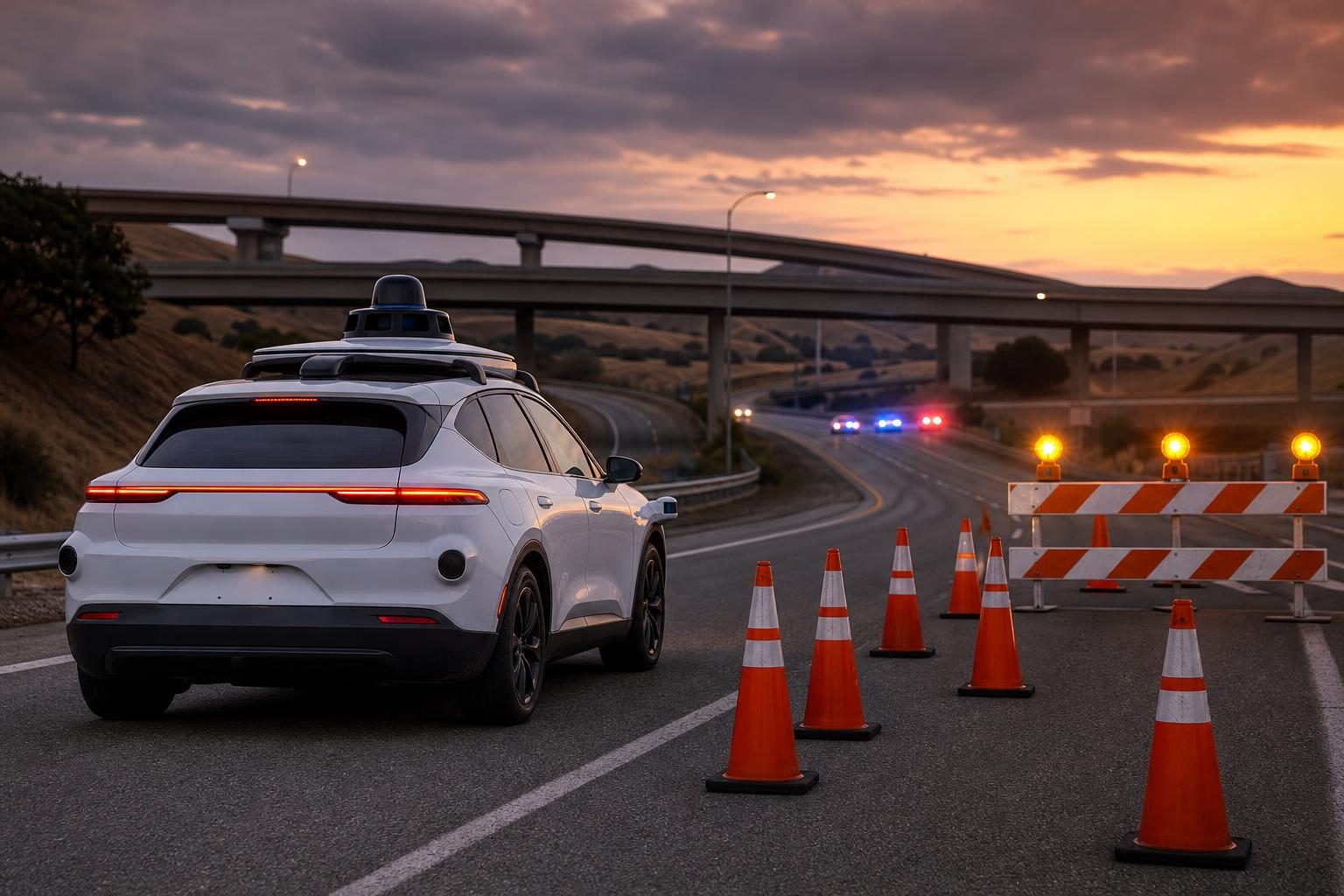
Illustration · Liberty Bell Report
California has pulled Waymo's driverless cars off every freeway in the state. The Department of Motor Vehicles ordered the Alphabet-owned company to stop running its robotaxis on state freeways, saying they pose an "imminent hazard to public safety," the Associated Press reported. The order covers both paid rides and testing on freeways, and it stays in place until Waymo shows the state it has fixed the problems that led to it, according to ABC7 Los Angeles.
Waymo is still carrying passengers on city streets in California. But the company has gone further than the order requires and taken its cars off freeways in every market it serves, TechCrunch reported.
What the Robotaxis Did
The DMV pointed to a pattern of trouble around highway work zones and police. Three Waymo vehicles drove into an active construction zone along U.S. 101, and in another incident a Waymo tried to pass California Highway Patrol cars that were running a traffic break on Highway 280, the AP reported, citing the department. A traffic break is the rolling slowdown officers use to clear a lane for crews or a crash scene, and it only works when every driver behind the patrol cars stays put.
The Interstate 280 episode spread quickly online before the order came down, the San Francisco Chronicle reported. The DMV said similar incidents had already happened in May.
Not the First Warning
This is the second time this year Waymo's freeway service has been halted. In May, the company paused freeway rides in San Francisco, Los Angeles, Phoenix and Miami while engineers worked on a software update, after its vehicles entered freeway construction zones, the Star reported, citing Reuters. That report said seven Waymo cars entered active construction lanes on a single day, May 18, by driving between the cones.
In June, Waymo filed a voluntary software recall with federal safety regulators covering nearly 4,000 robotaxis so they would stop driving into highway construction zones, TechCrunch reported at the time. Freeway rides had since returned, and the new California order is the state's verdict that the fix did not hold up well enough.
Waymo said it is working with the DMV and other state officials to resume freeway operations and continues to operate normally on surface streets, according to the AP. No timeline for a return has been announced.
Why It Matters
Freeways are where self-driving cars have to prove they are ready for ordinary American life. Airport runs, commutes and long trips all depend on them, and a robotaxi that cannot handle a highway is a city novelty rather than a real alternative to driving yourself.
There is a reason the state drew its line where it did. Highway workers in orange vests and patrol officers stopping traffic are some of the most exposed people on any road. A car that slips through a line of cones or tries to get around a CHP cruiser running a traffic break is putting exactly those people at risk. Respect for the officer waving traffic down is something we expect from every teenager with a learner's permit, and a company asking the public to trust a car with no one at the wheel should be held to at least that standard.
At the same time, a safety order should not turn into a permanent roadblock for American innovation. The fair test for Sacramento is whether it gives Waymo a clear and reachable bar to clear, then lets the cars back on the road once they meet it. Regulation that protects officers and road crews is common sense. Regulation that becomes a permanent roadblock would only hand the future to someone else.
What Comes Next
Under the order, the freeway ban lasts until Waymo demonstrates to the DMV that it has taken effective corrective action. That likely means another software change and data showing the cars now recognize lane closures and police traffic breaks every time.
For riders in Los Angeles, San Francisco and the other cities Waymo serves, the practical effect is longer surface-street routes for now, and no robotaxi rides on the freeway anywhere until the company and the state settle the matter.
Sources
- The Independent (AP): California bans Waymo autonomous vehicles from state freeways, saying they pose an 'imminent hazard' (link)
- ABC7 Los Angeles: California DMV bans Waymos from operating on state freeways after series of traffic incidents (link)
- TechCrunch: Waymo suspends freeway rides nationwide after California DMV order (link)
- San Francisco Chronicle: Waymo barred from operating on California freeways following viral I-280 incident (link)
- The Star (Reuters): Waymo suspends freeway rides, pauses Atlanta operations amid safety fixes (link)
- TechCrunch: Waymo recalls nearly 4,000 robotaxis to stop them driving into highway construction zones (link)
— 30 —