
 This morning on Command Post with Dan Whitaker
Missing Sailor Found Dead as Hormuz Attacks Hit a Wartime High
Jordan says the body of a 29-year-old tanker officer lost in a Nov. 17 attack was recovered off the UAE, as Iran readies tankers to test the U.S. blockade.
Filed November 26, 2026 · 📍 Washington, DC 20001
Were you there? Share your story
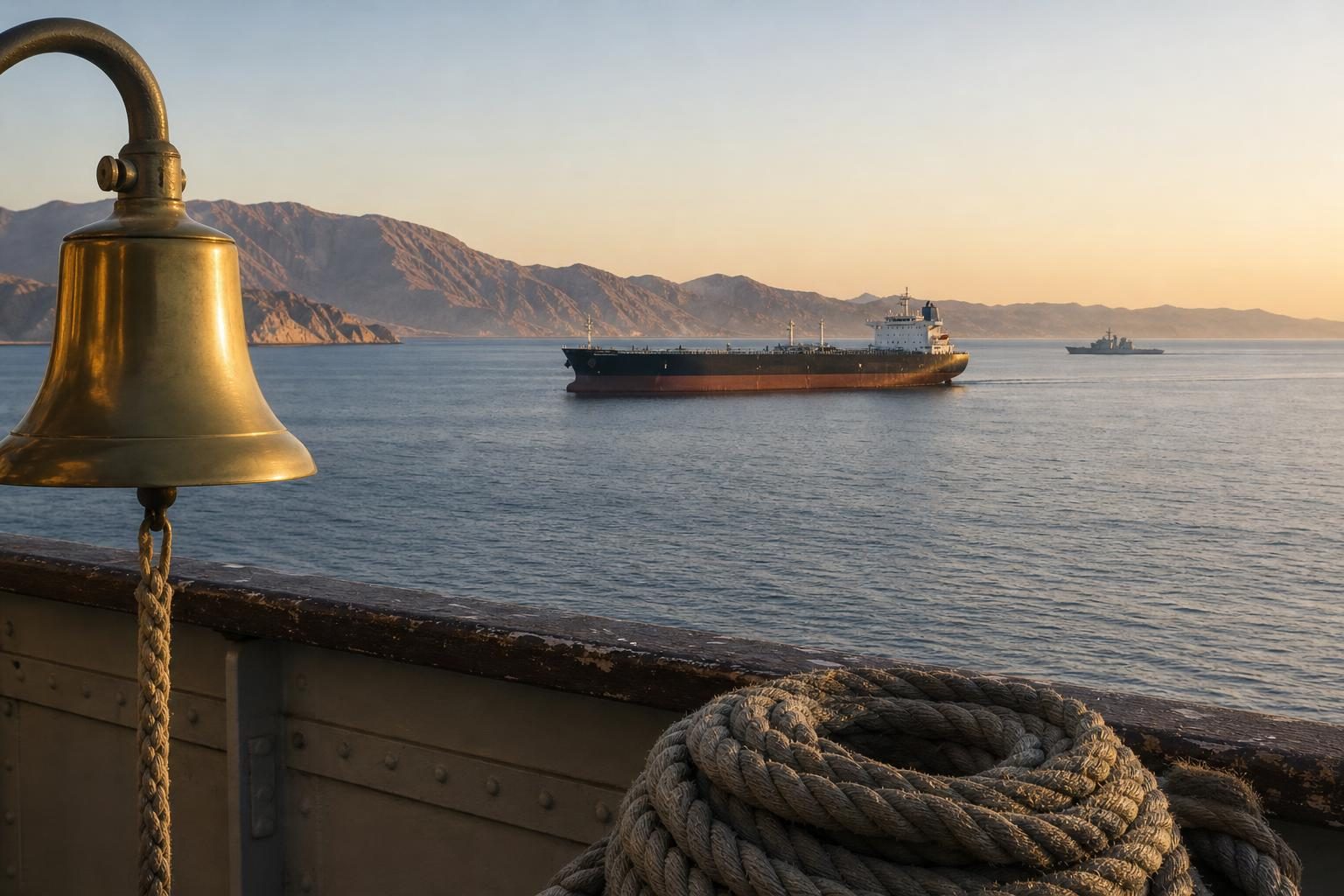
Part of our continuing coverage: UAE Runs Oil Past Iran's Blockade as Two Tankers Are Hit
Key points
- Jordan says the UAE Coast Guard recovered the body of tanker officer Mohammad Hussam Al Din Al Otaibi, 29, off Ras Al Khaimah.
- He went missing when an ADNOC-operated tanker was attacked in the Strait of Hormuz on Nov. 17; 11 crew were hurt.
- UKMTO data show October and November with more reported attacks than any month since the war began in late February.
- Iran says more than 14 tankers are preparing near Kharg Island to sail through the U.S. blockade.
A young merchant officer who vanished when his tanker was attacked in the Strait of Hormuz nine days ago has been found dead, Jordan's government said Thursday, putting a human face on a shipping war that maritime monitors say is running at its highest pace since the fighting with Iran began.
Jordan's Foreign Ministry said the United Arab Emirates Coast Guard recovered the body of Mohammad Hussam Al Din Al Otaibi, 29, off the coast of Ras Al Khaimah, The National reported [1]. Al Otaibi was serving as third navigation officer aboard a tanker operated by ADNOC Logistics and Services when it came under attack in the strait on Nov. 17 [1]. Jordanian broadcaster Roya News also reported that the missing sailor's body had been found off the UAE coast [2].
At the time of the attack, the company said one crew member was missing and the rest had been evacuated, and 11 crew members were injured, according to The National [1]. Jordan's Foreign Ministry and its embassy in Abu Dhabi are working with his family and Emirati authorities to bring his remains home for burial, the paper reported [1].
No one has been formally named as responsible for this specific attack. The National noted that Iran has claimed a string of attacks on ships in the strait and off Oman and the UAE, often blaming the vessels' operators for running into sea mines [1].
A Record Pace on the Water
The sailor's death comes as attacks on shipping have climbed to wartime highs. ABC News, citing data compiled by the U.K. Maritime Trade Operations center and other maritime groups, reported that the strait saw more reported attacks in October and November than in any month since the war among the United States, Israel and Iran began in late February [3]. UKMTO logged 31 attacks in October and about 19 in November as of ABC's report, compared with 53 incidents in all from March through September [3].
Tehran keeps raising the stakes. On Monday, Iran's Revolutionary Guard Navy claimed that three tankers struck mines and caught fire, two of them while moving under American air escort, and warned that U.S. protection is no substitute for obeying its orders in the waterway, The Jerusalem Post reported [6]. The claim has not been independently confirmed.
The Blockade Showdown
The bigger test may still be ahead. The United States has imposed a naval blockade on Iranian ports while giving military support to tankers using the strait, and Iranian officials have called the blockade an act of war, according to Euronews and Gulf News [4][5]. Iranian Deputy Foreign Minister Kazem Gharibabadi said more than 14 Iranian tankers were preparing near Kharg Island to sail through the blockade, with China as their destination, according to Euronews and Gulf News [4][5].
Last Saturday night, Iran launched two waves of drone and ballistic missile attacks against U.S. bases in Bahrain, the home of the Navy's Fifth Fleet headquarters, Euronews reported [4]. Bahrain said its air defenses intercepted the attacks, condemned them as Iranian aggression and reported no casualties [4][5].
Why It Matters at Home
For American families sitting down to Thanksgiving dinner, the Strait of Hormuz can feel a world away. It isn't. Every tanker that is hit, delayed or turned back tightens the flow of oil through one of the most important chokepoints on earth, and that pressure eventually reaches the gas pump and the grocery bill.
It also matters because of who is on those decks. The men who crew these ships are not combatants. They are navigators, engineers and deckhands from Jordan and many other countries, doing hard work far from home so the rest of the world can heat its houses and fill its tanks. When a government boasts of mines and fires in a commercial waterway, as Iran's Revolutionary Guard has done, it is telling the world that it regards these crews as an acceptable risk.
Keeping sea lanes open to peaceful trade is one of the oldest jobs of the United States Navy, and the sailors now escorting tankers through the strait are carrying that duty forward under fire. The question for the coming days is whether Tehran tries to force its tanker convoy past the blockade, and how Washington answers if it does.
For one family in Jordan, the war has already delivered its answer. They will bury a 29-year-old son who went to sea to make a living and did not come home. He deserves to be remembered, and the people who are turning a vital waterway into a shooting gallery deserve to be held to account.
Sources
Should U.S. military aid to Israel end early?
- Yes, Israel can afford its own weapons
- Phase it out slowly
- No, keep it while Iran is a threat
More in Military & Defense

Turkey, Prime Rib and a Thank-You: The Vances Serve Thanksgiving Lunch to Airmen at Wright-Patterson
Last night on Command Post with Dan Whitaker
Middletown Stockpile Destroyed; First Air Tests Come Back Clean
Yesterday on Command Post with Dan Whitaker

Hasan's Lawyer Plans a Habeas Petition That Could Delay the Dec. 3 Execution for the Fort Hood Massacre
Tuesday night on Order in the Court with Harold Whitmore
Were you there?
If you were at the scene, or this story touched your life, tell us what you saw and what it was like.
Discussion 0
Sign in or create a free account to join the discussion.
No comments yet. Start the discussion.