
 Today on Command Post with Dan Whitaker
Middletown Stockpile Destroyed; First Air Tests Come Back Clean
The Army destroyed its unstable lead azide stockpile in Middletown on Thanksgiving Eve. Early monitoring came back clean, and Vance says the problem was left to sit for years.
Filed November 25, 2026 · 📍 White House, DC 20500
Were you there? Share your story
Part of our continuing coverage: TRUMP HALTS IOWA BLAST, PUTS ROB SAND ON THE HOOK
Key points
- The Army destroyed 68 drums, about five tons, of unstable lead azide at the Iowa Army Ammunition Plant.
- Federal officials say preliminary air monitoring found zero airborne lead.
- Crews used foam and gel blocks to hold down lead particles; residents within 20 miles were told to shelter.
- Vice President Vance says the stockpile had been stored since 2009 and the problem was put off for years.
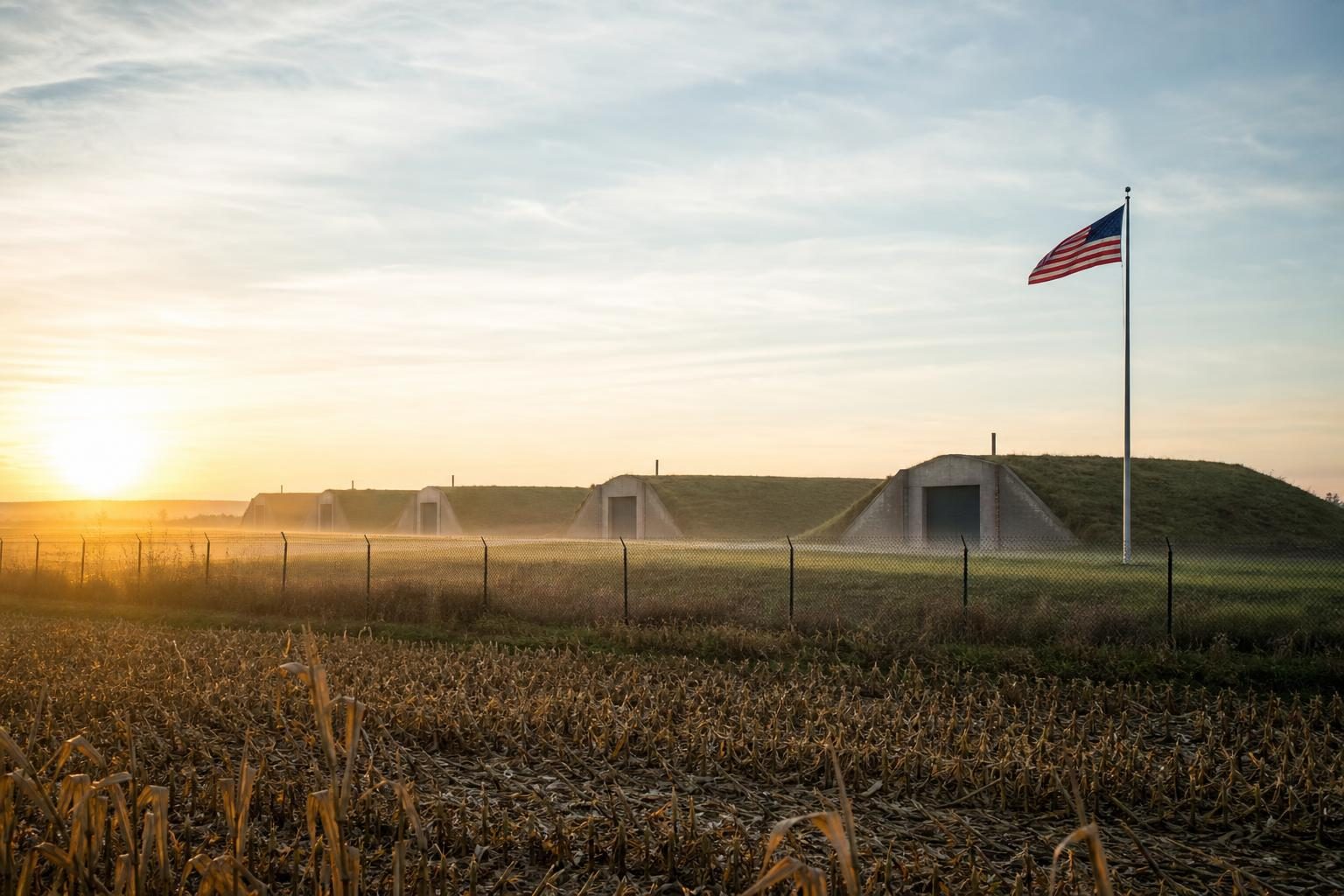
The Army finally did Wednesday what it had been trying to do for weeks: it destroyed the unstable lead azide that had been sitting in bunkers at the Iowa Army Ammunition Plant in Middletown, and the first readings came back clean. Federal officials said preliminary air monitoring after the blast found zero airborne lead, ABC News reported [1].
The controlled detonation destroyed 68 drums of the degraded explosive, Axios reported, after several delays, a court fight and intervention from the White House [2]. Fox News reported that the Army blew up about five tons of the material in southeast Iowa [3].
How the Army Tried to Keep the Dust Down
Lead azide was once used to set off larger munitions. The chemical had begun to crystallize in storage, Deutsche Welle reported, and the Army argued that a controlled blast was the safest way to get rid of it before it could go off on its own [4].
To limit what came out of the blast, crews smothered the site. Army Assistant Secretary Jordan Gillis said aqueous foam and gel blocks were used to hold down lead particles from the detonation, according to The Post Millennial [5]. Officials told reporters that early results showed no lead detected in the air, the outlet reported [5].
President Trump praised the work, saying the mitigation efforts had "far exceeded expectations," Deutsche Welle reported [4].
The Precautions Families Lived With
The operation was not easy on the people who live near the plant. FEMA told residents within 20 miles to stay sheltered until officials gave the all clear, Fox News reported [3]. Axios reported that the blast came with evacuations and closures, and that elected officials had criticized the military for how it communicated with the public in the run-up [2].
Doctors also warned about the health risks of lead exposure, Fox News reported [3]. Lead does its worst damage to the young, and parents in Des Moines County and beyond are right to want every test result made public, not just the first ones.
Who Left This Problem Sitting There?
Vice President JD Vance put the blame on decisions made more than a decade ago. Speaking to reporters in Ohio, he said the unstable material had been stored since 2009, under the Obama administration, and that "the can had been kicked down the road," The Hill reported [6].
That point matters. A stockpile of bomb-making chemical does not become unstable overnight. It degrades over years while officials sign off on storing it a little longer. By the time it began to crystallize, every choice left was a bad one: move it and risk an accident on the road, leave it and risk a blast nobody controls, or destroy it on site with every safeguard the Army could bring. This administration chose the last option, and on the first day's numbers, it worked.
That does not end the job. Clean air readings in the first hours are good news, but lead can settle into soil, water and farm fields. Iowa is farm country, and the families who raise livestock and grow crops near Middletown deserve follow-up testing that is thorough, independent and published in full.
What Comes Next
The questions now are practical ones. Residents will want to know when the shelter guidance is fully lifted, what follow-up monitoring of soil, water and food will show, and how often those results will be released [2][3]. Lawmakers who criticized the Army's communication may also press for answers about the delays and the court fight that came before Wednesday's blast [2].
There is also a wider question. If one plant held a stockpile this unstable for this long, Americans have every right to ask what else is sitting in storage at other military sites, and whether anyone is checking before the next crisis arrives.
For now, the people of southeast Iowa can head into Thanksgiving with some relief. The bunkers are empty, the first readings are clean, and the troops and civilians who carried out a dangerous job on the day before the holiday deserve the nation's thanks.
Sources
- [1]Opens in a new tab ↗
- [2]Opens in a new tab ↗
- [3]Opens in a new tab ↗
- [4]Deutsche WelleUS Army detonates unstable lead-based explosives in IowaOpens in a new tab ↗
- [5]The Post MillennialOfficials say zero lead detected in air after successful detonation of bomb making materials in IowaOpens in a new tab ↗
- [6]Opens in a new tab ↗
Should U.S. military aid to Israel end early?
- Yes, Israel can afford its own weapons
- Phase it out slowly
- No, keep it while Iran is a threat
More in Military & Defense

Hasan's Lawyer Plans a Habeas Petition That Could Delay the Dec. 3 Execution for the Fort Hood Massacre
Last night on Order in the Court with Harold Whitmore

Fort Hood Survivors Fight for a Seat at Hasan's Execution
Last night on Command Post with Dan Whitaker

CYBER INTRUDERS HIT CIA AND NATIONAL INTEL OFFICE
Yesterday on Breaking Now with Nathan Brooks
Were you there?
If you were at the scene, or this story touched your life, tell us what you saw and what it was like.
Discussion 0
Sign in or create a free account to join the discussion.
No comments yet. Start the discussion.