
 This morning on Command Post with Dan Whitaker
Farewell to the Reefer: The Navy Retires the Peacoat After More Than a Century at Sea
A new Navy order ends authorized wear of the classic wool coat in October 2027 and replaces it with a synthetic parka, citing cost and simplicity, as sailors and veterans push back and a petition gathers signatures.
Filed November 24, 2026 · 📍 NY 12207
Were you there? Share your story
Key points
- The Navy ends authorized wear of the wool peacoat on Oct. 1, 2027, under NAVADMIN 270/26.
- A synthetic parka will replace both the peacoat and the old foul weather jacket.
- The Navy Exchange sold only 67 peacoats in 2025 and 15 so far in 2026; the coat hasn't been issued in eight years.
- A petition to save the peacoat drew nearly 1,000 signatures in a week.
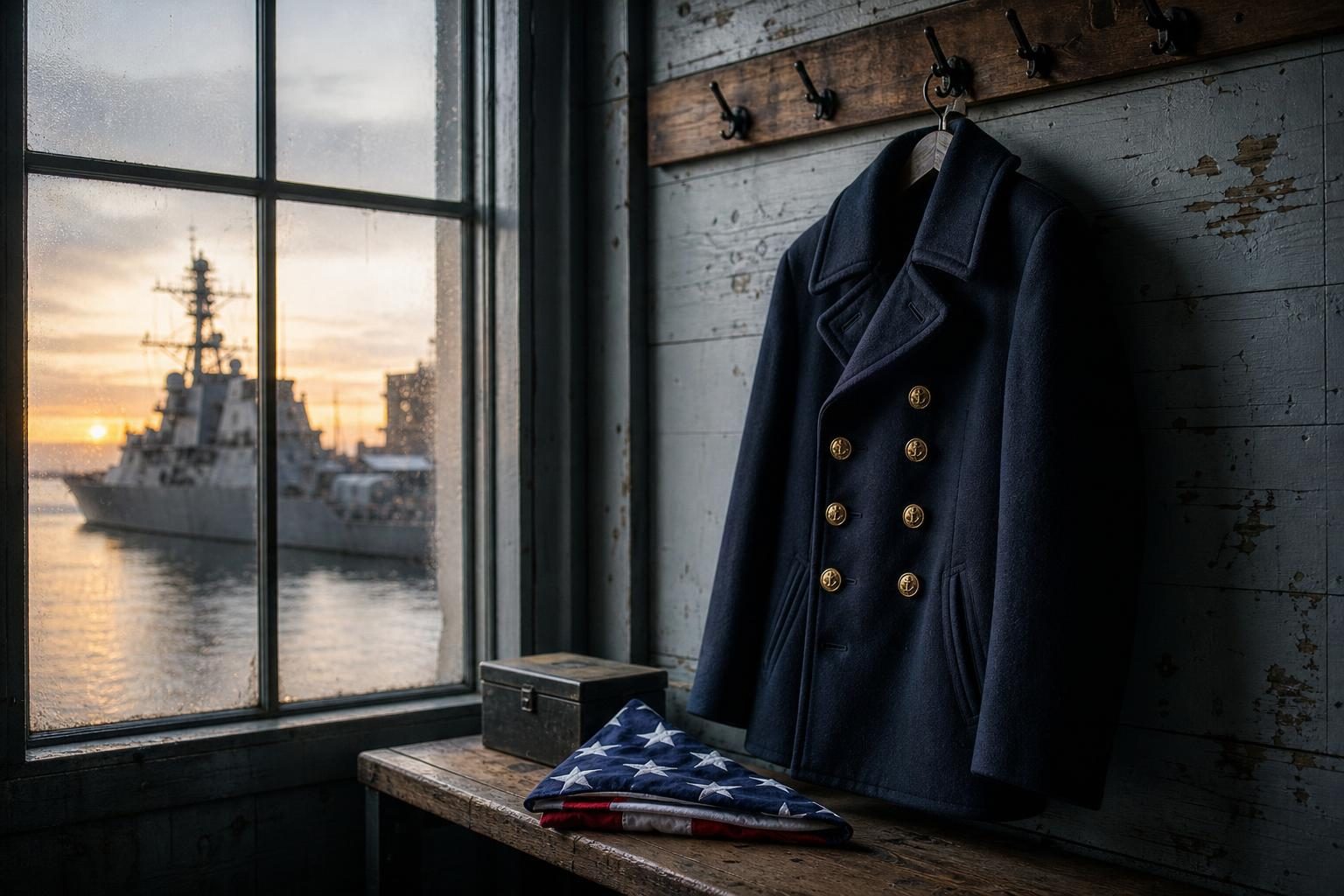
One of the most recognizable pieces of American military heritage is headed for the history books. The Navy will end authorized wear of the wool peacoat on Oct. 1, 2027, under a policy message known as NAVADMIN 270/26, dated Nov. 13, 2026, Maritime Executive reported [1]. The coat, which sailors also call the "reefer," has been part of Navy life for more than a century [3].
What Is Changing
The peacoat is currently an optional item in a sailor's seabag, and that option goes away next fall [1]. In its place, the Navy will authorize a parka made of synthetic material, which also replaces the old foul weather jacket, the A2 deck jacket that generations of sailors wore topside [1].
The coat is not the only change. The acrylic V-neck sweater also loses its authorization, though sailors may still wear the wool V-neck, and the familiar gold physical training shirt is being replaced with an all-blue option, Task & Purpose reported [2]. The New York Times noted that, whatever happens in the fleet, the peacoat's long life in civilian fashion is not ending [4].
Why the Navy Says It Is Doing It
The Navy's stated reasons are cost and simplicity: fewer items to buy, issue, stock and inspect [1]. The numbers suggest the coat had already faded from daily use. One official said the peacoat has not been issued to new sailors in eight years, and the Navy Exchange sold only 67 of the coats in 2025 and just 15 so far in 2026, according to reporting carried by Yahoo News [3].
Those figures are a reminder that uniform decisions often follow habits that change quietly over many years. Sailors today are more likely to reach for lightweight technical gear than a heavy wool coat on a cold pier. A single parka that does the work of two older jackets will be easier to issue and easier to keep in stock.
Why Sailors Are Pushing Back
But a uniform is never only about logistics. A Change.org petition asking the Navy to reverse the decision collected nearly 1,000 signatures within a week, according to the same reporting [3]. For many veterans, the peacoat is the uniform they wore home on leave, the coat in the photographs on the mantel and the one they handed down to sons and daughters who later served.
That kind of attachment matters in a military that depends on tradition to bind generations together. Traditions remind young sailors that they stand watch where others stood before them, through world wars, the Cold War and the long deployments of recent years. Commanders understand that pride in the uniform is part of readiness, not a distraction from it.
There is a fair middle ground in the debate. The Navy is not banning sailors from honoring the coat's history, and the civilian peacoat will be on store racks this winter as it has been for decades [4]. The decision is about what the service buys and requires, at a time when every dollar in the defense budget is under scrutiny.
A Short History of a Long Tradition
The heavy wool coat was built to shed wind and spray on open decks, and it served American sailors for more than a century [5]. Its double-breasted cut, broad lapels and anchor buttons became symbols of the service, recognized far beyond the fleet, and the style crossed over into civilian closets long ago [4].
There is also a practical lesson in the numbers. When a service stops issuing an item and almost no one buys it, keeping it on the books still costs money: contracts, inventory, inspections and the rules that govern how and when it may be worn [1][3]. Folding two older jackets into one modern parka is the kind of housekeeping taxpayers should expect. The question critics are raising is not whether the Navy can save money, but whether it could have kept a beloved, optional tradition alive at little cost [3].
For the sailors standing watch this winter on cold piers from Norfolk to Bremerton, the change will hardly be noticed at first. The parka is meant to do the job the peacoat and the deck jacket did, keeping sailors warm and dry topside [1].
What Comes Next
Sailors who own peacoats may keep wearing them in uniform until the October 2027 deadline [1]. The Navy's uniform board is expected to meet again next month, and more changes could follow [2]. For now, the reefer gets one more winter on the waterfront, and one more chance for the Navy to hear from the sailors and veterans who still love it.
Sources
- [1]Maritime ExecutiveU.S. Navy Retires the Venerable Peacoat From ServiceOpens in a new tab ↗
- [2]Opens in a new tab ↗
- [3]Opens in a new tab ↗
- [4]The New York TimesThe Navy Waves Goodbye to the PeacoatOpens in a new tab ↗
- [5]Opens in a new tab ↗
Should U.S. military aid to Israel end early?
- Yes, Israel can afford its own weapons
- Phase it out slowly
- No, keep it while Iran is a threat
More in Military & Defense
Melania Trump and Usha Vance Pack Holiday Care Packages for Deployed Troops at Joint Base Andrews
Overnight on The Briefing Room with Claire Donovan
Pentagon: No Policy Change as Ukraine's Patriots Wait
Overnight on Command Post with Dan Whitaker

Made in 2026, Fired at Kyiv: Fresh Western Chips Show Russia's Sanctions Wall Is Still Leaking
Overnight on Command Post with Dan Whitaker
Were you there?
If you were at the scene, or this story touched your life, tell us what you saw and what it was like.
Discussion 0
Sign in or create a free account to join the discussion.
No comments yet. Start the discussion.