
 Tonight on Heart of the Matter with Michael Grant
Thinking of Stopping a Heart Medicine? New Research on Statins and GLP-1 Drugs Says Talk to Your Doctor First
A new trial on older adults who quit statins and a study linking GLP-1 discontinuation to doubled heart risk in type 2 diabetes carry the same lesson: quitting a heart drug is a medical decision, not a chore.
Filed November 13, 2026 · 📍 Washington, DC 20001
Were you there? Share your story
Key points
- Fox News reported a trial in which 13% of older adults who stopped statins had a heart attack, stroke or died, versus 9% who continued.
- NTD News reported stopping may be safe for some older adults, with similar outcomes over two years.
- A new study found people with type 2 diabetes who stopped GLP-1 drugs had twice the risk of heart attack, stroke or death.
- Bottom line: talk with your doctor or pharmacist before stopping any heart medicine.
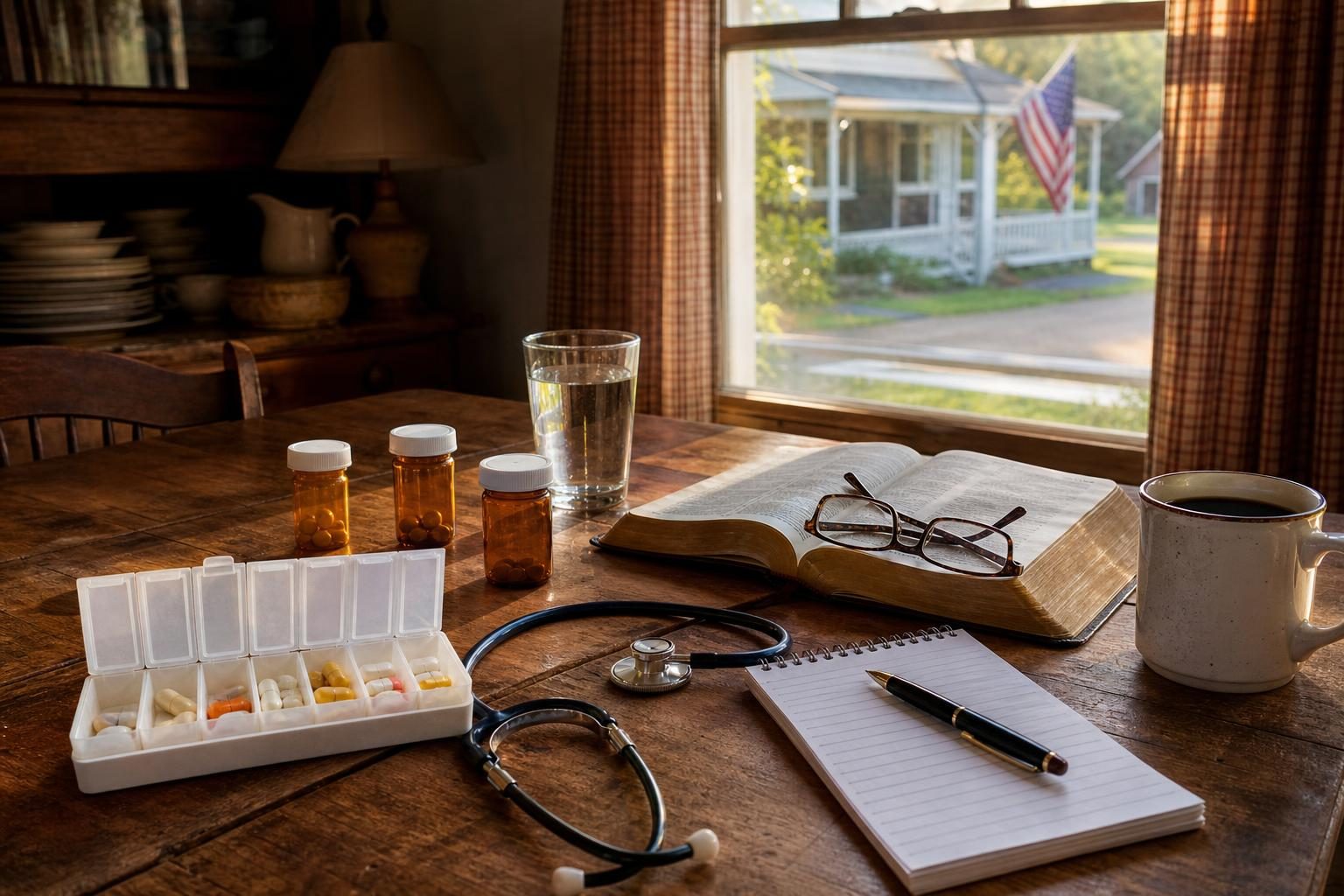
For many older Americans, there comes a day when the weekly pill organizer looks crowded and a simple question comes up: do I really still need all of these? This week brought new research on two of the most widely used families of medicine for protecting the heart, cholesterol-lowering statins and the GLP-1 drugs prescribed for diabetes and weight loss. Both pieces of news point to the same practical lesson. Stopping a heart medicine is a real medical decision, not a bit of household tidying.
What the New Statin Research Found
Statins are among the most familiar heart pills in the country, and many people have taken one for decades. Whether to keep taking them late in life has long been an open question, and researchers are now testing it head-on.
Fox News reported on a new clinical trial in which 13% of older adults who stopped their statins had a heart attack or a stroke or died, compared with 9% of those who stayed on the medicine [1]. NTD News, reporting on research into stopping statins, framed the findings more reassuringly: participants who stopped had similar outcomes over two years and were not substantially more likely to suffer a heart attack or stroke, or to die, than those who kept taking the drug [2]. NTD's headline said stopping may be safe for some older adults [2].
Readers should pay attention to the words "some" and "may." Even on the most favorable reading, this research does not say statins stop mattering at a certain birthday. In the numbers Fox News reported, the group that quit fared worse: about 13 of every 100 people had a serious event, compared with nine of every 100 who continued [1]. For one person, that difference may look small. Across a large population of older patients, even a small difference can add up.
The right answer will differ from one patient to the next. A person who has already survived a heart attack or stroke is in a very different place from someone who started a statin years ago as a precaution. Side effects, other illnesses, the number of pills a person takes and his or her own goals all belong in that conversation, and it is a conversation to have with a doctor, not a decision to make alone at the kitchen counter.
Stopping GLP-1 Drugs: A Warning for the Heart
The second study concerns the GLP-1 medicines that have become household names. Euronews reported that people with type 2 diabetes who stopped GLP-1 treatment had twice the risk of a heart attack, a stroke or death compared with those who continued, according to a new study [3]. CTV News reported the same finding, describing a doubled risk of heart attack, stroke or death for users who stop [4].
The heart is not the only concern. Fox News reported that a physician has laid out six risks for people who quit drugs such as Ozempic and Zepbound, ranging from regaining weight and losing muscle to worsening health markers and effects on mental health [5].
There is an important caution about the GLP-1 finding. As Euronews described it, the study compared people who stopped with people who continued [3]. That kind of comparison is a serious warning sign, but people stop medicines for many reasons, including other illnesses, and those reasons can also affect how they fare. The finding is a strong reason to be careful, even if it does not settle every question.
Sometimes the reason for stopping has nothing to do with a patient's health at all. Business Insider reported that Deloitte is cutting coverage of GLP-1 drugs for weight loss and raising health insurance costs for its U.S. staff, telling employees it was "untenable" for the firm to carry rising health costs alone [6]. Decisions like that, made by employers and insurers, can push patients off a medicine overnight. If your coverage changes, tell your doctor right away rather than simply letting the prescription lapse.
What This Means for You
The common thread in this week's research is that heart medicines are not light switches. Here is a practical way to approach them.
First, do not stop a statin, a GLP-1 drug or any other heart medicine on your own. Call your doctor or pharmacist first and ask what stopping would mean for you in particular.
Second, bring every bottle, including vitamins and supplements, to your next checkup and ask for a full review. Ask plainly: What is my personal risk of a heart attack or stroke? What do I gain by staying on this, and what might I lose by stopping? If I do stop, how should it be done, and how will we watch for trouble?
Third, if money or insurance is the real problem, say so. A doctor cannot help solve a problem he or she does not know about.
Finally, keep up the habits that protect the heart no matter what is in the pill organizer: daily walks, sensible meals, rest and time with family and church. Scripture calls the body a temple, and caring for it wisely in our later years is part of good stewardship of the gift of life. The newest research does not change that. It simply reminds us to make these choices carefully, and with good counsel.
Sources
- [1]Opens in a new tab ↗
- [2]Opens in a new tab ↗
- [3]EuronewsFor diabetes patients, stopping GLP-1 drugs linked to doubled risk of heart attack, stroke, deathOpens in a new tab ↗
- [4]CTV NewsGLP-1 users who stop taking medication face doubled risk of heart attack, stroke or death: studyOpens in a new tab ↗
- [5]Opens in a new tab ↗
- [6]Business InsiderDeloitte is cutting GLP-1 coverage for weight loss and raising health insurance costs for US staffOpens in a new tab ↗
What worries you most about health care?
- Cost
- Getting an appointment
- Quality of care
- Government getting more involved
More in Health & Medicine

HHS Says the FDA's Fast-Track Drug Voucher Program Is Still Running After a Report It Stalled Without Makary
Tonight on Health Check with Samuel Adeyemi

Beating Breast Cancer Shouldn't Cost a Woman Her Bones: What Survivors Should Ask Their Doctors
Today on Mother & Child with Elena Vasquez

Each Cigarette Raises the Odds of Dementia, a 2.8 Million-Person Review Finds, While a Small Study Points to Peanuts for the Aging Brain
This morning on Heart of the Matter with Michael Grant
Were you there?
If you were at the scene, or this story touched your life, tell us what you saw and what it was like.
Discussion 0
Sign in or create a free account to join the discussion.
No comments yet. Start the discussion.