
 Tonight on The Verdict Room with Natalie Sinclair
Guilty on All Counts: Miami Jury Convicts Christian Sanon in the 2021 Plot Against Haiti's President
After a nearly eight-week trial, the South Florida pastor faces up to life in prison at a Feb. 10 sentencing, and his lawyer says an appeal is coming.
Filed November 18, 2026 · 📍 Miami, FL 33130
Were you there? Share your story
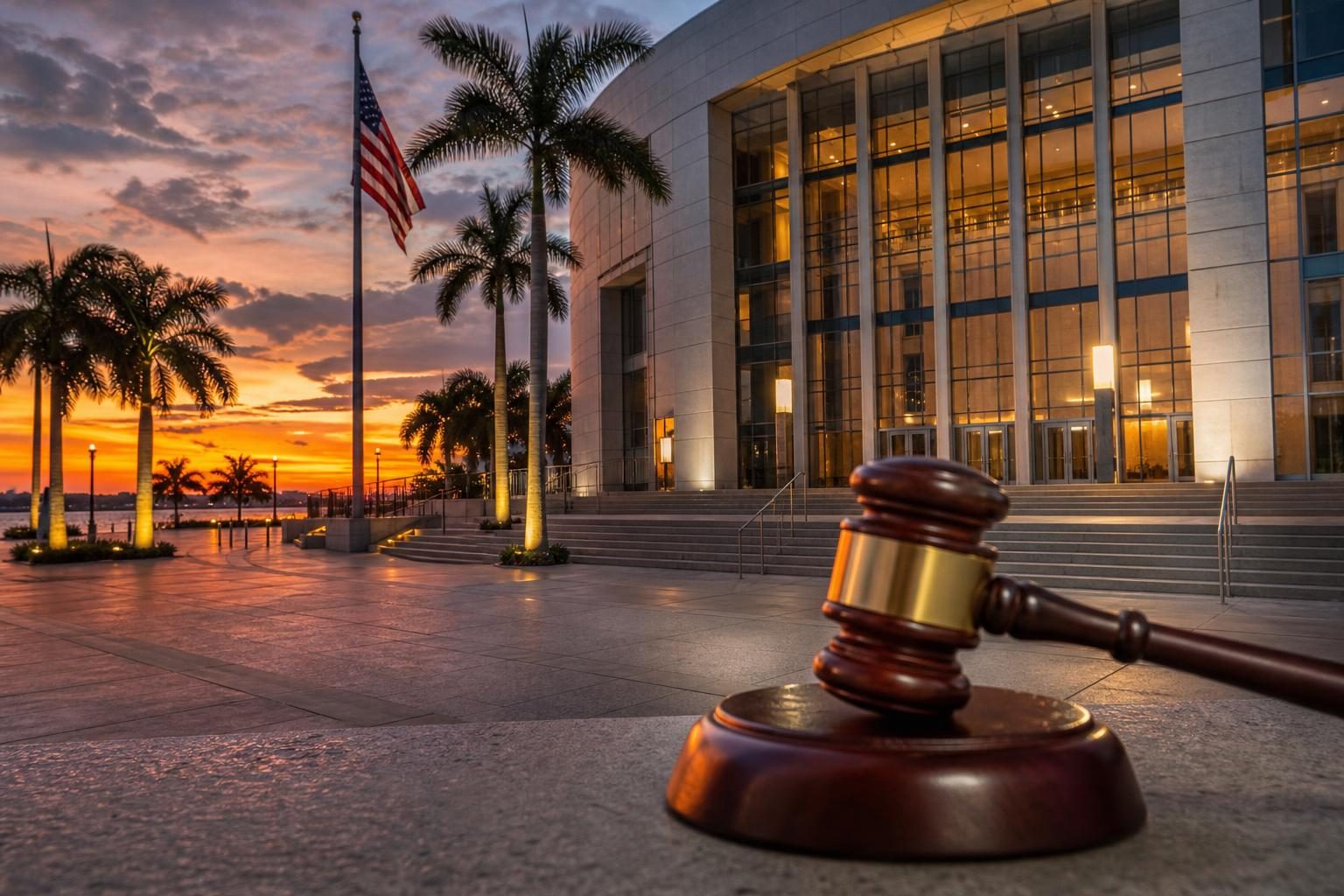
Key points
- A federal jury in Miami convicted Christian Emmanuel Sanon on all charges, including conspiring to kill Jovenel Moïse.
- The most serious of the eight counts was conspiracy to kidnap or kill a person outside the United States.
- Sentencing is set for Feb. 10; he faces up to life in prison, and his defense plans to appeal.
- Four defendants tied to a Miami security firm were convicted in the same plot in May.
A federal jury in Miami on Wednesday found Christian Emmanuel Sanon guilty on all charges, including conspiring to kill Haitian President Jovenel Moïse, after a trial that ran nearly eight weeks, the Associated Press reported [2]. Sanon, a Florida pastor with dual Haitian and American citizenship, was convicted of U.S. charges arising from the 2021 assassination [3].
He had faced eight charges, the most serious of them conspiracy to kidnap or kill a person outside the United States [2]. Sanon faces up to life in prison when he is sentenced on Feb. 10, and he remains in federal custody [2]. His attorney, Zeljka Bozanic, said the defense was disappointed and would file an appeal at the appropriate time, according to the AP [2].
What prosecutors told the jury
Federal prosecutors argued that South Florida served as a hub for planning and financing the plot to remove Moïse, CNN reported [1]. The government said Sanon was the conspirators' first choice to replace the Haitian president, according to CNN [1]. The AP reported that prosecutors described how the plotters, for a time, intended to install Sanon, before shifting their support to a former judge of Haiti's Supreme Court [2].
Moïse was shot to death in his bedroom in 2021 [2]. The Miami case has tried to answer a narrower but essential question: who in the United States helped plan it, and who paid for it.
The wider case
Sanon's conviction is the latest chapter in a long federal prosecution. In May, a federal jury in Miami found four defendants tied to the Miami security company Counter Terrorist Unit guilty of conspiring in the assassination, according to a New York Times report published by Infobae [4]. Earlier, Haitian-Chilean businessman Rodolphe Jaar was sentenced to life in prison after pleading guilty in the U.S. case [5].
The American and Haitian investigations have not always told the same story. Yahoo News has reported stark differences between the two, including over how central Sanon was to the scheme: whether he was a leader of the plot or a supporting player recruited by others [6]. The Miami jury's verdict does not settle every question Haitian investigators have raised, but it does settle Sanon's guilt under U.S. law, subject to the appeal his lawyer has promised [2].
Why this verdict matters
Trials like this one are the American justice system at its most demanding. The crime happened in another country. The evidence crossed borders, languages and years. The defendants were entitled to every protection the Constitution guarantees, and Sanon received a full jury trial, nearly two months long, before a jury of his fellow citizens decided the case [2].
That is how it should work. The government had to prove its case, and the defense had every chance to answer it. Now the defense has the right to appeal, and the courts will review the record [2]. Nobody should cheer a conviction for its own sake. What we should value is a process that is fair, public and final enough that a grieving nation can see justice being done.
For Christians, there is a sober lesson as well. Sanon is a pastor, and the jury found that he took part in a conspiracy against a sitting head of state [2][3]. A title in a church, like a title anywhere else, does not place anyone above the law. The faith teaches that we are all accountable for what we do, and that justice and mercy belong together. Both the victim's family and the convicted man deserve our prayers, and so do the people of Haiti, who have lived with the consequences of that night ever since.
The case also carries a message for anyone who sees South Florida as a safe place to plot violence abroad. Prosecutors argued that the planning and the money for this conspiracy ran through our own communities [1]. A Miami jury has now answered that argument, and federal prosecutors have secured convictions against a string of defendants over the past several years [4][5].
What comes next
Sanon is scheduled to be sentenced on Feb. 10, when he faces a possible life term [2]. His legal team has said it will appeal [2]. Watch for the post-trial motions that usually come first, and for whether federal prosecutors and Haitian authorities move to close the remaining gaps between their accounts of the plot [6].
Sources
- [1]Opens in a new tab ↗
- [2]The Hill (Associated Press)Florida pastor convicted of US charges related to assassination of Haitian President Jovenel MoïseOpens in a new tab ↗
- [3]Opens in a new tab ↗
- [4]Infobae (The New York Times)De empresario fracasado a presunto conspirador en el magnicidio de HaitíOpens in a new tab ↗
- [5]Opens in a new tab ↗
- [6]Opens in a new tab ↗
Should Florida ban new data centers until it studies power and water use?
- Yes
- No, bring the jobs
- Only near neighborhoods
More in Florida & Southeast News
Miami Home Sales Fall 10.6% as 7% Mortgage Rates Bite, but Florida's New Property Tax Break Could Bring Buyers Back Before Dec. 31
Today on Home Front with Carlos Mendoza

A Foot of Rain Overnight: Broward Closes Its Schools as Floodwaters Swamp Hollywood and a Synagogue Roof Gives Way
This morning on Sunshine State Report with Tomás Ortega
Following State Law, Miami Moves to Close Its DEI Offices and Pare Back Its LGBTQ Board Ahead of Thursday's First Vote
Overnight on Sunshine State Report with Tomás Ortega
Were you there?
If you were at the scene, or this story touched your life, tell us what you saw and what it was like.
Discussion 0
Sign in or create a free account to join the discussion.
No comments yet. Start the discussion.