
 Today on Order in the Court with Harold Whitmore
Five Years, No Case Left: Texas Supreme Court Throws Out Planned Parenthood's Challenge and Leaves the Heartbeat Act Standing
A unanimous, unsigned ruling dismissed the suit against Texas Right to Life for lack of jurisdiction and erased the lower-court decisions that had gone against the pro-life group. Here is what it means.
Filed November 25, 2026 · 📍 Supreme Court, DC 20543
Were you there? Share your story
Key points
- The Supreme Court of Texas unanimously dismissed the challenge on Nov. 20 for lack of jurisdiction.
- The court vacated the Third Court of Appeals judgment and the 2021 trial-court order.
- The Heartbeat Act's private-enforcement provision remains in place.
- The suit began after Texas Right to Life said it would use the law in court.
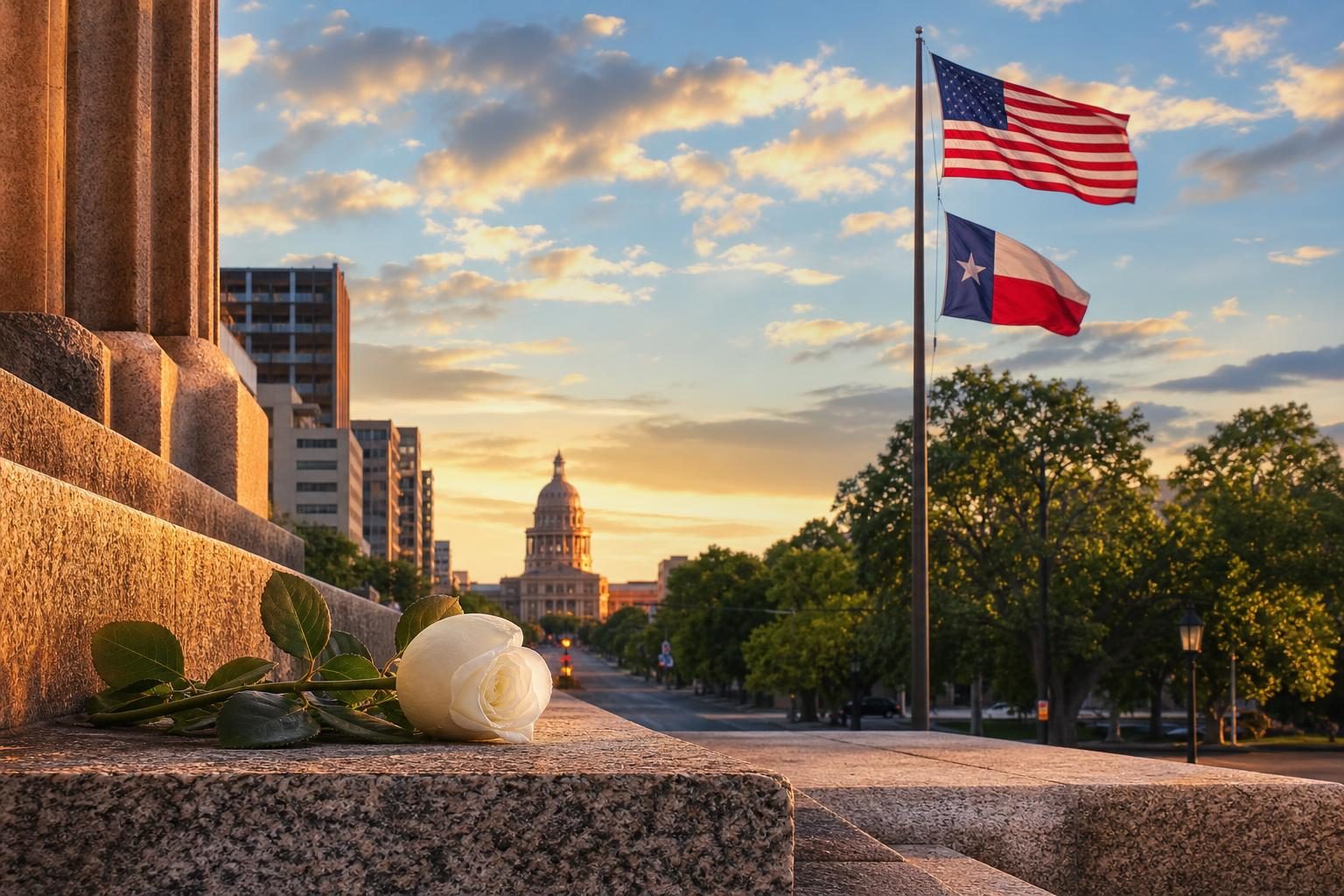
For five years, a Texas pro-life group lived under a lawsuit for saying it would use a law the Legislature had passed. On Friday, Nov. 20, the Supreme Court of Texas ended that fight. In a unanimous, unsigned opinion, the court dismissed Planned Parenthood's long-running challenge to the Texas Heartbeat Act for lack of jurisdiction, without hearing oral argument and without ruling on the merits [1][2].
The justices concluded there was "no justiciable controversy" left for the courts to decide [1]. Just as important, the court vacated the earlier rulings in the case, both the trial court's order and the judgment of the Third Court of Appeals in Austin, which had sided with the challengers [1][2]. The law's private-enforcement provision, which lets citizens sue anyone who performs or aids an abortion banned under the act, remains in place [1].
Here is what the case was about, how it got here, and what the ruling does and does not mean.
How the case began
The Texas Heartbeat Act, known in the Capitol as Senate Bill 8, took effect in 2021 and prohibits abortion once a heartbeat can be detected [1]. Its unusual feature is who enforces it. Instead of state officials, the law relies on private citizens, who can file civil suits against abortion providers and those who help them [1].
After the law passed, Texas Right to Life and its director, John Seago, announced they intended to sue organizations that helped women obtain abortions in violation of it [2]. Planned Parenthood of Greater Texas and others responded by suing the group first [2]. In all, 14 lawsuits were filed in Travis County and handled together [1][2].
In 2021, Judge David Peeples of Travis County's 98th District Court ruled that the law was unconstitutional, and that ruling became the foundation of the challenge that followed [4].
Five years in the courts
Texas Right to Life fought back with a motion to dismiss under the Texas Citizens Participation Act, the state's law that protects people from lawsuits aimed at their speech and petitioning [5]. In November 2024, the Supreme Court of Texas sent the case back to the Third Court of Appeals with instructions to answer a threshold question first: did the challengers even have standing to sue? If they did not, the court said, the case should be dismissed [5].
In January of this year, the Third Court of Appeals said they did. It found that the groups had shown an imminent threat of injury tied to Texas Right to Life's efforts to encourage private lawsuits and collect tips about suspected violations [4]. That opinion did not decide whether the law itself was constitutional, and Texas Right to Life said it would appeal [4].
By the time the case reached the state's highest court again, the challengers themselves asked it to be dismissed as moot, pointing in part to the law's four-year statute of limitations [1]. Texas Right to Life opposed the request and pressed its own claims for attorney's fees, according to reports [1][2]. The court's answer was to throw out the case for want of jurisdiction and erase the lower-court rulings that had gone against the group [1][2].
What the ruling means
Seago called it a clear win. The decision, he said, makes sure "that private citizens can sue abortionists who break the law" [3]. Texas Right to Life described the outcome as ending a five-year lawsuit and keeping the Heartbeat Act in full force [3].
Planned Parenthood did not respond to KUT before its report was published [1].
Three points are worth keeping straight. First, the court did not rule that the Heartbeat Act is constitutional; it ruled that there was no live dispute for it to decide [1]. Second, because the lower-court decisions were vacated, neither the 2021 trial-court ruling nor the appeals court's standing decision stands any longer [1][2]. Third, the dismissal does not change who may enforce the law. The Supreme Court of Texas settled that question in March 2022, when it ruled unanimously that state licensing officials cannot enforce the act and that the power belongs to private citizens, a decision that effectively ended the federal challenge [6].
Why it matters beyond Texas
The heart of this case was never just a medical statute. It was whether a citizens' group could be hauled into court for years because it announced it would use a law on the books. Free people are entitled to say they will go to court to defend the unborn, and legislatures are entitled to decide that citizens, not only bureaucrats, may enforce the law. The court's decision lets both of those principles stand.
For the families and pregnancy centers that have built a culture of life in Texas since 2021, the ruling removes a cloud that hung over the law's most important enforcement tool. For the abortion industry, it closes one more avenue that once seemed promising.
The legal fight over life is not over in Texas or anywhere else. Other suits may follow. But after five years, the challenge that was supposed to unravel the Heartbeat Act has ended without unraveling anything, and the law that has protected Texas children since 2021 remains exactly where the Legislature put it.
Sources
- [1]Opens in a new tab ↗
- [2]Opens in a new tab ↗
- [3]Texas Right to LifeTexas Right to Life Defeats Planned Parenthood in 5-Year Court BattleOpens in a new tab ↗
- [4]Texas Public RadioTexas court clears path for Planned Parenthood lawsuit challenging state abortion lawOpens in a new tab ↗
- [5]Opens in a new tab ↗
- [6]Baptist PressTexas high court ruling on heartbeat ban applaudedOpens in a new tab ↗
Should the death penalty stay on the books for the worst crimes?
- Yes, for the worst murders
- Only with absolute proof like DNA
- No, life without parole is enough
More in Crime & Justice
Man Shot Dead in Pre-Dawn Home Invasion Near Toronto's Casa Loma
This morning on Street Watch with Elijah Carter
Raytown Officer Slain as Warrant Turns Deadly; Suspect Found Dead
Overnight on Street Watch with Elijah Carter

Missouri Supreme Court Disbars Former St. Louis Prosecutor Kim Gardner in a 7-0 Ruling
Last night on From the Bench with Margaret Callahan
Were you there?
If you were at the scene, or this story touched your life, tell us what you saw and what it was like.
Discussion 0
Sign in or create a free account to join the discussion.
No comments yet. Start the discussion.