
 Overnight on Main Street Money with Marcus Hale
Tariff Plan Goes Official as Japan and India Push Back
Washington formally proposes duties of up to 35% on 14 economies over subsidized factories. Nothing takes effect before a January hearing, and the overnight objections have already started.
Filed November 26, 2026 · 📍 Supreme Court, DC 20543
Were you there? Share your story
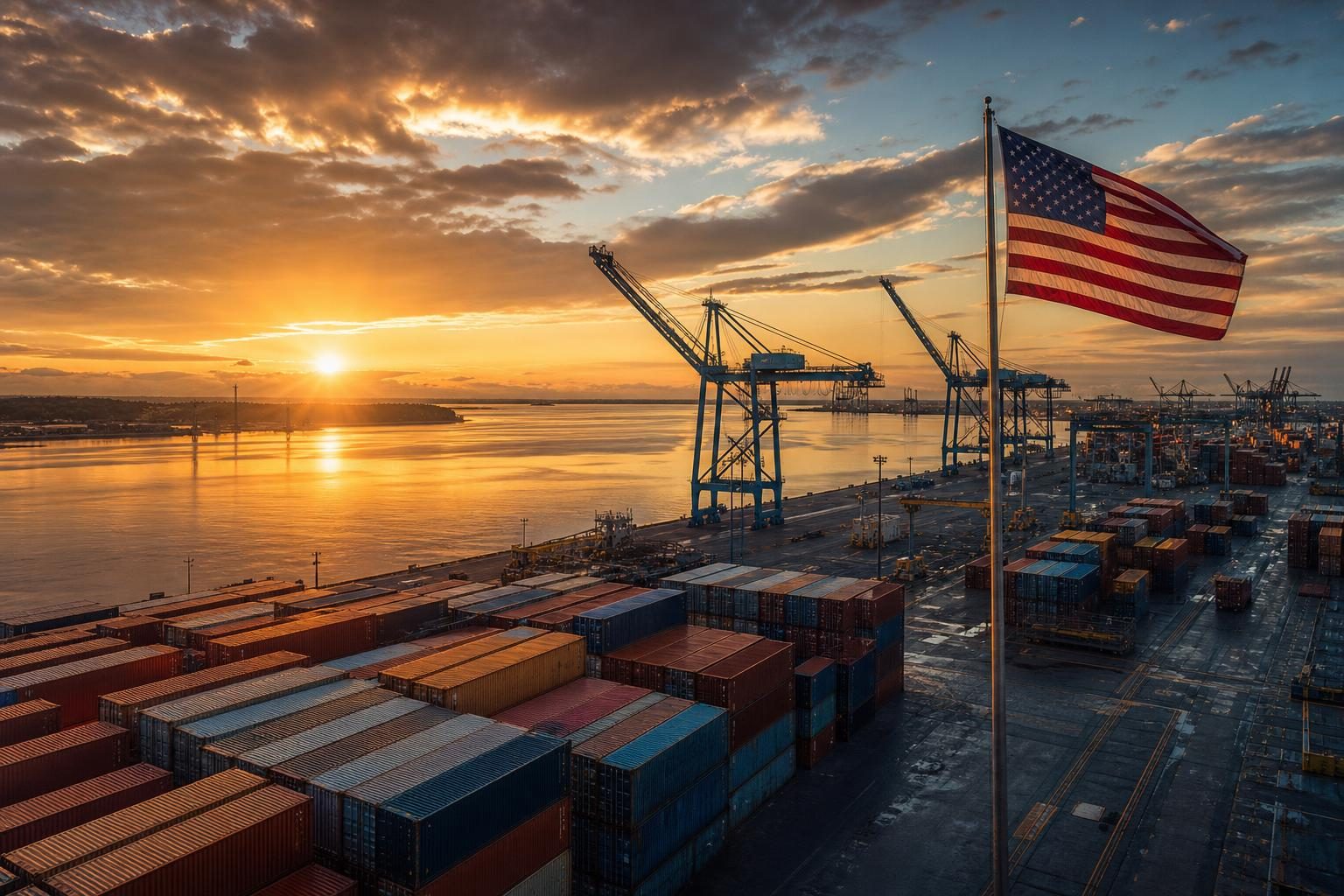
Part of our continuing coverage: NEW TARIFF WAVE TAKES AIM AT CHINA, EU AND 14 MORE
Key points
- USTR formally proposed Section 301 tariffs on 14 economies, from 15% for allies with trade deals to 35% for Vietnam.
- The duties replace the emergency tariffs the Supreme Court struck down; comments are due Jan. 5 and a hearing is set for Jan. 25.
- Japan and India both rejected the charge of structural excess capacity while saying they will keep negotiating.
- Greer says the new rates mostly replace existing levies; one estimate puts the added inflation at about 0.3%.
The tariff plan first previewed earlier this week is now on paper. The U.S. Trade Representative on Wednesday formally proposed new duties on goods from 14 economies it accuses of subsidizing factories to produce far more than the world will buy: China, the European Union, Japan, South Korea, Taiwan, India, Switzerland, Singapore, Vietnam, Thailand, Malaysia, Indonesia, Cambodia and Bangladesh [1]. Mexico and Norway were also investigated but were left out of the proposal for now [1].
By Thursday morning in Asia, the pushback had begun. Japan formally objected, and India's commerce ministry rejected the charge outright [4][5]. Here is what was actually proposed, why the administration says it is needed, and what it could mean for the price of what American families buy.
What Washington Proposed
The duties come out of an eight-month investigation under Section 301 of the Trade Act into subsidized foreign manufacturing, and they are meant to replace the tariffs the Supreme Court struck down earlier this year, Fox Business reported [2]. That ruling found that the emergency-powers law the President had relied on did not give him the power to tax imports. Section 301 is different: it is a trade statute Congress wrote for exactly this kind of dispute, and it comes with a public process.
The proposed rates are tiered. Japan, South Korea, Switzerland, Taiwan and the EU would face up to 15 percent, in line with the trade deals they have already signed with Washington. Bangladesh, Cambodia, Indonesia, Malaysia and Thailand would face up to 18 percent, China up to 20 percent, India up to 25 percent and Vietnam up to 35 percent, according to an analysis of the notices by the law firm Holland & Knight [6]. USTR also left room for lower rates for India, Singapore and Vietnam if they close reciprocal trade deals, and proposed higher fallback rates, including as much as 40 percent for China, if talks go nowhere [4][6].
Nothing takes effect yet. Written comments and requests to testify are due Jan. 5, and a public hearing is set for Jan. 25 at the U.S. International Trade Commission in Washington [6]. Trade Representative Jamieson Greer said none of the duties would kick in sooner than a couple of months from now, and argued that because the new rates largely replace levies already in place, the tariffs "really will just top up a few percentage points" once everything nets out, ABC News reported [3].
The Pushback
Japan's chief cabinet secretary, Minoru Kihara, said his country has no nonmarket policies and no structural excess capacity, though he added that Tokyo will keep working with Washington, The Japan Times reported [4]. The paper noted that the rate on most Japanese goods had fallen to 12.5 percent after the Supreme Court's February ruling, and that Japan's rate could climb to 20 percent if it misses the investment targets in last year's deal, which committed Japan to $550 billion in U.S. investment in exchange for lower auto duties [4].
India's commerce ministry rejected the claim of structural excess capacity, said any trade concerns belong in the two countries' ongoing negotiations, and restated that it wants an early bilateral trade agreement, the Deccan Herald reported [5]. Under the proposal, India's 25 percent rate would be capped at 17 percent if a deal is reached [5].
At home, Sen. Ron Wyden of Oregon, the top Democrat on the Finance Committee, accused the administration of trying to rebuild the global tariffs the Supreme Court threw out, according to ABC News [3].
What It Means for Families
The administration's case is a serious one. When foreign governments, above all Beijing, pour subsidies into factories that turn out steel, electronics and machinery far beyond what their own markets need, the surplus lands in ours at prices no unsubsidized American plant can match. Section 301 is the lawful tool Congress built to answer that, and unlike the emergency route the courts rejected, it gives manufacturers, importers and consumers a chance to be heard first [2][6].
The cost is the part to watch. Coverage of the announcement cited an estimate from Yale's Budget Lab that the proposal would add about 0.3 percent to U.S. inflation [3]. Greer's answer is that most of these rates swap one duty for another rather than stacking new ones on top [3]. For a household budget, that is the real test: if the final rates mostly replace what is already being paid, the effect at the checkout line should be modest. If talks break down and the fallback rates kick in, it would not be.
What comes next: the January comment deadline and hearing, whether India, Vietnam and Singapore close deals that lower their rates, and how Beijing and Brussels answer once the holiday week ends.
Sources
- [1]Opens in a new tab ↗
- [2]Opens in a new tab ↗
- [3]Opens in a new tab ↗
- [4]Opens in a new tab ↗
- [5]Deccan HeraldIndia rejects US allegation of excess manufacturing capacity, seeks early conclusion of bilateral trade dealOpens in a new tab ↗
- [6]Holland & KnightUSTR Proposes Tariffs Following 14 Section 301 Manufacturing Excess Capacity InvestigationsOpens in a new tab ↗
Should towns welcome AI data centers?
- Yes, they bring jobs and tax money
- Only if they pay their own power costs
- No, they strain water and the grid
More in Business & Economy
Two Shares for Every Child: Musk and SpaceX Double Their Trump Accounts Gift
Overnight on Main Street Money with Marcus Hale
Inflation Climbs to 3.8% as Growth Surges to 4.3%
Yesterday on The Hart of the Economy with Evelyn Hart
Dell Lifts Its Forecast to $202 Billion as AI Server Orders Hit a Record, While HP Sees Memory Costs Easing
Tuesday night on Money Wire with Victoria Chen
Were you there?
If you were at the scene, or this story touched your life, tell us what you saw and what it was like.
Discussion 0
Sign in or create a free account to join the discussion.
No comments yet. Start the discussion.