
 Last night on Main Street Money with Marcus Hale
Carney Says a U.S.-Canada Trade Deal Is Getting Closer, but Autos Remain the Sticking Point
After a long call with President Trump and his trade team, Canada's prime minister says the two sides are making progress, even as Ottawa signs new deals in Asia.
Filed November 14, 2026 · 📍 Lansing, MI 48933
Were you there? Share your story
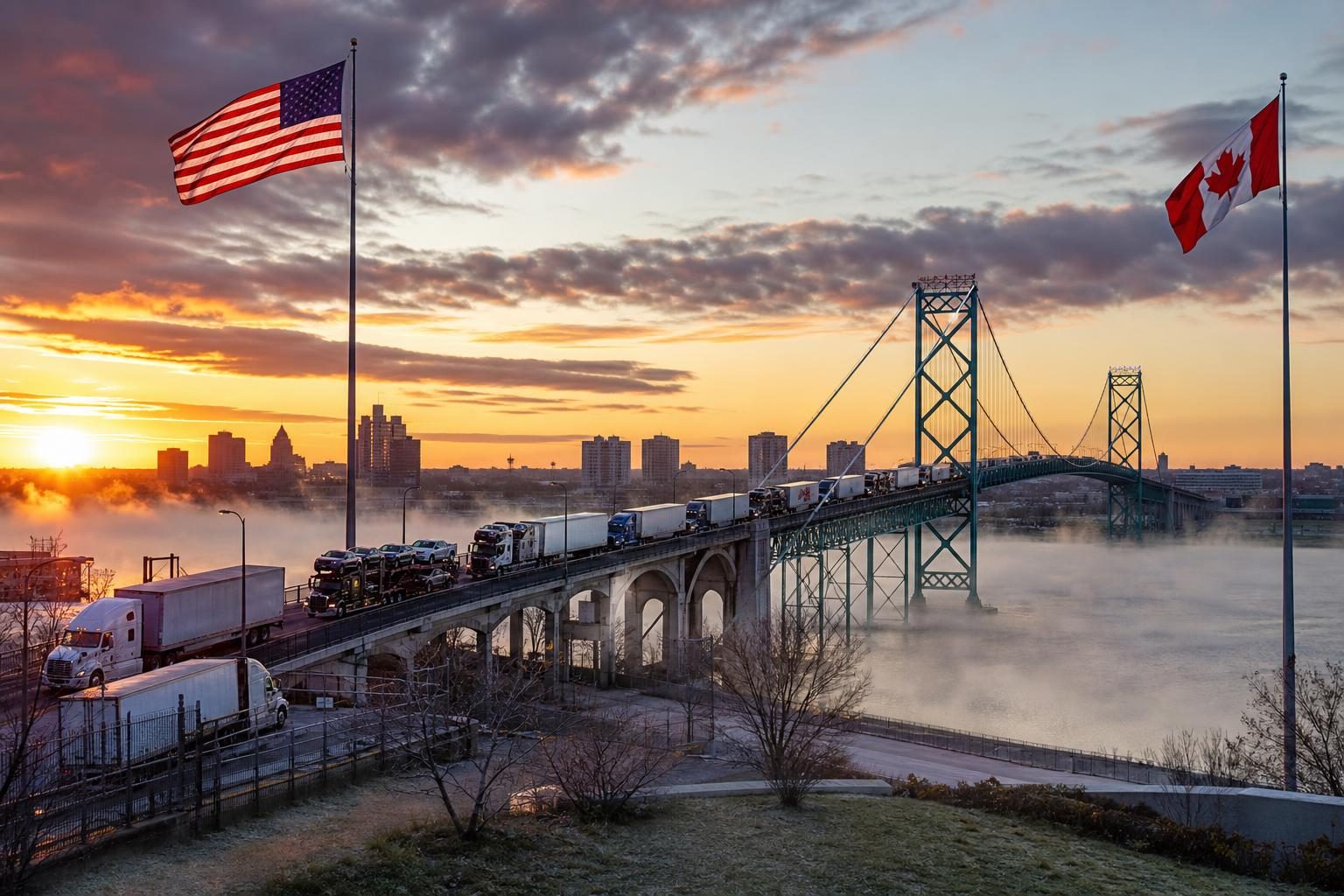
Key points
- Carney said Saturday in Manila that trade talks with the U.S. are making progress after a call with President Trump.
- He said significant issues remain, above all protections for Canada's auto industry.
- Canada and the Philippines concluded talks on a free-trade agreement, with a deal targeted by 2027.
- The U.S. remains Canada's largest customer, giving Washington leverage in the talks.
Canadian Prime Minister Mark Carney says his country and the United States are moving toward a trade deal, but he is not ready to call it done. Speaking to reporters in Manila on Saturday, Carney said negotiations were "making progress" after a conversation with President Trump and U.S. Trade Representative Jamieson Greer, The Hill reported [1].
The Associated Press reported that Carney described a lengthy call with the President and senior officials before he left for Asia, and said a bilateral agreement is possible but not yet within reach [2]. Significant issues remain unresolved, the AP reported, including protections for Canada's auto sector [2].
Autos Are the Hard Part
Carney has drawn a firm line on cars. Newsweek reported that he called the future of the auto industry one of the most difficult issues in the talks, and that he will not accept a deal that fails to leave Canada with a viable auto sector [3].
That is the heart of the matter for both countries. American and Canadian auto plants have been tied together for decades, with parts often crossing the border more than once before a finished vehicle rolls off the line. President Trump has made bringing auto production and good-paying factory jobs back to the United States a central goal of his trade policy. Canada wants to keep the plants it has. Those two goals collide in places like Ontario, Michigan and Ohio, which is why autos are the last and hardest piece of the puzzle.
How We Got Here
The road has been rocky. Days before the midterm elections, Carney said the two leaders had moved closer to an agreement, and he argued that any progress had come because Washington was moving toward Canada's position, the AP reported at the time [5]. The negotiations had broken down over the summer before resuming this fall [5].
The President's approach has been consistent: use America's economic weight to win better terms for American workers. Tariffs have brought trading partners to the table around the world, and the fact that Canada's leader is now publicly talking about progress suggests the pressure is working. A deal that protects American manufacturing while keeping goods flowing across the world's longest undefended border would be a win for both nations.
Canada Looks to Asia
At the same time, Carney is working to reduce Canada's dependence on its southern neighbor. In Manila, he announced that Canada and the Philippines had concluded talks on a free-trade agreement [6]. Carney said the deal would be good news for Canadian farmers, aerospace companies and businesses in forest products, mining, energy and services, Euronews reported [6]. CTV News reported that the two countries are aiming to have a deal in place by 2027 [4].
That diversification is Ottawa's right, and it is also a reminder that trade relationships run both ways. The United States remains Canada's largest customer by a wide margin, and no Asian agreement can replace access to the American market. That reality gives Washington leverage, and the administration has been willing to use it.
Why It Matters
For American families, the outcome will show up in the price of cars, lumber, groceries and energy, and in whether factory jobs stay in towns that have already lost too many of them. For auto workers on both sides of the border, the fine print on tariffs and on how much of a vehicle must be built in North America will help decide where the next plants go.
Conservatives have long argued that trade should serve the people who make things, not just the people who move money. A fair deal with Canada, one that rewards building in America and keeps a close ally close, would show that principle can work in practice.
What Comes Next
Neither side has announced a deadline for a deal. Carney's comments suggest the remaining gaps are narrow but serious, with autos at the center [2][3]. Any final agreement will have to satisfy a President who has promised to put American workers first and a prime minister who has promised to protect Canada's car plants. Watch for word from Greer's office and from Ottawa in the weeks ahead, as both governments try to turn progress into a signed agreement.
Sources
- [1]Opens in a new tab ↗
- [2]Associated Press (via WISH-TV)Carney says Canada and US are making progress toward trade dealOpens in a new tab ↗
- [3]Opens in a new tab ↗
- [4]Opens in a new tab ↗
- [5]Associated Press (via WSB-TV)Carney says Trump moving closer to Canada's trade demands as midterms loomOpens in a new tab ↗
- [6]Opens in a new tab ↗
Should towns welcome AI data centers?
- Yes, they bring jobs and tax money
- Only if they pay their own power costs
- No, they strain water and the grid
More in Business & Economy

You Can Save $1,000 More in Your 401(k) Next Year: The IRS's New 2027 Limits, and the Bigger Break for Workers in Their Early 60s
Yesterday on The Bottom Line with Douglas Park
Supreme Court Takes Up Robinhood Fight Over What IPO Filings Must Disclose
Yesterday on The Verdict Room with Natalie Sinclair
An Arbitrator Hands Amazon Its First North American Union Contract, as Some B.C. Warehouse Workers Push Back
Yesterday on Main Street Money with Marcus Hale
Were you there?
If you were at the scene, or this story touched your life, tell us what you saw and what it was like.
Discussion 0
Sign in or create a free account to join the discussion.
No comments yet. Start the discussion.