
 This morning on Main Street Money with Marcus Hale
'We Have No Money': Nine Months Into the War, America's Blockade Is Squeezing Tehran Dry
Iran's president admits the economic war is harder than the missile war. The rial has sunk to about 2.9 million to the dollar, inflation is near 90% and crude exports have stalled. Here is what the pressure has done, and the risks ahead.
Filed November 29, 2026 · 📍 Wall Street, NY 10005
Were you there? Share your story
Key points
- Iran's president says his government has no money as the U.S. blockade cuts off oil revenue.
- The rial fell to about 2.9 million per dollar, a record low, Benzinga reported.
- Kpler says Iran's crude export revenue could fall to zero by mid-December.
- Iran's navy chief says the Strait of Hormuz will stay closed.
As the war with Iran reaches its nine-month mark this weekend, Tehran's own leaders are describing the pressure in stark terms. President Masoud Pezeshkian said on state television on Nov. 20 that "we have no money," and the next day called the struggle an economic war that is harder than one fought with missiles, Fortune reported [1].
That admission is the clearest sign yet that the American strategy of choking off the regime's revenue is working. It also raises the stakes for what comes next.
A Currency in Free Fall
The rial has fallen to about 2.9 million to the dollar on the open market, a record low, Benzinga reported, citing The Wall Street Journal and Iran International [2]. When Iran signed the 2015 nuclear agreement, the rate was about 32,000 to the dollar [2].
Prices have followed the currency down. Food and beverage prices are up more than 110% from a year earlier, and consumer inflation has reached roughly 89%, according to government figures cited by Fortune [1]. With little cash coming in, the government has cut subsidies for food, fuel and electricity, and state workers and pensioners have gone unpaid, Fortune reported [1].
For a regime that has spent decades funding militias across the region, an empty treasury changes the math. Every rial Tehran needs at home to keep the lights on is a rial it cannot send to proxies in Yemen, Iraq or Lebanon.
The Oil Has Stopped Flowing
The heart of the pressure is oil. The Treasury Department said in a report last month that Iran had not loaded any oil onto tankers since Aug. 25 because of the naval blockade and sanctions, Axios reported [3]. The blockade, sanctions and blocked overland routes have crippled Iran's economy and intensified pressure on the regime, according to the Treasury report [3].
Energy analytics firm Kpler tells the same story from the water. In March, despite the war, Iran was exporting about 2 million barrels a day of crude and condensate, nearly all of it to China. Since July those exports have dried up, and production has fallen to about 1.8 million barrels a day, roughly half of prewar levels, Kpler reported [4]. The firm projects that Iran's revenue from crude and condensate exports could fall to zero by mid-December [4].
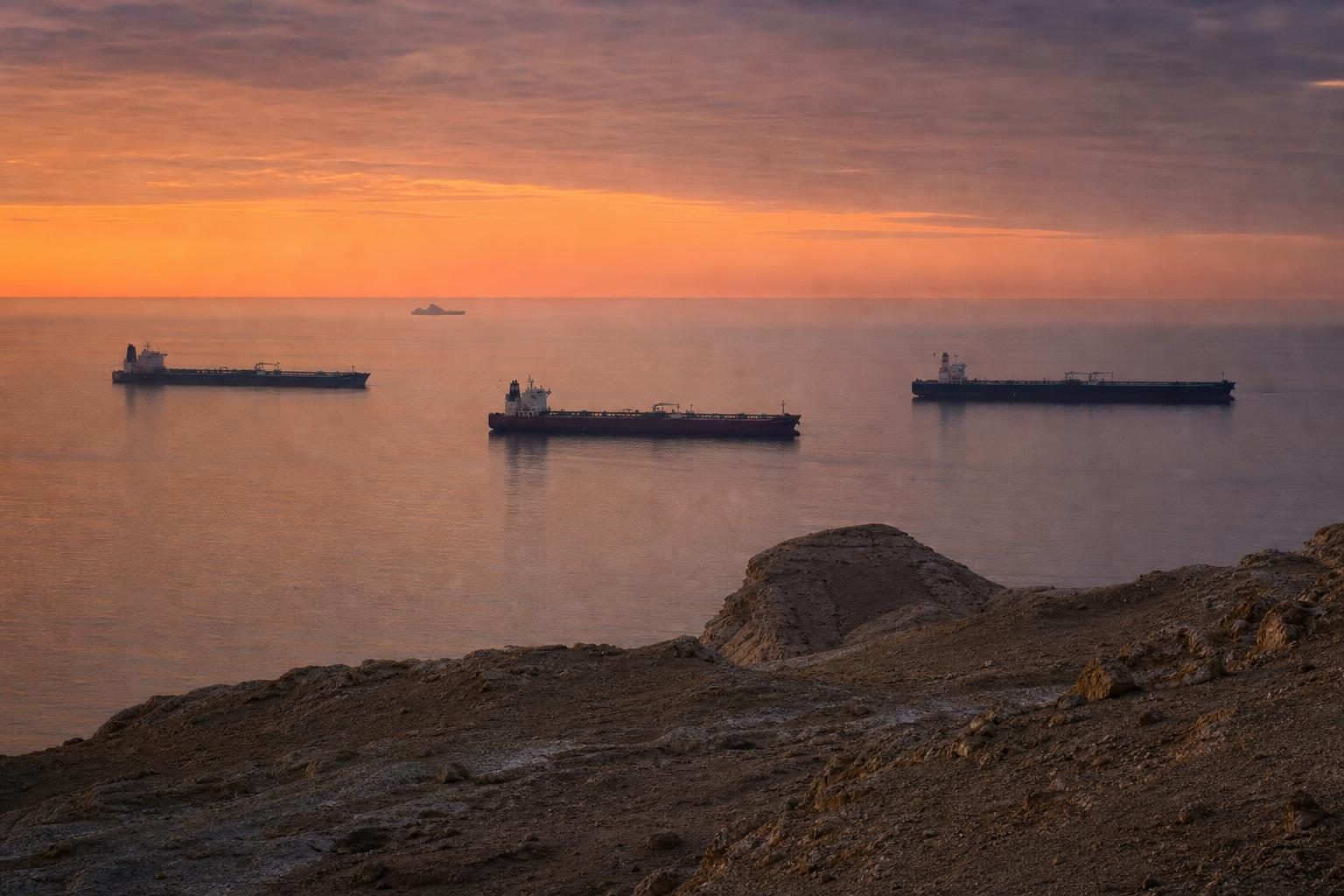
Iran has found a few cracks. Smaller vessels carrying oil products and liquefied petroleum gas have slipped through the Strait of Hormuz, delivering about 13 million barrels to Asian markets since August, according to Kpler [4]. Kpler also identified about 20 tankers near Kharg Island, Iran's main export terminal, but had seen only one moving and said it was too early to conclude Iran had taken serious steps to break the blockade [4].
Defiance From Tehran
The regime's public answer has been defiance. Iran's navy chief said Sunday that the Strait of Hormuz will remain closed, Al Jazeera reported [5]. The same day, Iran's army claimed that a U.S. drone struck a fishing boat in the south of the country and that one person was missing, according to Al Jazeera's live coverage [5]. That claim had not been independently confirmed.
Threats over Hormuz are Tehran's oldest card, and the most dangerous. A closed strait raises costs for the whole world, which is why the blockade's enforcement and America's naval presence matter so much to drivers and families far from the Gulf.
The President Holds the Clock
President Trump said last week that the conflict will end "sort of whenever" he decides to wind it down, Just the News reported, as the war approached nine months [6]. That is leverage, and the numbers above show why. A regime that cannot sell its oil, pay its workers or hold its currency steady has fewer and fewer good options.
The hardship falls heaviest on ordinary Iranians, not on the men who run the regime. That is a reason for the United States to keep the goal clear: an outcome that ends Iran's ability to threaten its neighbors, American troops and Israel, and that lets the suffering of the Iranian people end with it. Pressure is a means, not an end.
What to Watch
Three markers will show where this goes. First, Kpler's projected mid-December revenue cliff, and whether the regime finds new cash [4]. Second, the tankers waiting at Kharg Island, and whether Tehran tries to run the blockade with them [4]. Third, whether leaders in Tehran who now say they have no money decide that a deal on Washington's terms is better than another month like this one [1][6].
Sources
Israel's new parliament is sworn in. Who would you rather see lead Israel?
- Benjamin Netanyahu
- Gadi Eisenkot
- Someone new
- That's for Israelis to decide
More in World News
Breached Again and Again, Iran Orders Its Spy Service Rebuilt
This morning on World Watch with Grace Whitfield
Swiss Voters Back Arms Sales to Western Partners, but Ukraine Stays Shut Out
This morning on Border Watch with Cole Brennan
Saudi Coalition to the Houthis: Take the Peace Plan, or the Air War Goes On
This morning on World Watch with Grace Whitfield
Were you there?
If you were at the scene, or this story touched your life, tell us what you saw and what it was like.
Discussion 0
Sign in or create a free account to join the discussion.
No comments yet. Start the discussion.