
 This morning on Border Watch with Cole Brennan
Swiss Voters Back Arms Sales to Western Partners, but Ukraine Stays Shut Out
Early results show a majority easing the War Materiel Act for 36 mostly Western countries, after Germany, Denmark and the Netherlands took their orders elsewhere.
Filed November 29, 2026 · 📍 World desk · Washington, DC
Were you there? Share your story
Key points
- Early official results put the 'yes' side near 55 percent; gfs.bern projected about 54 percent.
- Swiss firms can now sell to 36 mostly Western partners even if they are in a conflict, and buyers no longer need Bern's approval to re-export.
- Ukraine stays excluded under Switzerland's neutrality law.
- A left-leaning alliance of Social Democrats, Greens and anti-army activists forced the referendum.
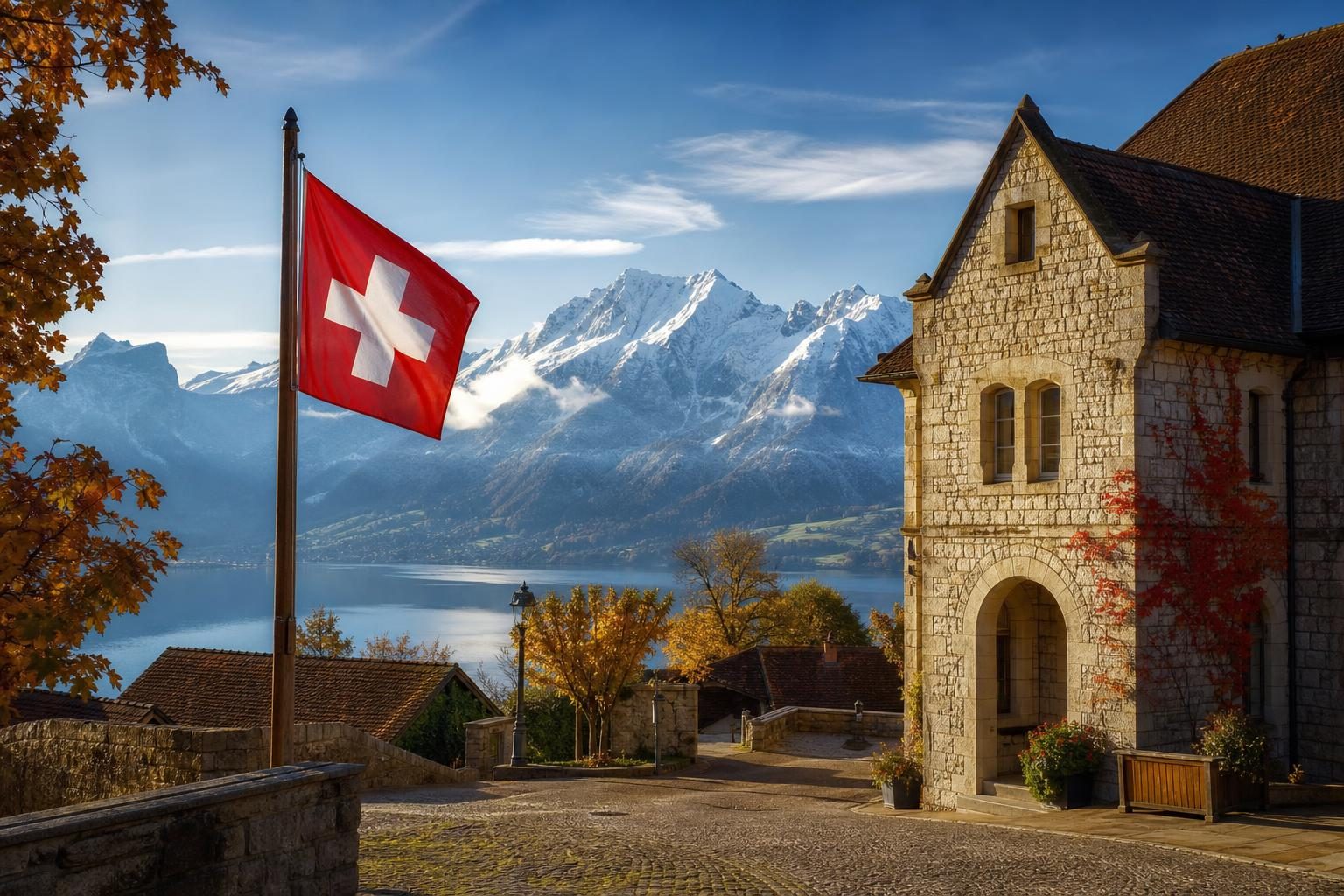
Swiss voters on Sunday approved a loosening of their country's strict rules on weapons exports, according to early official results and projections, in one of the clearest signs yet that Russia's war in Ukraine is reshaping how even the most cautious neutral nations think about defense.
First results from the Federal Statistical Office showed the "yes" side ahead with about 55 percent of the votes counted, Anadolu Agency reported, in line with the early government figures cited by Bloomberg [1][2]. A projection by the polling institute gfs.bern put support at roughly 54 percent, according to Euronews, which described the referendum as tightly contested [3]. Bloomberg, in a report carried by swissinfo, called the result the latest shift in Switzerland's long tradition of neutrality [1].
What Swiss voters changed
The amendment to the War Materiel Act lets Swiss manufacturers sell weapons to 36 mostly Western partner countries even when those countries are involved in an armed conflict, swissinfo reported [1]. It also drops the requirement that buyers ask Bern for permission before passing Swiss-made equipment on to another country, according to swissinfo's pre-vote explainer [5]. The government keeps the power to block a sale when national interests are at stake [5].
One line did not move. Ukraine remains excluded from receiving Swiss weapons, directly or indirectly, because of the principle of equal treatment in Switzerland's neutrality law, Anadolu reported [2].
Under the old rules, tightened in late 2021, sending arms to any country involved in a conflict was strictly off limits [5]. That rule became a flashpoint in 2022, when Switzerland refused to let Germany pass Swiss-made ammunition for its Gepard anti-aircraft guns to Ukraine [6].
Why the vote mattered to Switzerland's friends
Supporters argued that the strict rules were driving away the very democracies Switzerland depends on. Germany, the Netherlands and Denmark stopped placing certain orders with Swiss companies after their re-export requests were turned down, swissinfo reported [5][6]. Parliament passed the change in December 2025, backed by the government and by centrist and right-of-center parties, who said Swiss industry needed to stay a reliable link in Western supply chains [5].
The stakes reach beyond tanks and ammunition. Le Monde reported that about 80 Swiss start-ups now work in the drone sector, a field that has grown quickly since Russia's invasion, and that they were watching the outcome closely [4].
The referendum itself was forced by a left-leaning alliance: the Social Democrats, the Greens, the centre-left Protestant Party, the Group for a Switzerland without an Army and several civil-society groups, according to swissinfo [5]. Opponents warned that the change could raise the risk of Swiss weapons ending up in conflict zones and would weaken the country's humanitarian tradition [5]. About 20 non-governmental organizations, including Amnesty International Switzerland, condemned what they called the dismantling of key export safeguards, Anadolu reported [2].
Our take: a neutral nation chooses to be a reliable friend
Switzerland is not giving up its neutrality. It is not joining NATO, it is not sending arms to Ukraine, and it kept the power to say no to any sale that harms its interests. What its voters did on Sunday was recognize a hard truth that Americans understand well: peace is kept by nations that are strong enough to defend themselves and their friends.
For years the old rules sent a strange message to Switzerland's closest partners. A democracy could buy Swiss equipment and then be told it could not use or share it when it actually needed it. No serious ally plans its defense that way, and Germany, Denmark and the Netherlands made that plain by taking their business elsewhere [5][6]. A small country that wants to stay free and prosperous cannot afford to be the supplier nobody can count on.
There is a lesson here for families in our own country, too. Every dollar Europe spends on its own defense, and every factory that helps the free world rearm, is a load that does not fall entirely on American taxpayers and American troops. When a cautious, deeply democratic people looks at the world as it is and decides to stand a little closer to its friends, that is common sense, not militarism.
The debate is not over. Opponents can be expected to keep pressing their case, and the final certified count, which may differ slightly from the early figures, is still to come [1][3]. But Sunday's message from the Swiss people was clear: neutrality and reliability can go together.
Sources
- [1]SWI swissinfo.ch (Bloomberg)Swiss Back Easier Arms Exports in Latest Neutrality ShiftOpens in a new tab ↗
- [2]Opens in a new tab ↗
- [3]EuronewsSwiss voters set to ease arms export rules in tightly contested referendum, polling forecast saysOpens in a new tab ↗
- [4]Opens in a new tab ↗
- [5]SWI swissinfo.chSwiss to vote on loosening arms-export restrictionsOpens in a new tab ↗
- [6]Opens in a new tab ↗
Israel's new parliament is sworn in. Who would you rather see lead Israel?
- Benjamin Netanyahu
- Gadi Eisenkot
- Someone new
- That's for Israelis to decide
More in World News
Saudi Coalition to the Houthis: Take the Peace Plan, or the Air War Goes On
This morning on World Watch with Grace Whitfield

Netanyahu's Lawyers Accept Herzog's Offer of Talks on Ending His Corruption Trial
This morning on Cross-Examination with Dominic Kane
Zelensky: Ukraine Will Stop at Today's Front Line If Talks Follow
This morning on World Watch with Grace Whitfield
Were you there?
If you were at the scene, or this story touched your life, tell us what you saw and what it was like.
Discussion 0
Sign in or create a free account to join the discussion.
No comments yet. Start the discussion.