
 Tonight on Cross-Examination with Dominic Kane
Peace at What Price? Armenia's Draft Constitution Drops Karabakh Reference, Calls the State 'Secular'
Prime Minister Nikol Pashinyan says the new charter clears the way for a treaty with Azerbaijan. Baku likes what it sees, the opposition does not, and the world's first Christian nation faces hard questions.
Filed November 23, 2026 · 📍 World desk · Washington, DC
Were you there? Share your story
Key points
- The draft drops the preamble reference to the 1990 Declaration of Independence that mentions Karabakh
- Azerbaijan's foreign minister called the published text very positive
- Pashinyan's party is six votes short of the two-thirds needed to call a referendum
- The draft would call Armenia 'secular' while keeping the national church's recognized role
Armenian Prime Minister Nikol Pashinyan on Monday unveiled the draft of an entirely new constitution, the latest and perhaps boldest step in his push for a peace treaty with neighboring Azerbaijan, the Associated Press reported [1]. Pashinyan said that once the new charter is adopted, a treaty with Azerbaijan would be signed and ratified [1].
The heart of the change is a single paragraph. The draft rewrites the constitution's preamble and drops the reference to Armenia's 1990 Declaration of Independence, a document that mentions the Karabakh region, now part of Azerbaijan; Baku had insisted on that change before any treaty could be finalized [1]. Where the current text grounds the constitution in the national aspirations of that declaration, the draft instead speaks of Armenians as the founders of an independent, peaceful and secure state within its internationally recognized borders, according to an explainer by the regional outlet OC Media [2].
The rewrite reaches well beyond the preamble. AP reported that the draft expands the powers of the president and tightens residency requirements for Armenians who want to vote, which would limit the influence of the Armenian diaspora [1]. OC Media reported that citizens abroad would need to have spent at least a year in Armenia within the two years before an election, that the document would shrink from 220 articles to 89, and that the threshold for parliament to call a future referendum would fall from two-thirds to three-fifths [2].
Baku applauds, the opposition balks
Azerbaijan welcomed what it saw. Foreign Minister Jeyhun Bayramov, speaking at a joint press conference with Italy's foreign minister, Antonio Tajani, said adopting a constitution is Armenia's internal affair, but that Baku's one concern is that the text contain no territorial claims against Azerbaijan, Armenpress reported [3]. Judging by the published draft, he said, there are none, which he called very positive, while tying the signing of a peace deal to a final settlement of that question [3].
At home, the road is steeper. Calling a referendum requires a two-thirds vote of parliament, and Pashinyan's Civil Contract party holds 64 of the 105 seats, six short of that mark [1]. The opposition has refused to help, calling the draft a concession to Azerbaijan [1]. Pashinyan has staked his career on it, vowing to resign if voters reject the new constitution and not to run in the 2031 election if they approve it [1]. OC Media noted the text is still a draft that has not been finalized or debated in parliament [2].
The hard questions for the first Christian nation
The background explains why the stakes feel so personal to Armenians. Azerbaijan began blocking the road into Karabakh in late 2022, alleging it was used for weapons and mineral smuggling, and after months of worsening food and medicine shortages it launched a September 2023 offensive that forced the region's separatist Armenian authorities to capitulate within a day [1]. By Sept. 30, 2023, 100,417 people had arrived in Armenia from a population of about 120,000, according to Pashinyan's press secretary, AP reported at the time [4]. Pashinyan called it ethnic cleansing; Azerbaijan rejected that, calling the departures a personal decision [4]. Many who fled said they did not trust Azerbaijani authorities to protect their language, religion and culture [4].
Then came Washington. In August 2025, President Trump hosted Pashinyan and Azerbaijan's President Ilham Aliyev at the White House and witnessed a joint declaration aimed at ending the conflict, Reuters reported [5]. The deal envisioned the Trump Route for International Peace and Prosperity, a corridor across southern Armenia giving Azerbaijan a direct link to its Nakhchivan exclave and on to Turkey, with the United States holding exclusive development rights [5]. Iran, which borders the area, threatened to block it [5].
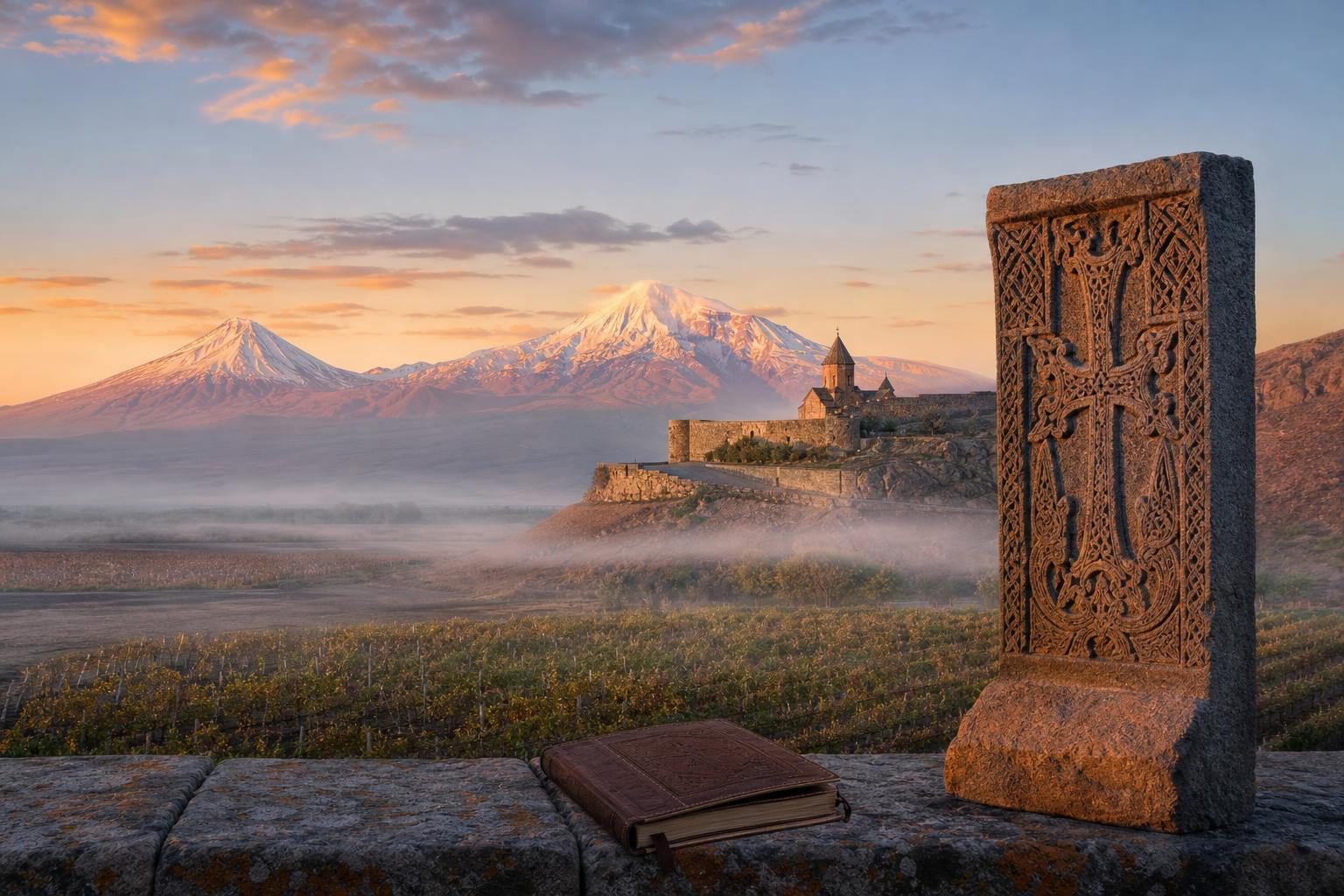
For Christians, Armenia is not just another post-Soviet republic. It was the first country to adopt Christianity as its state religion, around A.D. 300, after Gregory the Illuminator converted King Tiridates III, according to Encyclopaedia Britannica [6]. That heritage is written into the new draft in a complicated way. For the first time in modern history, it would define Armenia as a secular state, while keeping the Armenian Apostolic Church's recognized role in the nation's spiritual life, culture and identity [2]. It would also make a law governing church-state relations mandatory, a change OC Media tied to the government's running dispute with the church's leader, Catholicos Karekin II [2].
That raises the questions any honest observer should ask. Peace is a blessing, and a signed treaty after decades of conflict would be a genuine achievement worth praying for. But a constitution rewritten to satisfy a neighbor's precondition, a voting rule that limits the voice of Armenians abroad, and a new legal opening to regulate a church that has been part of the nation since the fourth century [6] are not small things. Armenians deserve to weigh them on their own terms.
What comes next depends on six votes. Without opposition support, the draft cannot go to the people [1], and Baku has made clear that its signature waits on the final text [3].
Sources
- [1]Opens in a new tab ↗
- [2]Opens in a new tab ↗
- [3]Opens in a new tab ↗
- [4]U.S. News & World Report (AP)Almost All of Nagorno-Karabakh's People Have Left, Armenia's Government SaysOpens in a new tab ↗
- [5]U.S. News & World Report (Reuters)Iran Threatens Planned Trump Corridor Envisaged by Azerbaijan-Armenia Peace DealOpens in a new tab ↗
- [6]Encyclopaedia BritannicaWhen did Armenia adopt Christianity as its state religion?Opens in a new tab ↗
Israel's new parliament is sworn in. Who would you rather see lead Israel?
- Benjamin Netanyahu
- Gadi Eisenkot
- Someone new
- That's for Israelis to decide
More in World News
Russian Jets Set Off Brief Shelter Alert on Korean Island
Tonight on World Watch with Grace Whitfield
Hacked Russian Records Suggest Putin's War Has Killed Up to 700,000 Soldiers
Tonight on Cross-Examination with Dominic Kane
Danish High Court Upholds Tough Integration Law
Tonight on World Watch with Grace Whitfield
Were you there?
If you were at the scene, or this story touched your life, tell us what you saw and what it was like.
Discussion 0
Sign in or create a free account to join the discussion.
No comments yet. Start the discussion.