
 Tonight on World Watch with Grace Whitfield
Danish High Court Upholds Tough Integration Law
Denmark's Supreme Court ruled that evicting tenants under the country's 'parallel societies' housing law is not ethnic discrimination, handing a major win to a policy kept by governments of the left and the right.
Filed November 23, 2026 · 📍 Supreme Court, DC 20543
Were you there? Share your story
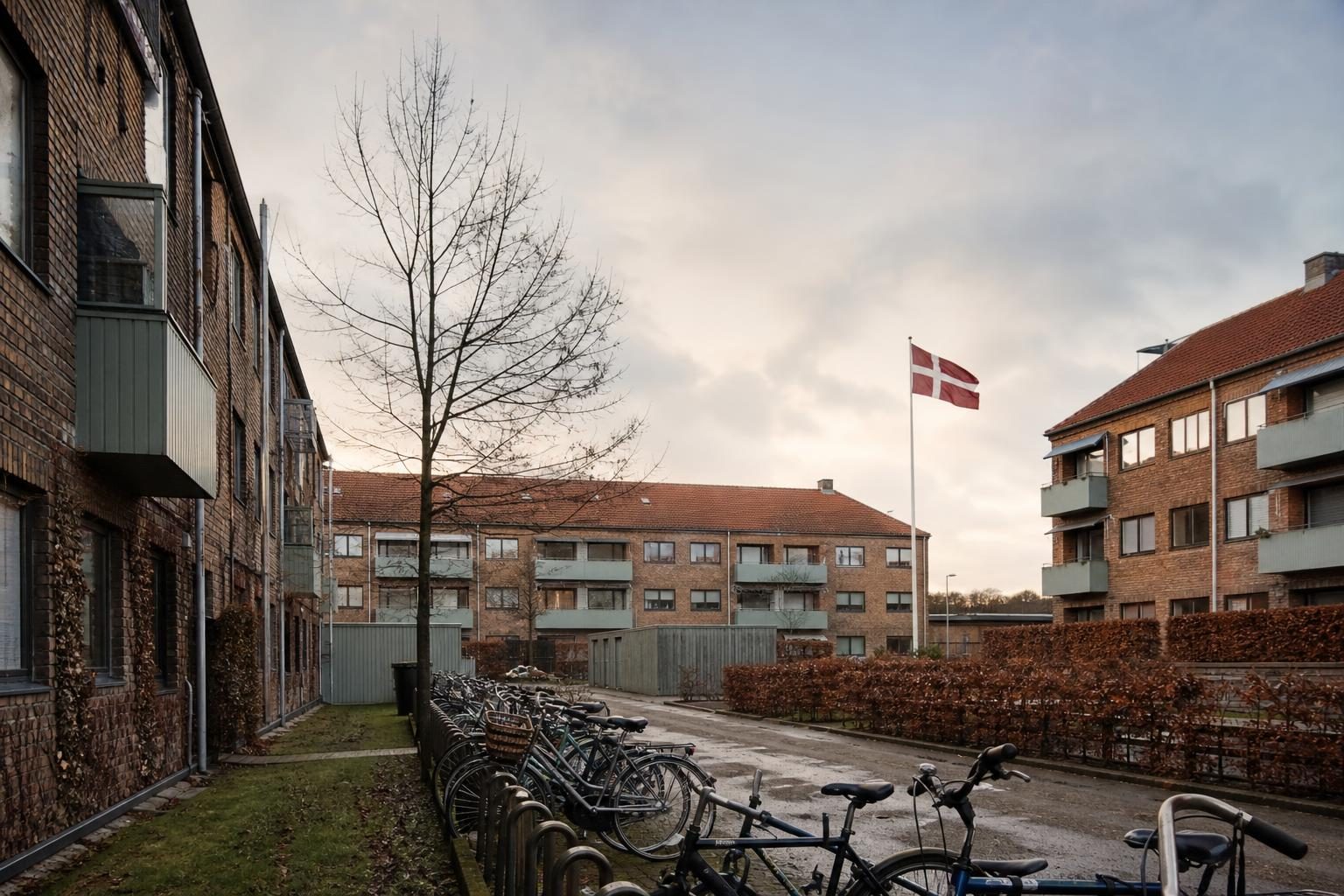
Key points
- Denmark's Supreme Court ruled Monday that evictions under the so-called ghetto law are not discrimination.
- The court said the law's 'non-Western' category is a neutral criterion that covers many ethnic origins.
- Europe's top court had warned last year the law could amount to discrimination but left the final call to Denmark.
- The government says the law is about integration, safety and breaking up isolated neighborhoods.
Denmark's Supreme Court on Monday upheld one of Europe's toughest integration policies, ruling that evicting families from public housing under the country's so-called ghetto law does not amount to ethnic discrimination [1][2].
The case was brought by tenants whose leases were ended as part of the law's push to break up neighborhoods where large shares of residents are immigrants or descendants of immigrants from non-Western countries [1][3]. The families had already lost in the lower courts, and the Supreme Court, the last word in Denmark's judicial system, rejected their claim that the evictions were unlawful discrimination [1][2].
What the Court Decided
At the heart of the case was a single word: "non-Western." The tenants argued that sorting residents into Western and non-Western groups was a stand-in for ethnic origin [5]. The Supreme Court disagreed, finding that the category is a neutral criterion rather than one based on ethnic origin, because each group contains people of many different ethnic backgrounds [2].
The ruling is Denmark's answer to a question sent back by the European Union's highest court. In December 2025, the Court of Justice of the European Union found that the law could amount to ethnic discrimination, but it left the final decision to Denmark's own courts [4]. On Monday, those courts gave it.
What the Law Does
The law, passed in 2018 and officially aimed at what Danes call "parallel societies," targets public-housing areas that combine a high share of residents with non-Western backgrounds with high unemployment, crime and low education or income [5]. In the hardest-hit areas, housing associations must cut the share of family public housing, which has meant selling, tearing down or converting buildings and moving tenants elsewhere [5].
The Danish government argues the law encourages integration and strengthens safety and social cohesion in neighborhoods that had become cut off from the rest of the nation [1][2]. Critics, including human rights groups, call it discriminatory and say it uproots families who have done nothing wrong [4][5].
Why It Matters
For Americans, the most striking thing about Denmark's policy is who stands behind it. This is not a right-wing experiment: governments led by both the center-right and the Social Democrats have kept the law in place, and Denmark remains one of the most generous welfare states in the world [5]. Danish leaders of both parties have concluded that a welcoming country can still insist that newcomers learn its language, join its workforce and live as part of its communities rather than apart from them.
That is a debate America knows well, from sanctuary cities to English-language instruction to the strain on public housing in cities that receive large numbers of migrants. Monday's ruling shows that a modern democracy can set firm expectations for integration and defend them in court.
For now, the nation's highest court has given the policy its strongest legal footing yet.
Sources
- [1]Opens in a new tab ↗
- [2]Opens in a new tab ↗
- [3]The Jerusalem PostDanish court backs 'ghetto law' evictionsOpens in a new tab ↗
- [4]Amnesty InternationalDenmark: ECJ ruling that ghetto law is potentially unlawful is important step in protecting basic human rightsOpens in a new tab ↗
- [5]Opens in a new tab ↗
Israel's new parliament is sworn in. Who would you rather see lead Israel?
- Benjamin Netanyahu
- Gadi Eisenkot
- Someone new
- That's for Israelis to decide
More in World News

Bukele Names 3 Soldiers Killed Fighting Haiti's Gangs
Tonight on Border Watch with Cole Brennan

Costa Concordia's Captain Walks Free Years Early
Tonight on Open Road with Frank Kowalski

Kushner Warns Israel: Change Course or Risk 'Pariah' Status
Today on World Watch with Grace Whitfield
Were you there?
If you were at the scene, or this story touched your life, tell us what you saw and what it was like.
Discussion 0
Sign in or create a free account to join the discussion.
No comments yet. Start the discussion.