
 This morning on Cross-Examination with Dominic Kane
Denmark Names Moscow in a Plot to Kill a Ukrainian American Rapper, and the Case Leaves Hard Questions for the West
Copenhagen expelled Russia's defense attaché after its intelligence service concluded that Russian spies, allegedly working through a banned gang, tried to kill the performer known as Kyivstoner.
Filed November 21, 2026 · 📍 Supreme Court, DC 20543
Were you there? Share your story
Part of our continuing coverage: Hired Guns for Moscow? Two Danes Accused of a Russian-Backed Plot to Kill Ukrainian Rapper Kyivstoner
Key points
- Denmark formally accused Russian intelligence of plotting to kill the U.S.-Ukrainian rapper Kyivstoner before a Sept. 25 concert.
- Russia's defense attaché was given seven days to leave, and Denmark announced tighter visa limits for Russians.
- Danish intelligence says members of a gang banned in 2021 helped plan the attack; Russia denies it.
- The target is an American citizen, raising questions for Washington about protecting Americans abroad.
Denmark has stopped speaking in hints. On Friday, Copenhagen formally accused Russian intelligence of plotting to assassinate a Ukrainian American rapper on Danish soil, and it backed the accusation with action: Russia's defense attaché was ordered out of the country [1][2]. The target, Danish authorities say, was the performer known as Kyivstoner, who had been scheduled to play a concert in Denmark on Sept. 25 [1].
The case had been building quietly for two months. What changed this week is that a NATO ally put its name, and its intelligence service's reputation, behind a direct charge against the Kremlin. That raises hard questions for every Western capital that has watched Russia's shadow campaign in Europe grow bolder, and for Washington in particular, because the man Moscow allegedly wanted dead holds American citizenship.
What Copenhagen Says Happened
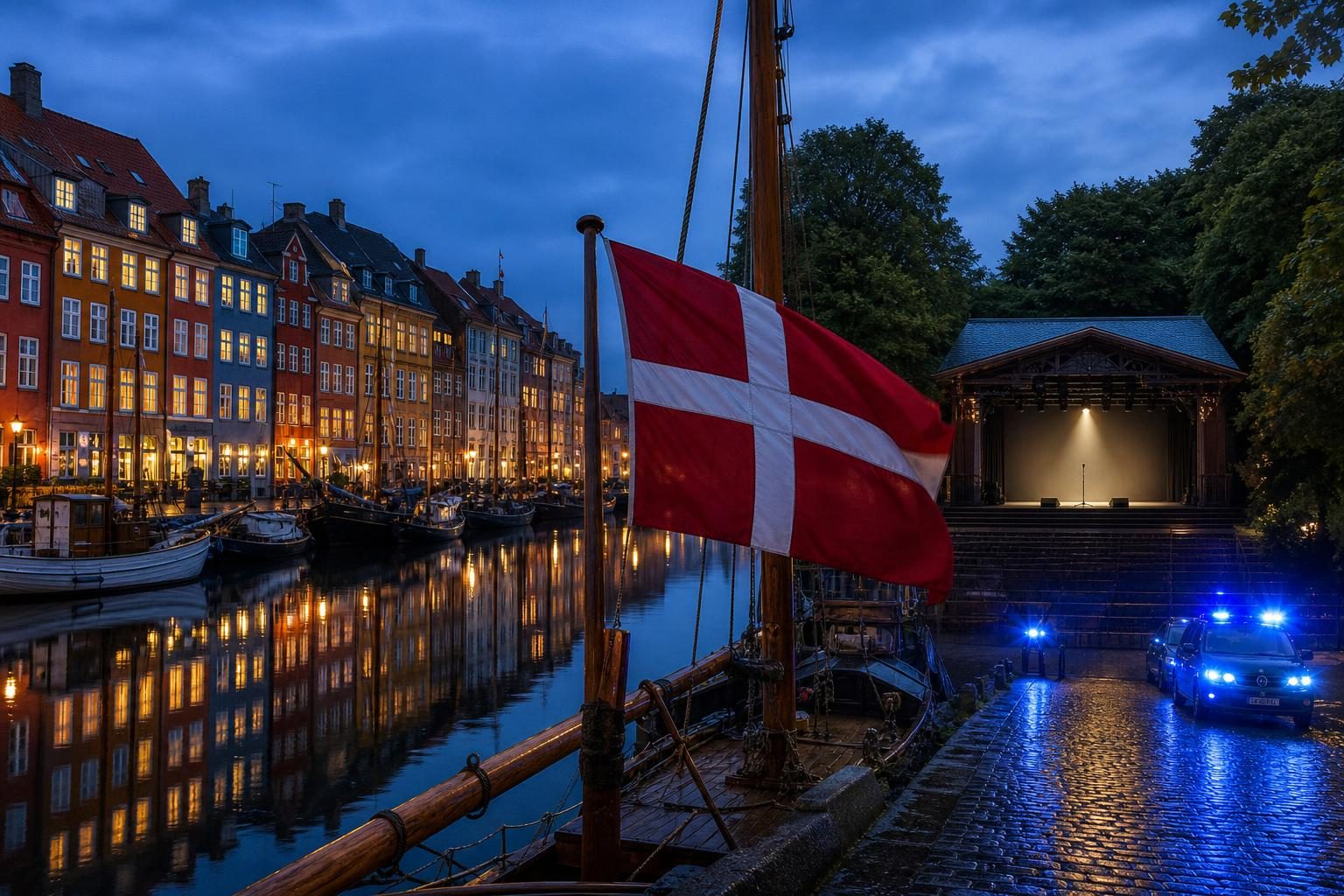
According to Meduza's account of Friday's disclosures, two men were detained near a concert venue in Charlottenlund, a quiet suburb north of Copenhagen, shortly before Kyivstoner was due to take the stage [3]. The show was later canceled, and both men deny any involvement [3]. Our earlier report covered the court hearing in Lyngby where the allegation first surfaced.
Denmark's Security and Intelligence Service, known as PET, said at a Friday news conference that it had concluded the attempt was commissioned by Russia's intelligence services, Meduza reported [3]. The two suspects are accused of attempted murder and of assisting a foreign intelligence service operating in Denmark [3].
PET also pointed to signs that leading members of Loyal to Familia, a criminal gang that Denmark's Supreme Court banned in 2021, helped plan the attack [2][3]. Al Jazeera summed up Copenhagen's charge in plain terms: Moscow planned an assassination using a banned local gang [2].
Who Is Kyivstoner, and Why Would Moscow Want Him?
Kyivstoner is the stage name of Albert Vasiliev, a rapper and video blogger, the Kyiv Independent reported [1]. He holds both Ukrainian and American citizenship, which is why European and American outlets alike describe him as a Ukrainian American [1][4].
Moscow had already made him a target on paper. In July, Russia's Federal Security Service, the FSB, accused him of organizing a drone attack on a Russian defense enterprise, The Moscow Times reported [6]. The FSB opened a terrorism case against him, and he has denied the accusations, according to reports at the time [6]. Those claims have never been tested before any independent court, and they come from the same security apparatus that Denmark now says tried to have him killed.
This is also not the first time a European government has said it stopped someone from reaching him. Meduza noted that Polish authorities said in August they had foiled a separate Russian-linked plot against the rapper in Poland [3]. Two countries, two alleged plots, one target, in under two months. Whatever one thinks of a rapper's music or his politics, a pattern like that is not an accident.
Denmark's Answer: An Expulsion, a Summons and Visa Limits
Denmark gave Russia's defense attaché seven days to leave and summoned Moscow's ambassador to the Foreign Ministry, according to the Kyiv Independent and France 24 [1][4]. France 24 reported that Copenhagen also announced tighter restrictions on visas for Russian citizens [4].
Europe rallied quickly. European Commission President Ursula von der Leyen condemned the alleged plot and pledged full solidarity with Copenhagen, France 24 reported on Saturday [5].
Moscow's answer was a flat denial. Russia rejected the charge and said there was no evidence for it, Al Jazeera reported [2]. Danish prosecutors will now have the chance to test PET's conclusions in open court, which is exactly where a claim this serious belongs.
The Gang Connection Is the Story Inside the Story
The most troubling detail may be the alleged use of a banned street gang. If PET's assessment holds, this case is a textbook example of how a hostile government can work in a free country without risking its own officers: a foreign service picks the target, and local hired hands take the risk.
That approach is cheap for Moscow and expensive for everyone else. It turns every gang feud and every petty criminal with debts into a potential instrument of a foreign power. It forces democracies to answer with police work, prosecutions and courtrooms, which are slower than a hit squad but far more trustworthy. Denmark, to its credit, made arrests before anyone was hurt, built a case, and only then went public with its accusation [1][3].
There is a lesson in that order of operations. Free nations do not answer lawlessness with lawlessness. They answer it with evidence, due process and steady resolve, and they make the other side pay a price that is visible to the world. The expulsion of a senior military diplomat is exactly that kind of price.
A Small Ally With an Outsized Role
It is worth remembering who is taking this stand. Denmark is a small nation with a large strategic footprint, and as we reported this week, its parliament voted unanimously to clear the way for two new American bases in Greenland. Copenhagen has every reason to keep its relationship with Moscow calm and quiet. Instead, it chose to name the Kremlin publicly and expel a senior Russian military officer [1][2].
That choice deserves recognition from Americans. Allies are not only measured by the size of their armies, but by their willingness to defend shared principles when it would be easier to look away. A government that refuses to let a foreign power hunt its critics in quiet suburbs is defending the same freedoms Americans hold dear: the freedom to speak, to perform, to criticize a dictator and to walk home safely afterward.
It also sends a message to Russian intelligence officers across Europe. Every operation that is exposed, every officer who is sent home and every hired hand who ends up in a courtroom makes the next plot harder to staff and more costly to attempt.
Hard Questions for Washington
The target is an American citizen. That fact alone should put this case on the desks of the State Department, the FBI and the congressional intelligence committees.
Three questions deserve straight answers. First, were American agencies aware of the threats against a U.S. citizen in Poland and then in Denmark, and was information flowing between allies as it should? Second, if Russian intelligence is willing to try twice inside NATO countries, what is being done to protect Americans living abroad who have angered the Kremlin? Third, how should the United States respond when a close ally formally attributes an assassination plot against an American to Moscow?
None of those questions requires shouting. They require the kind of firm diplomacy that tells Moscow plainly that attempted murder on allied soil carries consequences. Whatever path toward peace in Ukraine emerges, negotiations work best when the other side understands that America notices, remembers and responds when its citizens are targeted.
What Comes Next
The Danish criminal case will move forward, and prosecutors will eventually have to show a court the evidence behind PET's assessment [3]. The European Union will face questions about whether to follow Denmark's lead on visas for Russian citizens [4][5]. And Kyivstoner, who by these accounts has now been the target of two foiled plots, will have to decide whether and where he can safely perform again [1][3].
For ordinary Americans, the takeaway is simple. Freedom of speech does not end at the water's edge, and neither should our government's protection of the citizens who exercise it. Denmark did its part this week. The rest of the alliance, including our own government, should take careful note.
Sources
Israel's new parliament is sworn in. Who would you rather see lead Israel?
- Benjamin Netanyahu
- Gadi Eisenkot
- Someone new
- That's for Israelis to decide
More in World News

Brazil's Bolsonaro Rushed to a Brasilia Hospital With an Intestinal Blockage as Doctors Try to Avoid Surgery
Overnight on World Watch with Grace Whitfield

Two Salvadoran Soldiers Killed Handling Explosives in Haiti
Last night on World Watch with Grace Whitfield

Two Men Killed as Training Glider Plunges Into Scotland's Loch Leven
Yesterday on World Watch with Grace Whitfield
Were you there?
If you were at the scene, or this story touched your life, tell us what you saw and what it was like.
Discussion 0
Sign in or create a free account to join the discussion.
No comments yet. Start the discussion.