
 Tonight on Order in the Court with Harold Whitmore
What the East Potomac Golf Ruling Does, and Doesn't, Do: A Two-Week Pause, a Crumbling Seawall and a Long Fight Ahead
A federal judge kept the historic Washington course open past its planned Nov. 15 closing. The order is narrow, the government says safety is the issue, and the merits are still undecided.
Filed November 15, 2026 · 📍 Washington, DC 20001
Were you there? Share your story
Key points
- Judge Ana Reyes issued a temporary restraining order the day before East Potomac's planned Nov. 15 closing.
- The order keeps the park open at its usual hours through Nov. 28 but does not require the government to run the golf operation.
- The administration cites a deteriorating seawall that floods the park and would cost hundreds of millions to repair.
- The challengers argue the renovation violates the 1897 act of Congress that created the park.
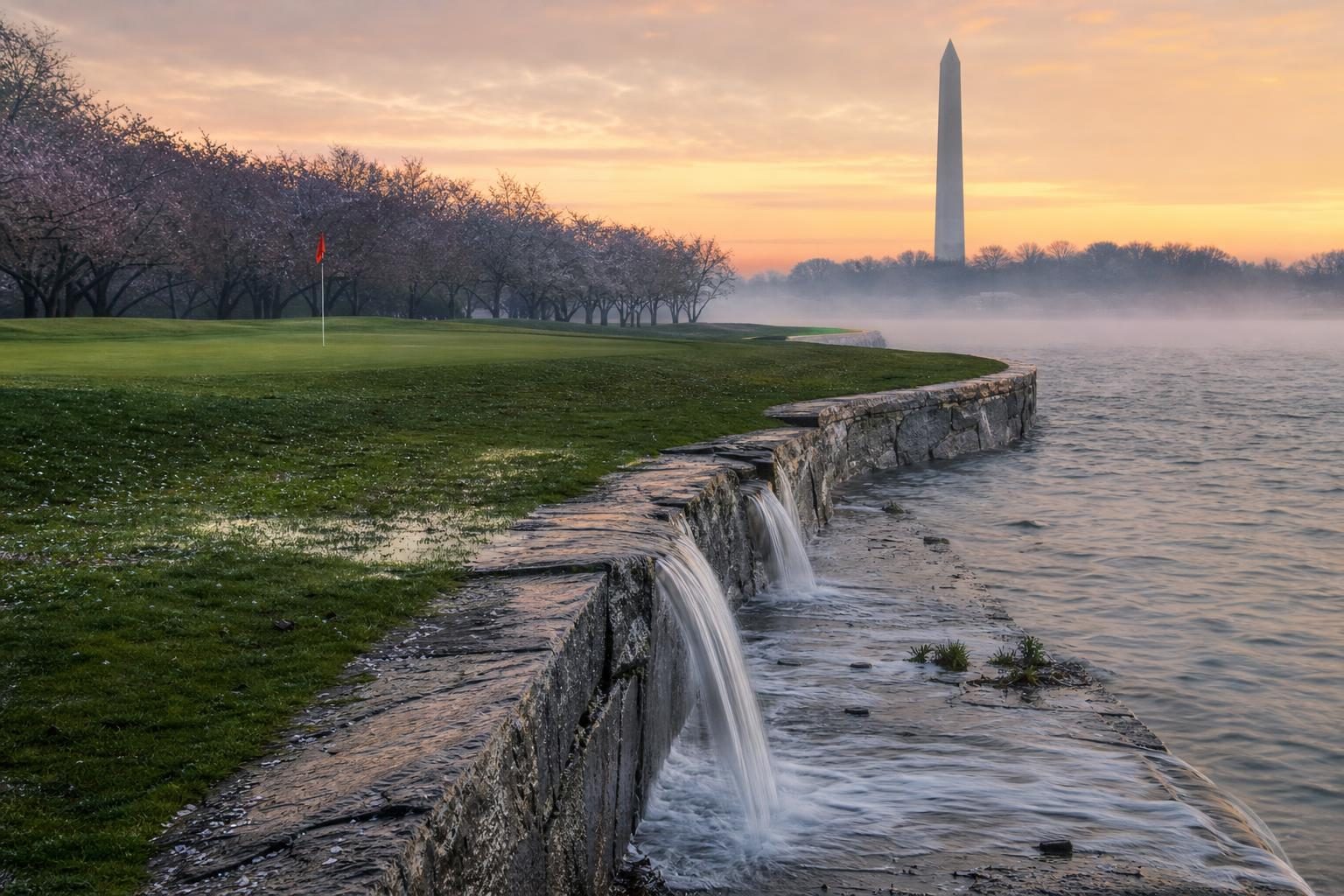
The Trump administration's plan to rebuild the historic East Potomac Golf Links in Washington hit another legal speed bump this weekend, but the order a federal judge issued on Saturday is narrower than many headlines suggest. Here is what the judge did, what she did not do and where the case goes from here.
What the Judge Ordered
U.S. District Judge Ana Reyes issued a temporary restraining order on Saturday, a day before the course was set to close on Nov. 15 for about 15 months of work, NPR reported [1]. The order imposes roughly a two-week pause [1][4].
The details matter. The order bars the government from closing East Potomac Park and the golf course during the daily hours they were open as of Nov. 14, according to WJLA [2]. It does not require the government to take on any active management of either one, WJLA reported, which means the park must stay open to the public but the administration is not being told how to run the golf operation [2]. The order lasts through Nov. 28 or until the court says otherwise [2].
In other words, this is a pause on closing the gates, not a ruling that the renovation is illegal. A temporary restraining order is one of the most limited tools a federal judge has. It is meant to freeze things in place for a short time so the court can hear more argument, and it does not decide who wins the case.
The Administration's Case: Safety First
The government's lawyers told the court the closure was about safety. Justice Department attorney Adam Gustafson argued that the whole park was being closed for safety reasons, and the National Park Service pointed to a deteriorating seawall and the departure of National Links Trust, the nonprofit that has operated the course, WJLA reported [2].
That seawall is a real problem. The Hill reported that the damaged seawall, which has been in poor shape for years, leads to frequent flooding at the park and will cost hundreds of millions of dollars to fix [3]. The Hill also noted that the government has offered few details so far on how that repair would be paid for [3].
The administration's broader goal is to turn the aging public course into a championship venue in the nation's capital [3]. Supporters of the project see it as part of the President's push to restore Washington's landmarks, and it is fair to say that a crumbling seawall and a flood-prone peninsula are not anyone's idea of a showcase for the capital.
The Challengers' Case
The lawsuit was filed in February by the DC Preservation League and two local golfers, who are challenging the plan to remake the course, the Associated Press reported [6]. Their complaint argues that the overhaul breaks an 1897 act of Congress that dedicated the land to public recreation, and it also claims violations of federal environmental, historic preservation and administrative procedure laws [6].
This is not the first time Judge Reyes has ruled against the administration in the case. She had already restricted tree removal at the park, and in late October she ordered an inquiry into whether Justice Department officials misled the court about their plans for the course, NPR reported [5]. Reyes, an appointee of President Biden, has been sharply critical of the government's lawyers during the dispute [4][5].
Why It Matters
Cases like this one test a basic question about the separation of powers: how much say should a single district judge have over how the executive branch manages federal property? Under the Constitution, Congress makes the rules for federal lands, and the President carries them out. The challengers argue that the administration is ignoring a law Congress passed in 1897 [6]. The administration argues it is doing the job the Park Service was created to do, including fixing a dangerous seawall [2][3].
Those are fair arguments on both sides, and they deserve a full hearing on the merits rather than a string of emergency orders. Americans of every political stripe should want the courts to decide these disputes on the law, quickly and clearly, so that a public park does not sit in legal limbo for months.
What Comes Next
The restraining order runs through Nov. 28 unless the judge changes it [2]. Before then, expect the court to consider whether a longer injunction is warranted, and expect the administration to keep pressing its safety arguments. The bigger questions in the case, including the judge's earlier limits on tree removal [5], could eventually land before the U.S. Court of Appeals for the D.C. Circuit.
For now, golfers and walkers can keep using the park at its usual hours. Whether they will one day tee off on a rebuilt championship course is a question the courts have not yet answered.
Sources
Is America headed in the right direction?
- Right direction
- Wrong direction
- Mixed
- Too soon to tell after the midterms
More in U.S. News
Port of New Orleans Sues and Seizes the Tanker That Struck a Docked Riverboat in the 'Miracle on the Mississippi'
Yesterday on The Verdict Room with Natalie Sinclair

Flights Are Moving Again, but the Ground Stop's Aftershock Cancels Thousands More on Saturday
Yesterday on Open Road with Frank Kowalski
FAA Grounds Every Departing Flight Nationwide After Communication Failure at Air Traffic Control Centers
Friday night on Breaking Now with Nathan Brooks
Were you there?
If you were at the scene, or this story touched your life, tell us what you saw and what it was like.
Discussion 0
Sign in or create a free account to join the discussion.
No comments yet. Start the discussion.