
 Overnight on Free Speech Frontline with Ryan Mercer
Mast Opens the Books: House Panel Shows Commerce Cleared 879,868 Advanced Chips for Chinese Buyers in Six Months
The Foreign Affairs Committee's Republican chairman released license records showing approvals for Nvidia and AMD processors, including for firms tied to China's military. Approval is not delivery, but Congress wants answers.
Filed November 20, 2026 · 📍 Pentagon, VA 22202
Were you there? Share your story
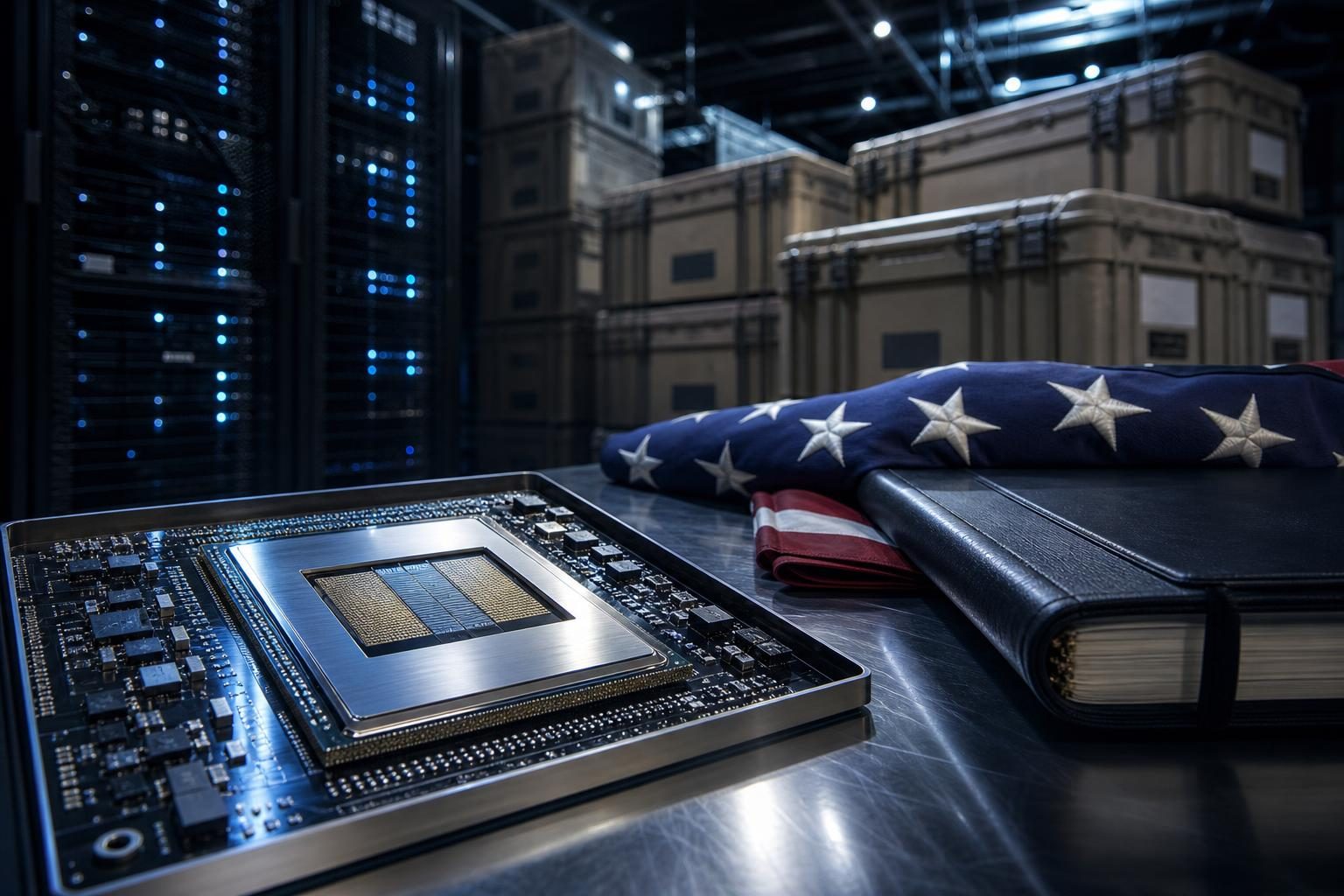
Part of our continuing coverage: Nvidia Halts Its Licensed Hopper Chip Shipments to China as Beijing Threatens to Answer America's New Remote-Access Rule
Key points
- The House Foreign Affairs Committee says nearly 900,000 Nvidia and AMD chips were approved for Chinese companies from December 2025 through May 2026.
- Chairman Brian Mast released the license records; buyers reportedly include Tencent, Alibaba and firms on a Pentagon list of military-linked companies.
- A license is permission to sell, not proof of delivery, and Nvidia has since halted its licensed shipments to China.
- The release comes amid scrutiny of former Nvidia CEO Jensen Huang's alleged links to a suspected Chinese spy.
The federal government approved the sale of nearly 900,000 advanced computer chips made by Nvidia and AMD to Chinese companies over a six-month stretch, from December 2025 through May 2026, the House Foreign Affairs Committee said Thursday, NTD News reported [1].
The committee released the export records amid the growing scrutiny of former Nvidia chief executive Jensen Huang and his alleged ties to a suspected Chinese spy, Al Jazeera reported [2]. The release came from the committee's Republican chairman, Rep. Brian Mast of Florida, who made public the license records for Nvidia and AMD chips bound for China [4].
What the Records Show
The approvals covered 879,868 chips, according to The Times of India, which reported that the buyers included major Chinese technology companies such as Tencent and Alibaba, as well as firms linked to China's military [3]. International Business Times reported that companies on a Pentagon list of firms tied to the Chinese military were among the approved buyers [5].
The chips at issue are the high-powered processors that run the largest data centers in the world and train the most advanced computer models. They are among the most valuable technology the United States makes, and they sit at the center of the economic and military race between Washington and Beijing.
It is important to be clear about what an approval is and is not. A license from the Commerce Department gives a company permission to sell. It does not mean the chips were shipped or delivered. And the picture has already shifted this week: Nvidia has stopped shipping its U.S.-approved data center chips to China as Washington tightens its export rules, the Hindustan Times reported [6].
Why Congress Is Asking Questions
The timing of the release is no accident. Nvidia has been in the headlines for weeks after Huang stepped down amid scrutiny of his alleged links to a suspected Chinese spy [2]. That scandal has raised a simple question in Washington: who was watching the flow of America's most sensitive technology to its chief rival?
By putting the license records in public view, the committee has given Congress and the public a way to answer that question with facts instead of guesses. The approvals have already prompted lawmakers to press for answers about how the licenses were granted, The Times of India reported [3].
This is how oversight is supposed to work. A Republican chairman is asking hard questions of a Republican administration on behalf of the American people. That should reassure voters who worry that party loyalty keeps Washington from policing itself.
The Case for Tighter Controls
Conservatives have long argued that America cannot out-compete a rival by arming it. China's government has made no secret of its ambition to lead the world in advanced computing, and its strategy of tying civilian industry to military needs is well documented. When a Chinese firm tied to the People's Liberation Army buys American chips, the line between a business deal and a security risk gets very thin.
There is a fair argument on the other side. American chipmakers say sales abroad fund the research that keeps them ahead, and that if they do not sell, foreign competitors will. Some limited sales to purely commercial buyers may make sense. But selling to companies on the Pentagon's own list of military-linked firms is hard to defend under any version of that argument [5].
The records also show how large the demand is. Hundreds of thousands of top-end chips in six months is a measure of how hungry China's tech sector is for American technology, and how much leverage the United States holds as long as it keeps that technology at home [1][3].
What Comes Next
The committee's release is likely the start of a longer inquiry, not the end of one. Lawmakers will want to know which officials signed off on which licenses, what conditions came with them, and whether any of the approved chips reached military buyers [3][4].
For the administration, the release is a chance to show that the licensing system works and to tighten it where it does not. Nvidia's decision to halt its licensed shipments to China has already taken some pressure off [6]. A clear, public standard for who can buy America's best chips, and who cannot, would do even more.
The lesson is an old one. Ronald Reagan won the Cold War in part by keeping America's best technology out of Soviet hands. The same principle should guide the contest with Beijing: trade where it helps American workers and families, and draw a hard line where it helps a rival's military.
Sources
- [1]NTD NewsUS Signed Off on Sales of Nearly 900,000 AI Chips to China in Six Months, House Committee SaysOpens in a new tab ↗
- [2]Opens in a new tab ↗
- [3]The Times of IndiaTrump admin approved sales of nearly 9 lakh Nvidia and AMD AI chips for Chinese firmsOpens in a new tab ↗
- [4]Opens in a new tab ↗
- [5]International Business TimesUS Approved 880,000 AI Chips For China. Pentagon-Linked Firms On List.Opens in a new tab ↗
- [6]Opens in a new tab ↗
Do you trust AI chatbots to give straight answers on politics?
- Yes
- Sometimes
- No, they lean left
- I don't use them
More in Technology
FCC Cuts China's State-Owned Carriers Off From Direct Access to American Phone Numbers
Last night on Free Speech Frontline with Ryan Mercer
Did Nvidia Chips Reach China? California Wants Answers
Last night on Free Speech Frontline with Ryan Mercer

EU Says AI-Assisted Cyberattack Hit Its Executive Arm in October, a Warning for U.S. Defenses
Yesterday on Free Speech Frontline with Ryan Mercer
Were you there?
If you were at the scene, or this story touched your life, tell us what you saw and what it was like.
Discussion 0
Sign in or create a free account to join the discussion.
No comments yet. Start the discussion.