
This morning on Power Play with Connor Maguire
Two Days to the Deadline: Baseball's Salary Cap Fight Goes to the Wire as a Lockout Looms
The labor deal expires Monday night. Owners want a cap and a floor, the players call it a pay cut, and the fight is already in federal court.
Filed November 29, 2026 · 📍 New York City, NY 10007
Were you there? Share your story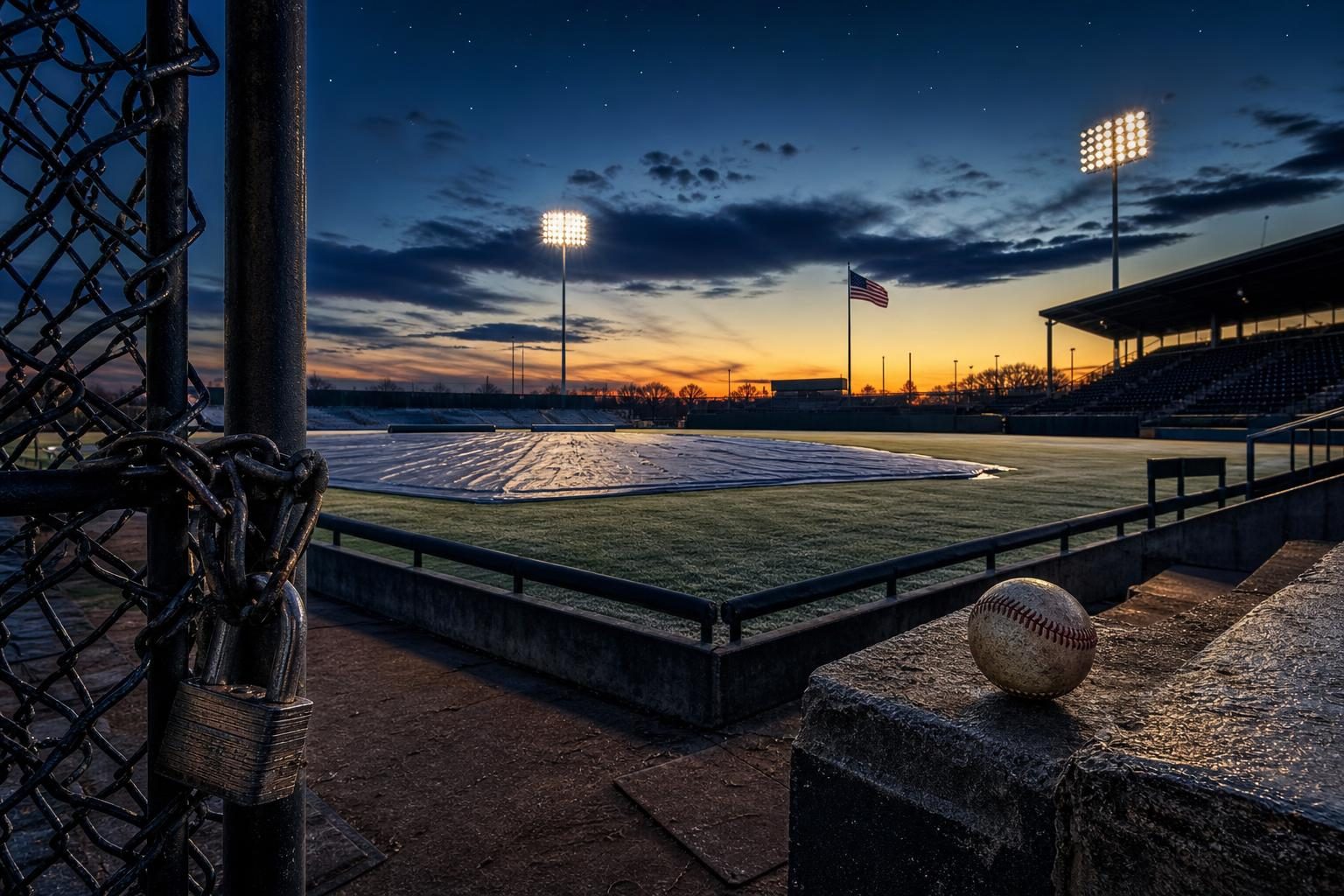
Part of our continuing coverage: Into Court Before the Cold: Baseball's Owners Sue the Players' Union to Clear the Way for a Lockout as the Dec. 1 Deadline Nears
Key points
- MLB's labor agreement expires at 11:59 p.m. ET Monday, Dec. 1, and a lockout is widely expected.
- Owners want a salary cap and floor; the union says a hard cap would cost players at least $500 million a year.
- MLB sued the players' association in federal court to have a lockout declared legal.
- Teams are racing to finish signings and trades before the doors close.
Baseball has less than two days of labor peace left. The collective bargaining agreement between Major League Baseball and its players' union runs out at 11:59 p.m. Eastern on Monday, Dec. 1, and with no new deal announced, a lockout is widely expected to follow [1][5].
For a sport that sells itself on summer evenings, hot dogs and fathers teaching their kids to keep score, the next two days carry real weight. A lockout would not cancel a single game right away, but it would freeze the offseason, and nobody can say how long the freeze would last.
The Fight Over a Cap
The heart of the dispute is money, and how it gets divided. Commissioner Rob Manfred has told reporters he could not see owners ratifying a new agreement without both a salary cap and a salary floor, and that the league would decide on a lockout "at the last possible moment," according to AFP [3].
The owners' latest plan, AFP reported, would split revenue 50-50 with the players, set a cap of $258.2 million and a floor of $180.2 million beginning in 2028, and keep the current system in place for 2027 [3]. The league's pitch is that a floor would force low-spending clubs to invest in their rosters, giving fans in smaller markets a fairer shot.
The players see it very differently. Union chief Bruce Meyer has argued that a hard cap would cost players at least $500 million a year in lost pay, Front Office Sports reported, a figure the league strongly disputes [4]. The union has treated any cap as a nonstarter since bargaining began.
From the Bargaining Table to the Courthouse
The standoff moved into federal court the day before Thanksgiving. MLB sued the players' association, asking a judge to declare that a lockout would be legal and trying to head off any attempt by the union to decertify and bring an antitrust challenge against a work stoppage, The Guardian reported [1].
The New York Post reported that the 38-page complaint was filed in U.S. District Court in Manhattan by the league and the companies that own its 30 teams, and that it names the union along with the eight players on its executive subcommittee, a group that includes star pitcher Tarik Skubal [2]. Whatever the legal merits, the filing showed how far apart the two sides remain with the clock running down.
The Rush to Beat the Clock
While the lawyers trade filings, front offices are racing. Once a lockout begins, teams cannot sign free agents from other clubs or make trades, and players are kept out of team facilities, according to NBC Sports' guide to the offseason calendar [5]. That has turned the final days of November into a sprint.
Yahoo Sports' running free agency tracker reported that the Mets agreed to an eight-year, $130 million extension with young outfielder Carson Benge, and that left-hander Adrian Morejón is headed to Toronto on a five-year, $115 million deal [6]. More moves are likely before Monday night, as agents push to get their clients settled before the doors close.
What It Means for Fans
Here is my take. Both sides have legitimate points. The owners are right that baseball has a competitive-balance problem when a handful of clubs can outspend everyone else many times over, and a payroll floor would hold the teams that pocket shared revenue without investing in winning to account. The players are right to be wary of any system that limits what the best in the game can earn.
But the people with the most at stake never sit at the table: the families who plan a spring break around Florida or Arizona, the kids who wait all winter for pitchers and catchers to report, the small-business owners near ballparks who count on 81 home dates. Baseball has been here before, as recently as the winter of 2021-22, and every stoppage costs the game goodwill it cannot easily win back.
What Comes Next
If no agreement is reached by the Monday night deadline, the owners are widely expected to lock the players out, a decision Manfred has said will come at the last moment [3][5]. The federal lawsuit will move on its own track [1][2]. Talks can continue during a lockout, and spring training is still months away, which means there is time to get a deal done if both sides want one.
The hope here is simple: that the owners and players remember that the game belongs to the fans who love it, and that they find a fair deal before the first spring practice is in doubt.
Sources
- [1]Opens in a new tab ↗
- [2]Opens in a new tab ↗
- [3]The Manila Times (AFP)MLB boss sees no union deal without salary capOpens in a new tab ↗
- [4]Front Office SportsMLBPA says owners' salary cap would cut player pay by $500MOpens in a new tab ↗
- [5]Opens in a new tab ↗
- [6]Yahoo SportsMLB free agency news, live updatesOpens in a new tab ↗
Should athletes keep politics out of the game?
- Yes, just play
- They can speak off the field
- They have every right to speak out
More in Sports

Five Touchdowns, No Ego: Gunner Stockton Leads No. 1 Georgia to a Record 63-0 Shutout in Clean, Old-Fashioned Hate
This morning on Saturday Nation with Wade McAllister

Crocombe Holds His Nerve: England Edge Australia by Seven Runs in Sydney to Clinch the T20 Series
This morning on Fourth Quarter with Andre Coleman
No Decision Yet: Kyle Whittingham Says He Knows the Fix as Michigan Weighs a $24.75 Million Question After 45-0
This morning on Fantasy Huddle with Abby Lawson
Were you there?
If you were at the scene, or this story touched your life, tell us what you saw and what it was like.
Discussion 0
Sign in or create a free account to join the discussion.
No comments yet. Start the discussion.