
 Tonight on First Principles with Benjamin Stone
Doug Ford Said What Every Parent Thinks. The Law Should Back Them Up
After a deadly Toronto home invasion, Ontario's premier said he would use his gun to protect his family, and critics called it irresponsible. The Constitution, Florida law and Scripture show why the right to defend your home is worth defending.
Filed November 26, 2026 · 📍 Supreme Court, DC 20543
Were you there? Share your story
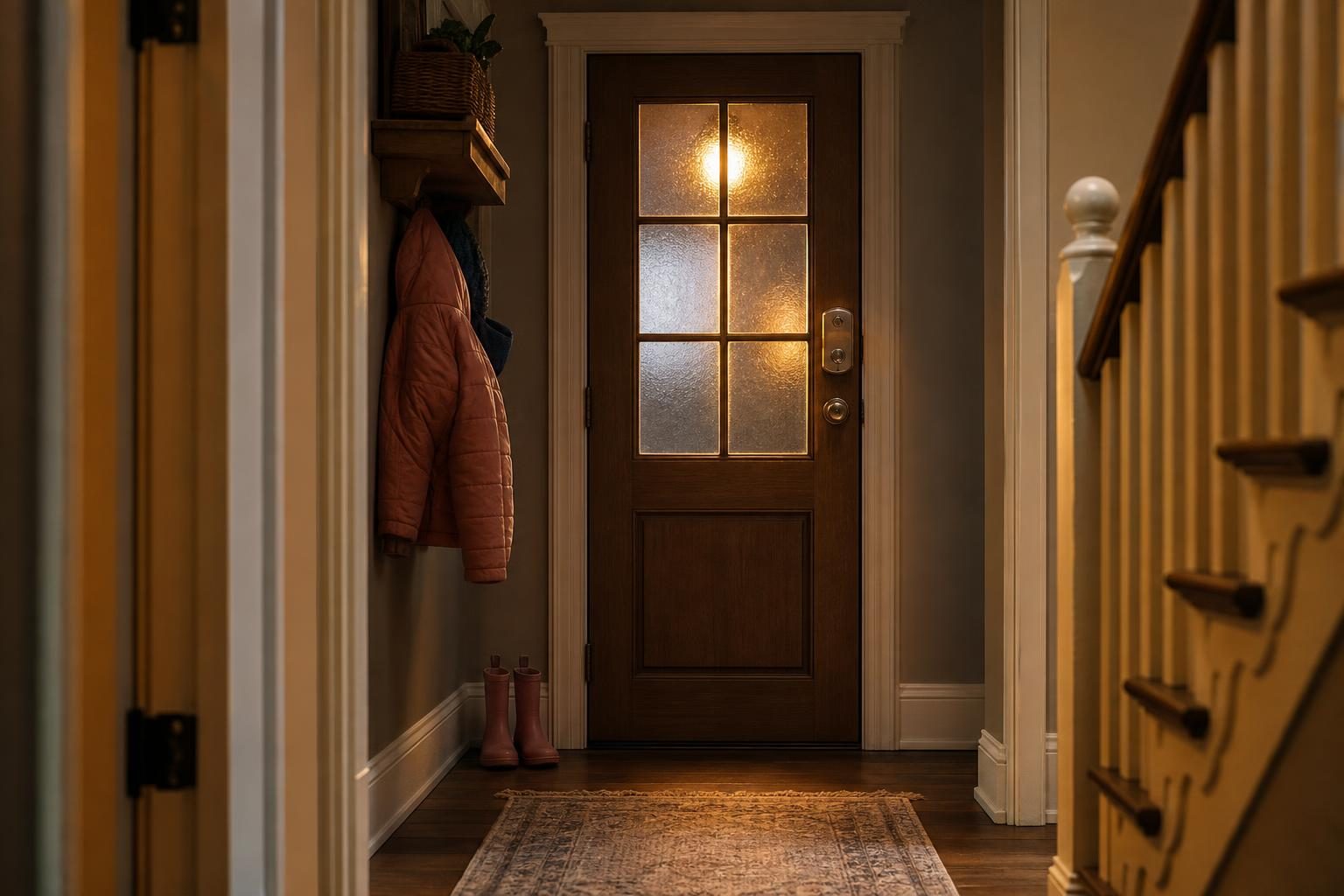
Part of our continuing coverage: Man Shot Dead in Pre-Dawn Home Invasion Near Toronto's Casa Loma
Key points
- Ontario Premier Doug Ford said he is a legal gun owner and would use his firearm against an armed intruder.
- NDP Leader Marit Stiles called the remarks irresponsible; police urged residents to call 911 when it is safe.
- Canadian law allows only force that is reasonable in the circumstances and has no broad castle doctrine.
- The Supreme Court's Heller ruling and Florida's home-protection law back armed self-defense in the home.
Ontario Premier Doug Ford said on Thursday what a great many fathers and mothers think when they lie awake listening for a noise downstairs. His critics called it irresponsible. The record, the law and plain common sense are on his side.
Ford, speaking after a 39-year-old Toronto musician was shot and killed during a pre-dawn home invasion near Casa Loma on Wednesday, said he is a legal gun owner and would use his firearm "in a heartbeat" if an armed intruder came through his door, CTV News reported [1]. CBC News reported that the premier encouraged Ontarians to fight back against home invaders and said he would not hesitate to shoot one [2]. He suggested that people without firearms defend their homes with whatever they have, the reports said [1][2].
The reaction was swift. Ontario NDP Leader Marit Stiles called the remarks irresponsible and argued that the province would do more good by clearing court backlogs and keeping criminals off the street, according to CTV News [1]. Toronto police did not comment directly on what the premier said but stressed the importance of calling 911 as soon as it is safe, the outlet reported [1].
The objection, stated fairly
The critics' case deserves a fair statement. They worry that a premier urging people to arm themselves invites panic, encourages ordinary residents to take on violent criminals, and could lead to tragedy. Calling police first is sound advice, and nobody should go looking for a confrontation.
But that is not what Ford described. He described a family that is already in the confrontation, with an intruder inside the house. In that moment, the question is not whether the government would prefer citizens to wait. It is whether a mother or father has the right to stop a violent stranger before he reaches the children's bedroom.
What the law says on each side of the border
In Canada, the answer is a qualified yes. The Criminal Code allows a person to use force to defend themselves or others, but the force must be reasonable in the circumstances, as The Canadian Press explained in a fact file on home invasions [3]. Canada has no broad castle doctrine, so whether a homeowner who fought back acted lawfully is judged case by case, after the fact [3].
That uncertainty is why the debate is bigger than one premier's choice of words. In March, federal Conservatives introduced a private member's bill to create a stand-your-ground rule for home invasions, so that force used against an illegal intruder would be presumed justified, CP24 reported [4].
Americans already settled this question, and the Constitution is why. In District of Columbia v. Heller in 2008, the Supreme Court held that the Second Amendment protects an individual right to keep a handgun in the home for self-defense, writing that "the inherent right of self-defense has been central to the Second Amendment right" [5]. The Court singled out the home as the place where the need to defend self, family and property is most acute, and it drew on the long English common-law tradition, including Blackstone, to show that this right came before the Constitution itself [5].
Florida writes the same principle into its statutes. Under Florida law, a person in his or her own home has no duty to retreat, and someone who uses defensive force against an intruder who is unlawfully and forcibly entering the home is presumed to have held a reasonable fear of death or great bodily harm [6]. The burden falls where it belongs: on the man who broke in, not the family he terrorized.
Why the principle matters
None of this is new. Scripture itself draws the line: the Law of Moses held that a homeowner who struck down a thief breaking in at night bore no guilt for his blood. The idea that a family's home is its castle runs from the Bible through the common law to the Bill of Rights.
Ford's words were blunt, and reasonable people can wish he had chosen them more carefully. But the instinct behind them is not reckless. It is the oldest duty a parent has. A government that tells law-abiding citizens to wait, while it keeps the courts slow and repeat offenders on the street, is asking them to bear all the risk of its own failures.
What comes next
Toronto police are investigating the killing near Casa Loma as a homicide [1][2]. And the debate over whether Canada should presume that a homeowner who defends his family acted lawfully, the idea behind the Conservative bill, now has a premier's voice behind it [1][4].
Canadians will decide that question for themselves. Americans can offer one piece of experience: when the law trusts families to defend their own homes, it sends a message criminals understand, and it reminds everyone whose side the law is on.
Sources
- [1]Opens in a new tab ↗
- [2]CBC NewsFord says he wouldn't hesitate to shoot a home invader, encourages Ontarians to 'fight back'Opens in a new tab ↗
- [3]The Canadian PressFact File: Canadians can defend against home invaders, but force must be 'reasonable'Opens in a new tab ↗
- [4]Opens in a new tab ↗
- [5]Cornell Legal Information InstituteDistrict of Columbia v. Heller (No. 07-290)Opens in a new tab ↗
- [6]Opens in a new tab ↗
Have you ever been censored or shadow-banned on social media?
- Yes
- I think so
- No
- I'm not on social media
More in Pushback
A Tip Line Isn't an Invasion: Why Mexico Should Welcome the DEA's Call to Sinaloa
Tonight on Border Watch with Cole Brennan

Plymouth Tried a Common Store First. Mamdani's City-Run Groceries Should Study What Happened
Tonight on First Principles with Benjamin Stone
Good Advice, Bad Law: California Turns a Seat-Belt Checklist Into a $490 Ticket
Tonight on Hollister Tonight with Jack Hollister
Were you there?
If you were at the scene, or this story touched your life, tell us what you saw and what it was like.
Discussion 0
Sign in or create a free account to join the discussion.
No comments yet. Start the discussion.