
 This morning on The Bottom Line with Douglas Park
Democrats Want the EV Tax Credit Back, Even Doubled. The Record Says Taxpayers Shouldn't Pay for It Again
Fresh off their midterm wins, some House Democrats want to revive and expand federal EV subsidies. The research on who actually collected the old credit points the other way.
Filed November 15, 2026 · 📍 Berkeley, CA 94704
Were you there? Share your story
Key points
- A House Democratic bill would revive the federal EV credit and double it to as much as $15,000.
- A Berkeley study of 2009-2021 tax filings found the top 5% of earners got about half of EV credit benefits.
- Even with income caps, the credit stayed open to married couples earning up to $300,000.
- EV makers aren't counting on a revival, and any bill faces a presidential veto.
Democrats won big in the midterms on a promise to make life more affordable. One of the ideas getting attention on their side is bringing back the federal tax credit for electric vehicles, and in one version, doubling it.
What They Are Proposing
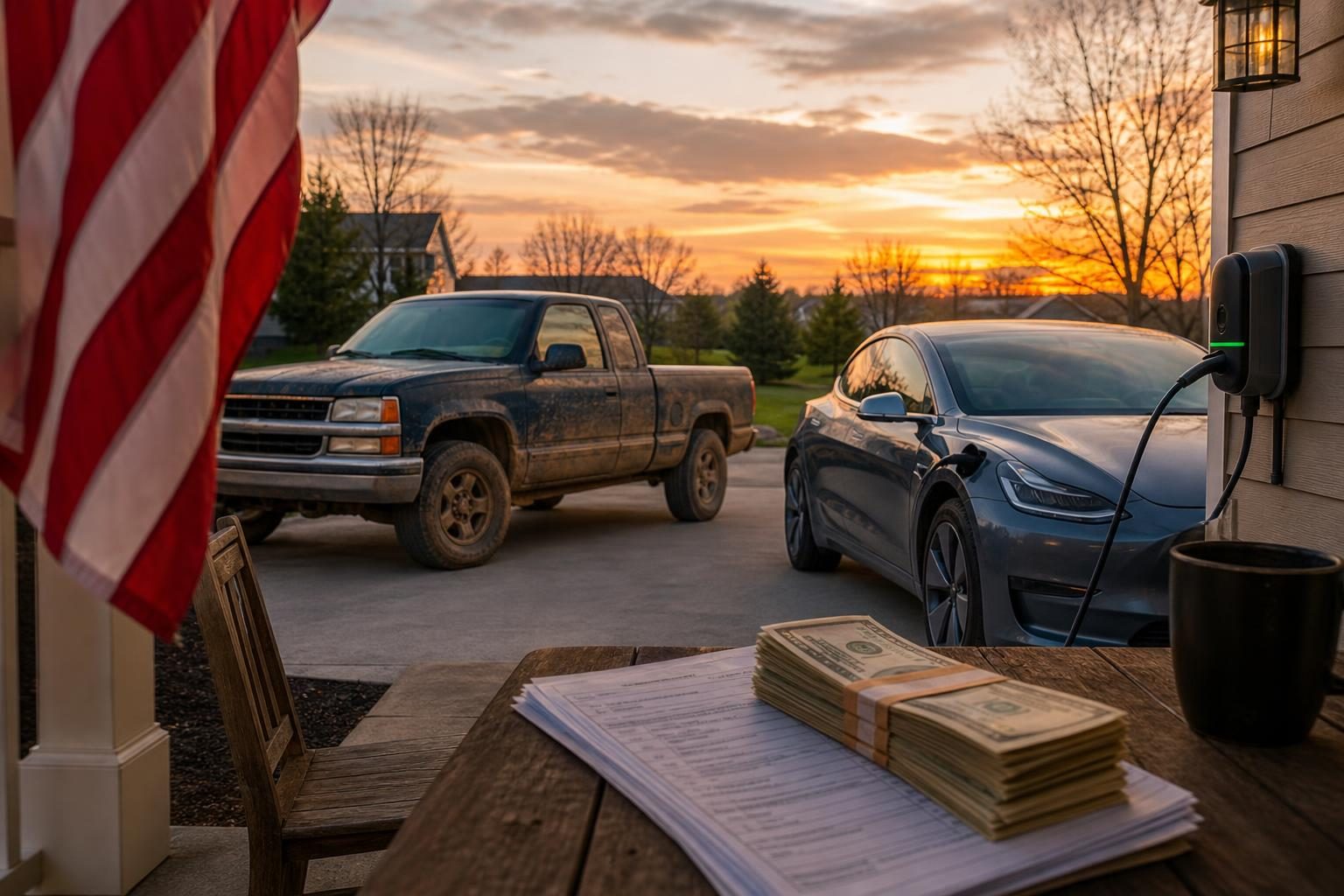
A House Democratic bill introduced in October would revive the federal credit for new electric vehicles and double it to as much as $15,000, Tesla North reported [1]. The same bill would also raise the credit for used EVs and expand the break for home chargers, according to the report [1].
The old $7,500 credit for new clean vehicles is not available for vehicles acquired after Sept. 30, 2025, under the tax law Congress passed last year, according to the IRS [4]. Some Democrats now want it back.
The pitch is that subsidies make EVs affordable for working families. But even the companies that would benefit sound doubtful the money is coming. The chief executives of Rivian, Lucid and Scout are not counting on Democrats to restore federal EV support after their midterm wins, CNBC reported Sunday [2].
Who Actually Got the Money
The best evidence on the old credit is not kind to the affordability argument. Economists Severin Borenstein and Lucas Davis of the University of California, Berkeley studied federal tax filings from 2009 to 2021 and found that the top 5% of earners collected about half of all EV credit benefits, while the bottom 60% received less than 3%, according to a Congressional Research Service summary of their work [3].
Think about what that means. The cashier, the welder and the young family stretching every paycheck helped pay for a subsidy that flowed mostly to households far better off than their own.
The Congressional Research Service adds a fair caveat: the 2022 changes added income limits, so the effects of the newer credit may differ from the earlier version those economists studied [3]. But those limits were hardly tight. The credit remained open to married couples earning up to $300,000 a year, according to the IRS [4]. That is not a program aimed at the struggling middle.
Economists have raised a second problem, too. Research reviewed by the Congressional Research Service suggests that many buyers who claimed the credit would likely have bought an electric car anyway [3]. For them, the credit was not an incentive. It was a bonus paid for by other taxpayers.
The Common-Sense Answer
Washington does not have spare money lying around. Every dollar of a doubled EV credit is a dollar borrowed or taxed from Americans who will never buy the car it subsidizes. If the goal is affordability, the honest place to start is the price of the things every family buys, not a rebate that mostly lands in the driveways of the well-off.
There is also a basic question of fairness and freedom. A family that chooses a pickup, a minivan or a used sedan because it fits their work and their budget should not be asked to underwrite a neighbor's luxury purchase. Government's job is to keep the road open and the rules even, not to pick which engine sits under the hood.
Who Is Pushing Back
The obstacles are real, and they start inside the Democratic Party. Party leaders have been holding back while rank-and-file members split over whether reviving the $7,500 credit is worth the fight, Electric-Vehicles.com reported [5]. Some Democrats doubt it is worth the effort because voters have not warmed to EVs the way the previous administration expected, according to InsideEVs [6].
Then there is the Constitution's own check. Even with Democratic majorities, any bill restoring the credit would have to pass both chambers and win the president's signature, and the president could veto it, InsideEVs noted [6]. The industry's leaders appear to have read the same math [2].
What Comes Next
The new Congress convenes in January, and the bills will have to be reintroduced and debated in the open. That is the right place for this argument. When it comes, voters should ask a simple question: who really collected the last credit? The tax records already gave the answer [3].
Sources
- [1]Opens in a new tab ↗
- [2]Opens in a new tab ↗
- [3]Congressional Research ServiceEconomic Perspectives on Electric Vehicle Tax CreditsOpens in a new tab ↗
- [4]Opens in a new tab ↗
- [5]Electric-Vehicles.comDemocrats Split on Reviving $7,500 EV Tax Credit as Party Leaders Hold BackOpens in a new tab ↗
- [6]Opens in a new tab ↗
Have you ever been censored or shadow-banned on social media?
- Yes
- I think so
- No
- I'm not on social media
More in Pushback

She Got an Assisted-Death Pamphlet Before She Saw an Oncologist. Canada's Own Numbers Show Why Americans Should Take Note
This morning on Mother & Child with Elena Vasquez

One Year Into 'Free' Child Care for All, New Mexico Still Lacks the Seats, and Oil Money Is Paying the Bill
This morning on The Bottom Line with Douglas Park

Prop 50's Architect Now Wants to End Gerrymandering Nationwide. California Already Had the Fix He Is Selling
Overnight on First Principles with Benjamin Stone
Were you there?
If you were at the scene, or this story touched your life, tell us what you saw and what it was like.
Discussion 0
Sign in or create a free account to join the discussion.
No comments yet. Start the discussion.