
 Tonight on Health Check with Samuel Adeyemi
Democrats Chase the Fine Print on Trump's Drug Deals While Patients Count the Savings
Four incoming committee leaders want drugmakers' un-redacted pricing contracts. Oversight is their right, but the record on GLP-1s, Medicaid and TrumpRx shows what is at stake if the probe scares companies away from the table.
Filed November 11, 2026 · 📍 White House, DC 20500
Were you there? Share your story
Key points
- Reps. Pallone, Neal and Scott and Sen. Wyden asked all 27 drugmakers with MFN deals for un-redacted agreements, with a two-week window to meet if they cannot comply.
- The White House reports 26 manufacturers covering 89% of the branded market signed deals, with TrumpRx savings above $700 million and $50 monthly GLP-1 access for seniors.
- KFF says rebate data is proprietary and Medicaid savings estimates rest on unclear assumptions, questions oversight can fairly test.
- Democrats gain subpoena and hearing power in January; the test is whether the probe protects lower prices for patients.
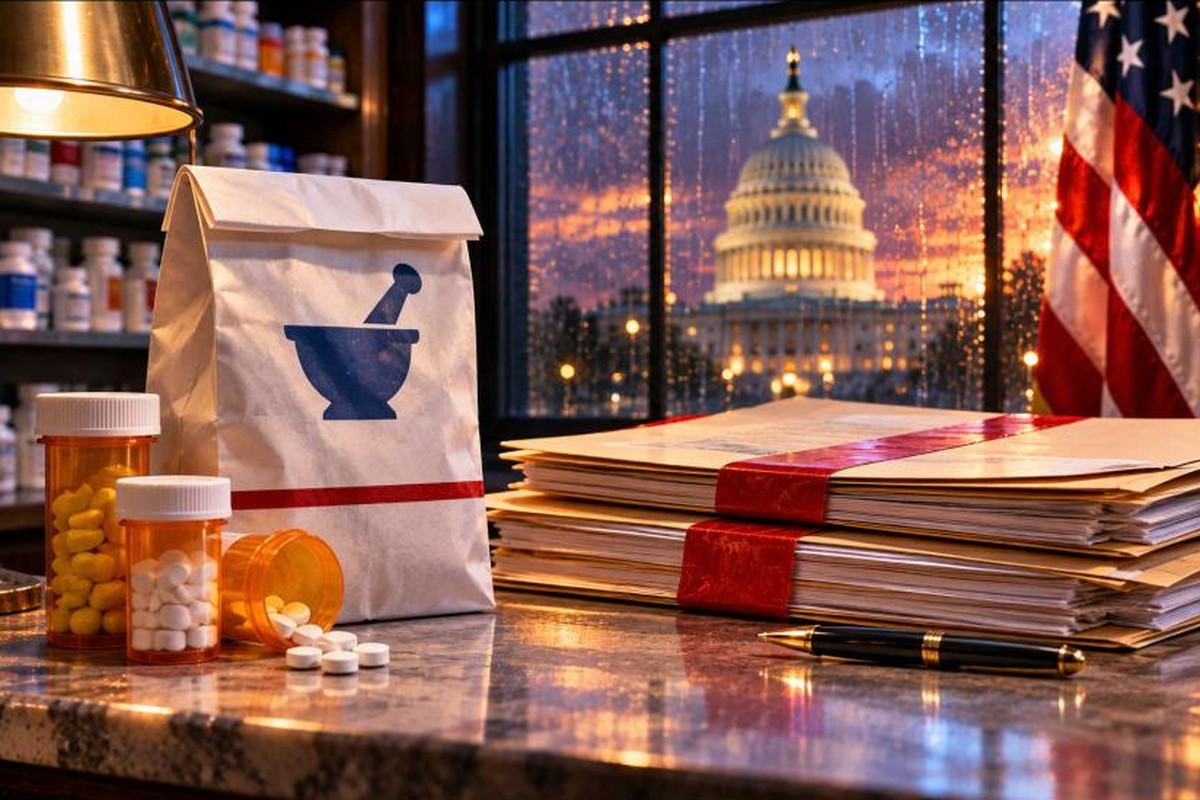
Congressional Democrats this week escalated their investigation of President Trump's "most favored nation" drug-pricing agreements, demanding that drugmakers turn over the un-redacted terms of their deals with the administration, The Hill reported [1]. That is a fair question about any government bargain. But before subpoenas arrive in January, it is worth recalling what these deals have already done for patients.
What Democrats Are Asking
The push is led by four Democrats in line to run health policy in the next Congress: Rep. Frank Pallone of New Jersey on the Energy and Commerce Committee, Rep. Richard Neal of Massachusetts on Ways and Means, Rep. Bobby Scott of Virginia on Education and Workforce, and Sen. Ron Wyden of Oregon on the Senate Finance Committee, according to The Hill [1]. STAT reported, citing a congressional source, that the new letters went to all 27 companies with such agreements, including some that signed after the lawmakers' first requests [2].
According to The Hill, the lawmakers want to know what the companies received in return for lowering Medicaid prices, and they want to check the administration's savings claims for themselves [1]. Under the agreements, manufacturers pledge not to charge more than the lowest international price for selected products [1]. Companies that cannot share the details, perhaps because of nondisclosure agreements with the White House, were told to meet with lawmakers within two weeks to explain how they will comply [1]. The same four lawmakers asked for copies in March, and the administration ignored the request, The Hill noted [1].
The skepticism is not new. When the obesity-drug deals were announced last year, Pallone said the announcement would not have been possible without Democrats' 2022 Medicare price negotiation law, which he contrasted with what he called Trump's cost-shifting proposals [6].
What the Deals Actually Delivered
When the White House announced its agreements with Eli Lilly and Novo Nordisk in November 2025, it said the cash price of Ozempic and Wegovy through the new TrumpRx portal would drop from about $1,000 and $1,350 a month to $350, and that Zepbound would fall from $1,086 to an average of $346 [3]. Medicare would pay $245 for the leading GLP-1 drugs, beneficiaries would owe a $50 monthly copay, and every state Medicaid program would get most-favored-nation prices on the two companies' products [3]. Lilly also cited at least $27 billion in new U.S. manufacturing investment, and Novo an added $10 billion [3].
Those deals followed the first agreement, with Pfizer, on Sept. 30, 2025 [4]. By this September the administration counted 26 manufacturers, among them AstraZeneca and EMD Serono, covering 89% of the branded drug market [4]. The White House said then that patients had saved more than $700 million through TrumpRx since its Feb. 5 launch, and that 600,000 seniors had saved $216 million in the first two months of $50-a-month GLP-1 access that began in July [4]. It also announced that all 50 state Medicaid programs would receive rebates meant to "ensure the final price to Medicaid does not exceed the MFN price," with the Council of Economic Advisers projecting $64.3 billion in Medicaid savings over a decade, $36.6 billion for Washington and $27.6 billion for the states [4].
The American Medical Association's president called the obesity-drug agreement "a transformative step in the battle against chronic disease and obesity," Medical Economics reported, while the Obesity Society welcomed the Medicaid option and asked who would qualify [6].
Fairness requires the caveats. KFF, a nonpartisan health research group, noted that Medicaid rebates already cut gross drug spending by 53% on average from fiscal 2019 through 2024, that the projected savings amount to roughly 14% of annual Medicaid drug spending, and that the assumptions behind the estimate are unclear [5]. Those are legitimate questions that oversight can answer.
Confidentiality, Oversight and What Comes Next
Why are so many terms private? KFF pointed out that data on the size of rebates for specific drugs is proprietary both in Medicaid and abroad [5]. In ordinary commerce, the price one seller accepted from one buyer is among the most closely held facts a business has. Publish every concession, and competitors and foreign governments get a road map for the next negotiation, while the next drugmaker thinks twice about signing.
Democrats are right that leverage was involved: KFF noted that manufacturers without these deals face new pharmaceutical tariffs [5]. Asking whether that trade served patients is fair. Congress's power to investigate is real, rooted in its constitutional duties to legislate and to control spending, and Medicaid runs on taxpayer money. Conservatives should defend that power whichever party holds the gavel.
The common-sense test is whether this probe helps the patient at the pharmacy counter. Confidential briefings, careful handling of trade secrets and a sober audit of the savings would serve that patient. Dumping contracts into the public record, or making signers regret signing, would not. The White House has already challenged the scope of the coming House probes in a letter to Rep. Robert Garcia, covered separately on this site.
Companies that cannot hand over their contracts have two weeks to meet with lawmakers [1]. In January, Democrats gain subpoena and hearing power [1], and STAT reported the deals are expected to be a top health oversight priority [2]. Lower prices for seniors, GLP-1 patients and Medicaid families are worth protecting while Congress does its job.
Sources
- [1]Opens in a new tab ↗
- [2]Opens in a new tab ↗
- [3]The White HouseFact Sheet: President Donald J. Trump Announces Major Developments in Bringing Most-Favored-Nation Pricing to American PatientsOpens in a new tab ↗
- [4]The White HouseFact Sheet: President Donald J. Trump Announces Lower Drug Prices for All 50 State Medicaid ProgramsOpens in a new tab ↗
- [5]Opens in a new tab ↗
- [6]Opens in a new tab ↗
Have you ever been censored or shadow-banned on social media?
- Yes
- I think so
- No
- I'm not on social media
More in Pushback
Why the Framers' Electoral College Still Gives Wisconsin, and Every State, a Voice Worth Keeping
Tonight on First Principles with Benjamin Stone

COP31 Says the World Must Ditch Fossil Fuels Faster. The Energy Facts Tell a Different Story.
Tonight on The Power Grid with Priya Desai
Even California Said No: Why Voters Rejected the Billionaire Tax, and Why the Facts Back Them
Tonight on The Bottom Line with Douglas Park
Were you there?
If you were at the scene, or this story touched your life, tell us what you saw and what it was like.
Discussion 0
Sign in or create a free account to join the discussion.
No comments yet. Start the discussion.