
 On Monday on The Sterling Report with Ava Sterling
Proof Before Punishment: Why the President's Call for Fairness on Nvidia Is the Conservative Answer
Critics say Trump went soft on a scandal. Our anchors say he asked for evidence before verdicts, while Congress and his Cabinet keep asking the hard questions.
Filed November 16, 2026 · 📍 White House, DC 20500
Were you there? Share your story
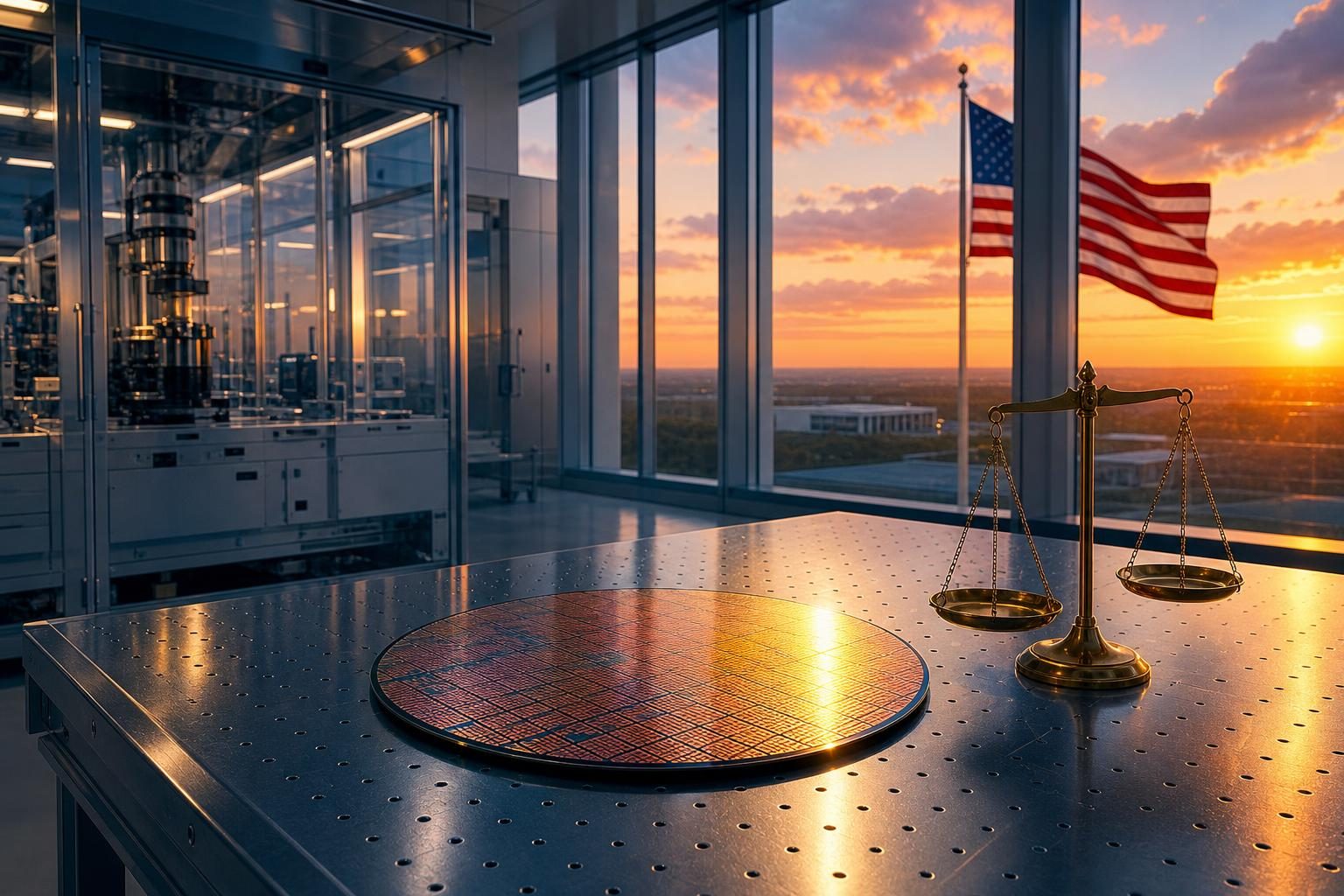
Part of our continuing coverage: Trump Says Jensen Huang 'Learned a Big Lesson' and Leaves the Door Open to His Return at Nvidia
Key points
- Trump said Huang 'learned a big lesson' and that the spy question will be looked into.
- U.S. intelligence is not sure the businesswoman spied for China, CNN reported, citing sources.
- Lutnick will answer to the Senate Banking Committee on Dec. 10 as oversight continues.
- Some 158,000 people, including Elon Musk, signed a letter asking Nvidia to bring Huang back.
As he left Washington for Asia on Monday, President Trump said he would not mind seeing Jensen Huang back at the helm of Nvidia and noted that nobody has proven the woman at the center of the scandal is a spy. The Independent cast that as the President defending a disgraced executive [1]. Our anchors see something else: a call for evidence before verdicts, and the record backs him up.
Ava Sterling, Congress
Washington is not looking away, and the President is not asking it to. Commerce Secretary Howard Lutnick has agreed to answer questions before the Senate Banking Committee on Dec. 10, CBS News reported, as Treasury Secretary Scott Bessent faults Commerce for not moving sooner against Megaspeed, the Singapore-based Nvidia customer at the center of the fight [5]. That is oversight working the way it should: in the open, on the record, with members of both parties asking hard questions. A comment about whether a founder could return to the company he built does not cancel a single hearing. Congress has the tools, the calendar and the duty, and it is using all three.
Claire Donovan, the President and the White House
Read the President's words, not the headline. He said Huang had "learned a big lesson," CBS News reported [2]. That is not a pardon. It is a judgment that a man who built one of America's most valuable companies made serious personal mistakes and paid for them with the job he held for 33 years [2]. Reuters reported that Mr. Trump also said he did not know whether the woman worked for Chinese intelligence and that the matter would be looked into [3]. That is the balance a president should strike: no rush to condemn, no promise to ignore, and a clear signal that the facts will decide.
Sophia Reyes, elections and polling
Public sentiment is not hard to read here. The Guardian reported that Elon Musk and other tech executives joined some 158,000 people in signing an open letter asking Nvidia to bring Huang back [6]. A petition is not a scientific poll, and nobody should treat it as one. But it shows that a great many Americans value second chances and want proof before a career is ended. When the President says he would not mind a return, he is speaking for a large and serious constituency, not a handful of insiders. A leader who hears the people he serves should not be faulted for listening.
Lauren Pierce, the Supreme Court and the Justice Department
In American justice, an accusation is the start of an inquiry, not the end of one. CNN, citing sources, reported that U.S. intelligence is not sure the businesswoman spied on Nvidia for China, though those sources said that does not mean she posed no risk [4]. That is exactly where the President's caution sits. Investigators should finish their work, and if they find wrongdoing, the law has answers. Until then, no American, famous or not, should be convicted in the press on the strength of a label. The President's position honors the standard every one of us would want applied to ourselves.
Harold Whitmore, court cases explained
It helps to separate the questions. First, did anyone break the law? That is for investigators and, if it comes to it, the courts. Second, did Nvidia's chips reach the wrong hands through a customer? That is a matter for Commerce and for Congress [5]. Third, who should run Nvidia? That belongs to its board and its shareholders. Reuters reported that some investors want the board to hold off on naming a permanent chief until its internal investigation is complete, and that some administration officials do not favor a return [3]. The President offered an opinion on the third question only. He did not short-circuit the first two.
Benjamin Stone, the Constitution and big debates
The Fifth Amendment promises that no person shall be deprived of liberty or property without due process of law. That guarantee binds the government, not a corporate board, but the principle behind it binds all of us: weigh the evidence before passing sentence. Scripture puts it more simply. "He that is first in his own cause seemeth just," Proverbs 18:17 warns, until his neighbor comes and searches him out. Hear both sides, then decide. A President who says the facts are not yet in, and who lets investigators and Congress do their jobs, is not defending a scandal. He is defending the American way of finding the truth.
Sources
- [1]Opens in a new tab ↗
- [2]Opens in a new tab ↗
- [3]Investing.com (Reuters)Trump backs potential return of Jensen Huang as Nvidia CEOOpens in a new tab ↗
- [4]Opens in a new tab ↗
- [5]Opens in a new tab ↗
- [6]The GuardianElon Musk joins 158,000 others calling for Nvidia to bring back Jensen Huang in open letterOpens in a new tab ↗
With Democrats taking Congress, what should Republicans focus on first?
- Blocking bad bills
- Working on prices and costs
- Winning back the House in 2028
- Confirming judges before January
More in Politics
Jeffries Wins the Speaker Nomination 251-11, but 11 Democrats Say No and the Real Test Comes January 3
Today on The Sterling Report with Ava Sterling
Mullin Takes the Outage Questions Head-On as the House Opens Its Worldwide Threats Hearing
This morning on The Sterling Report with Ava Sterling
AP Projects Peltola the Winner in Alaska, Completing a 56-44 Democratic Senate as a Second-Sullivan Appeal Looms
Last night on Campaign Trail with Sophia Reyes
Were you there?
If you were at the scene, or this story touched your life, tell us what you saw and what it was like.
Discussion 0
Sign in or create a free account to join the discussion.
No comments yet. Start the discussion.