World News
Guatemala Declares a State of Emergency Along a Cartel Corridor After a Congressman and Three Police Officers Are Gunned Down
The 30-day decree for Zacapa and Izabal allows warrantless searches and bans on gatherings, coming a day after Washington branded a local trafficking clan a terrorist group. Here is what happened and why it matters north of the border.
By ELIJAH CARTERStaff Correspondent · WASHINGTON · Nov 15, 11:31 AM · 5 min. read
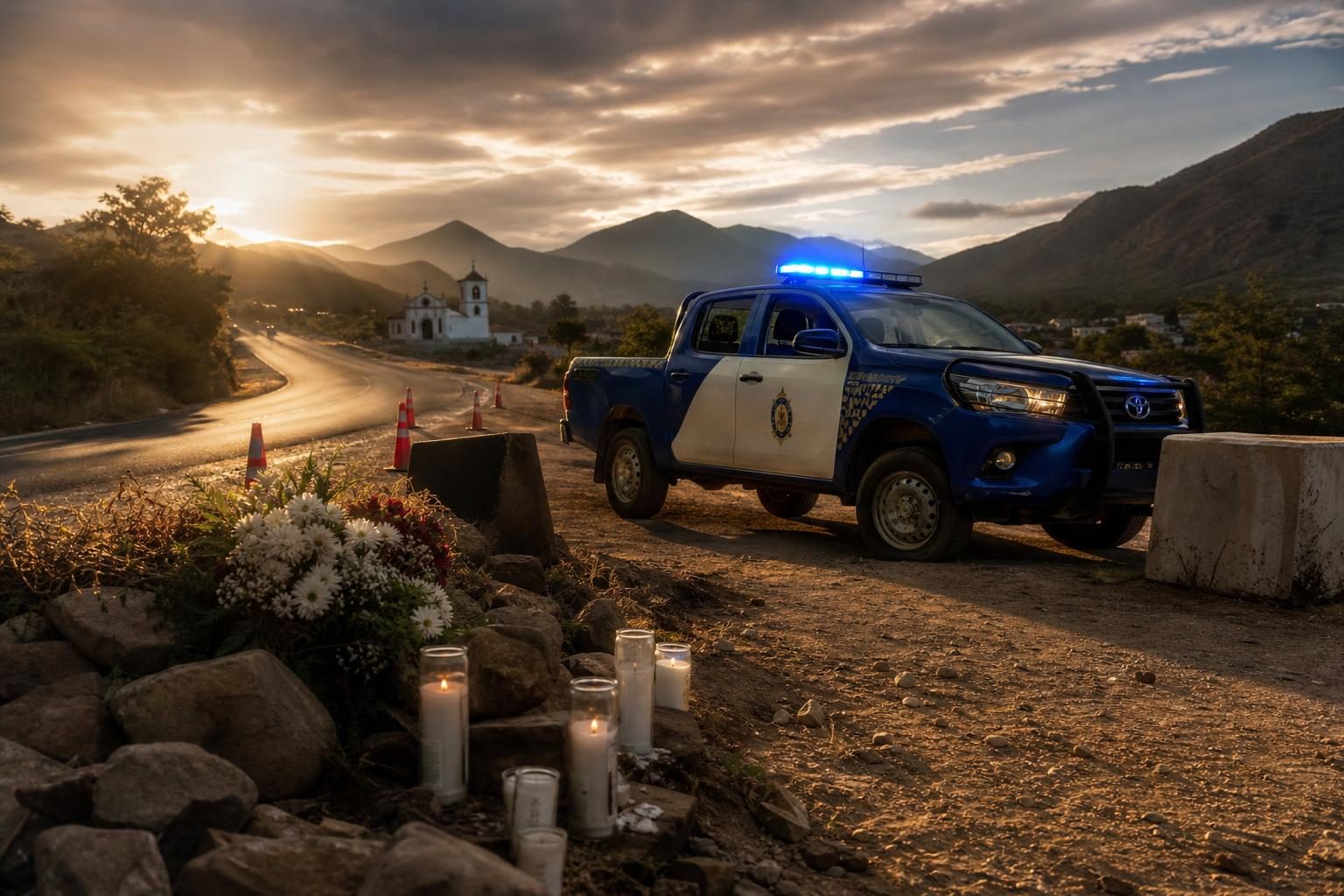
Illustration · Liberty Bell Report
Guatemala's government has put two eastern provinces under emergency rule, a little more than a week after gunmen killed a member of Congress and three of the police officers around him in a region long contested by drug traffickers.
The 30-day state of emergency covers the departments of Zacapa and Izabal and took effect immediately on Saturday, Reuters reported in a story carried by ThePrint. Together, the two neighboring departments cover an area about the size of Qatar, according to the report. The Hindu described the decree as a response to drug violence in the country's east.
The powers are sweeping. The decree restricts outdoor gatherings, lets security forces disperse crowds by force and allows arrests and home entries without a warrant, according to the Reuters report.
The Attack That Triggered It
The emergency follows the killing of Congressman Julio César Portillo in Río Hondo, a town in Zacapa, on Nov. 6. Portillo was shot and later died of his injuries, and three officers of Guatemala's National Civil Police were killed in the same attack, Reuters reported, citing President Bernardo Arévalo.
The first hours were confused. Earlier that day, a fire service official told reporters Portillo had escaped unharmed, before later reports confirmed he had died, according to Reuters. His party, the National Unity of Hope, confirmed his death after he had been taken to a hospital with serious wounds, Al Jazeera reported.
Arévalo condemned the violence and ordered security forces to help prosecutors identify those responsible, Reuters reported. Authorities have not disclosed a motive or named anyone responsible for the attack.
Portillo won his seat in 2023 for the opposition party Cabal and later switched to the National Unity of Hope, the party led by former first lady Sandra Torres, according to Reuters. His killing came about three weeks after a former anticorruption prosecutor, Juan Francisco Solórzano Foppa, was shot dead in Guatemala City, Reuters noted. Two killings of public figures in three weeks would shake any country. In a nation still building trust in its institutions, they strike at the idea that elected officials and prosecutors can do their jobs without fear.
The Officers Who Died
Lost in some of the coverage are the three police officers. Officials said they died in the line of duty, and Arévalo instructed security forces to cooperate with the prosecutors investigating their deaths, Reuters reported.
Their names may never become household words outside Guatemala, but their sacrifice deserves to be said plainly. They went to work in one of the most dangerous corners of their country and did not come home. Every police family, in Guatemala or in Georgia, knows what that phone call means. Our readers will want to keep those families in their prayers this Sunday.
Why Zacapa Matters
Zacapa and Izabal sit on Guatemala's eastern side, where the country borders Honduras and reaches the Caribbean. For years the region has been a corridor for traffickers. Reuters noted that Washington recently designated several crime groups operating in Zacapa as terrorist organizations, accusing them of ties to Mexican drug cartels.
That designation came on Nov. 13, when the State Department named three Guatemalan groups, Los Lorenzanas, Los Huistas and Los Mendoza, and said all three have deep ties to Mexican cartels and help move and export illegal drugs. The department designated Los Lorenzanas a Foreign Terrorist Organization, calling it one of Guatemala's most powerful drug-trafficking clans and blaming it for numerous acts of violence against civilians, government officials and military forces inside Guatemala.
Washington's announcement came the day before Arévalo's decree took effect. Whether or not the timing was planned, both governments are now pointing in the same direction: treating the trafficking clans of eastern Guatemala as a security threat, not just a crime problem.
Not the First Emergency This Year
Arévalo has used this tool before. In January, after prison riots and retaliatory gang attacks on police, he declared a 30-day state of emergency, Al Jazeera reported. Guatemala's Congress approved that decree with minor changes by a vote of 149 to 1, and it limited demonstrations and allowed police to arrest suspected gang members without a judicial order, according to Al Jazeera.
That near-unanimous vote says something important. Across party lines, Guatemala's lawmakers were willing to give security forces extraordinary tools when the violence turned on the police themselves. If the January precedent holds, Congress will have its say on this decree as well.
Emergency powers are strong medicine, and they should be. Warrantless searches and limits on gatherings are not things free people accept lightly, and Americans can fairly hope Guatemala uses them to go after armed traffickers rather than ordinary families. But when gangs and cartels can gun down a congressman and his police detail in broad daylight, a government that does nothing has failed the first duty it owes its people, which is to protect them.
What It Means for Americans
To many readers in the United States, eastern Guatemala can sound far away. It is not. The State Department says the groups it designated help move and export illegal drugs for Mexican cartels, the same cartels whose product reaches American towns. Every clan that controls a stretch of that route is a link in a chain that ends in American neighborhoods.
That is why the administration's approach treats the suppliers and middlemen as part of the same threat as the cartel bosses. And it is why a Guatemalan government willing to confront those groups on its own soil is a partner worth encouraging. Strong borders start far south of the Rio Grande, in places like Río Hondo, where local police are on the front line.
There is a humanitarian side, too. Families who live under the shadow of armed clans have little reason to stay when their towns are not safe. Restoring order where people live is one of the most practical ways to ease the pressures that push people north.
Partnership also means accountability on both sides. Washington has given Guatemala's government new reasons to act, branding one clan a foreign terrorist organization and calling out the cartel ties of two others. Guatemala City, in turn, has given its security forces broad new powers in the very region where those groups operate. The test now is whether those powers are used with discipline, aimed at the gunmen and their bosses, and backed by prosecutors who can win cases in court. Tough measures that produce convictions build public trust. Tough measures that produce only headlines wear it down.
What Comes Next
Three things will show whether this emergency works. First, arrests: investigators have not yet named suspects in the Portillo killings, and a credible case would send a message that attacking public officials carries a price. Second, Congress: lawmakers in Guatemala City will weigh the decree, as they did in January. Third, cooperation with Washington: the new terrorist designations give U.S. authorities fresh tools against the groups operating in the region, and joint work with Guatemalan police could turn those labels into results.
For now, Zacapa and Izabal wake up under emergency rule. The hope, in Guatemala and here at home, is that the next headlines from Río Hondo are about arrests, not funerals.
Sources
- ThePrint (Reuters): Guatemala decrees state of emergency in two departments after lawmaker killed in attack (link)
- The Hindu: Guatemala declares state of emergency in east over drug violence (link)
- U.S. News & World Report (Reuters): Guatemalan Lawmaker, Three Police Officers Killed in Armed Attack (link)
- Al Jazeera: Guatemalan lawmaker and three police officers killed in armed attack (link)
- U.S. Department of State: Foreign Terrorist Designations of Guatemalan Groups (link)
- Al Jazeera: Guatemala's president declares 30-day state of emergency after prison riots (link)
— 30 —