Science & Space
Look North Tonight: NOAA Gives Nine States a Chance at the Northern Lights Into Monday Morning
No storm is forecast, but a moderate burst of solar activity could paint the sky green along the Canadian border, and the best odds may come in the early hours of Monday.
By HANNAH LINDGRENStaff Correspondent · WASHINGTON · Nov 22, 10:00 PM · 3 min. read
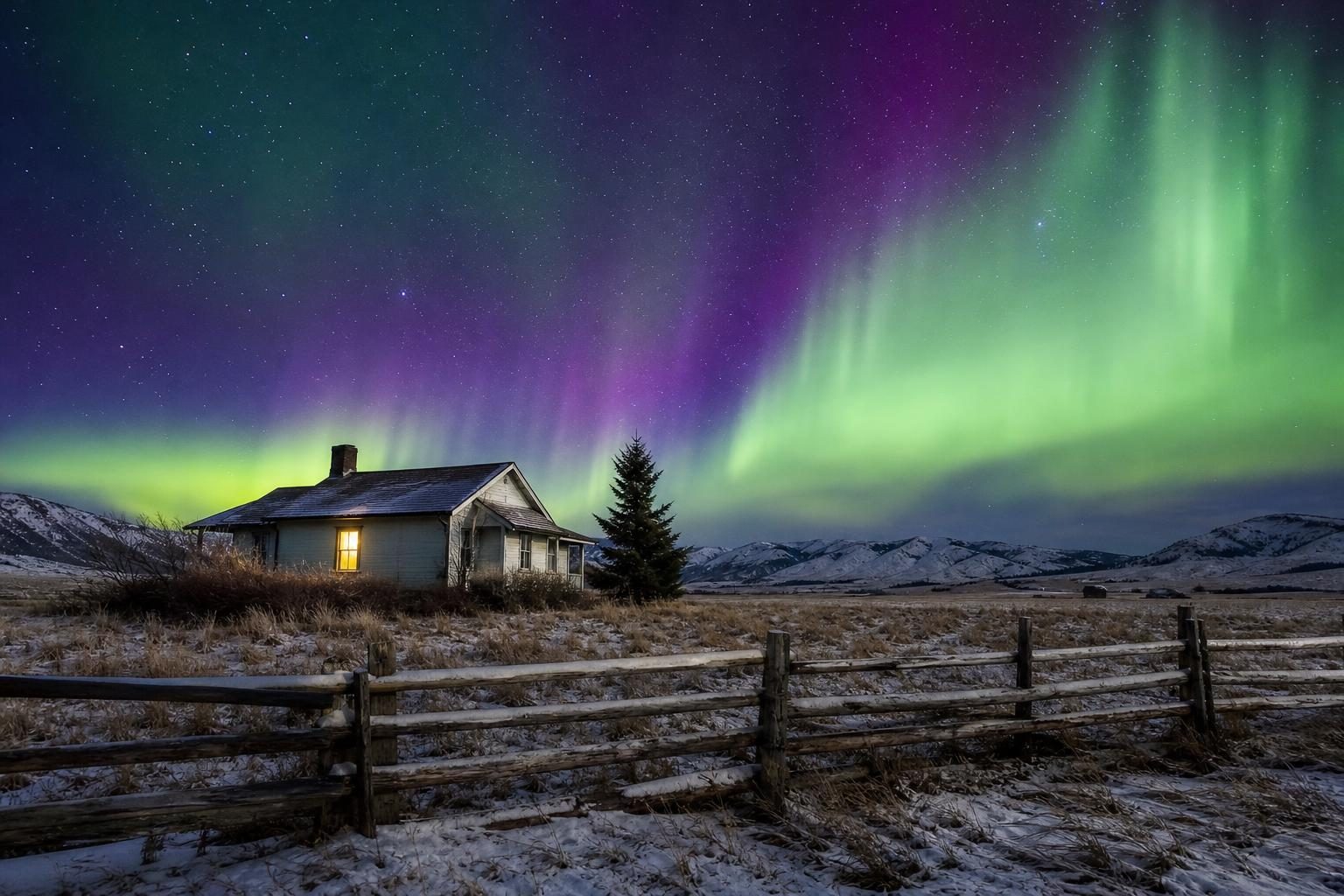
Illustration · Liberty Bell Report
If you live along the Canadian border and the clouds cooperate, it may be worth stepping outside late tonight. The northern lights have a chance to be visible Sunday night into Monday morning from parts of nine states, according to a Forbes report based on forecasts from the National Oceanic and Atmospheric Administration.
NOAA is projecting a Kp index of 4 for Sunday night into Monday morning, a moderate level of geomagnetic activity. Forecasters are not predicting a geomagnetic storm, but the agency's latest three-day outlook shows the index could spike in the early hours of Monday.
Where to Look
Forbes lists northern Washington, Idaho, Montana, South Dakota, Minnesota, Wisconsin, Michigan's Upper Peninsula and much of North Dakota as having a chance of seeing the lights. Alaska's interior has much better odds, according to NOAA.
Experts are not expecting major space weather conditions, so this is not the kind of night that carried the aurora deep into the South during the strongest storms of recent years. For most viewers in the lower 48, the lights will likely appear low on the northern horizon, if they appear at all.
What the Numbers Mean
The Kp index is a scale from 0 to 9 that measures how strongly the Earth's magnetic field is being disturbed by the solar wind, and it is one of the main tools NOAA's Space Weather Prediction Center uses to forecast auroras. Higher numbers push the glowing oval of the aurora farther south. A reading of 4 typically keeps it near the northern tier of the country, while storm-level readings of 5 and above can carry it much farther.
NOAA's experimental aurora dashboard also tracks the chances of solar radiation storms and radio blackouts, and on Sunday it showed only low odds of significant activity. That fits with a quiet-but-active night rather than a dramatic one.
Why We've Seen So Many Auroras
The sky has been unusually busy for a reason. In October 2024, NASA, NOAA and an international panel of scientists announced that the sun had reached the maximum period of its 11-year cycle. Officials said at the time that solar cycle 25 had slightly exceeded expectations, producing the most sunspots since 2002, and that the peak of activity would only be identified months or years later.
That is why auroras have been showing up far more often than many Americans can remember. Earlier this month, Forbes was already tracking another round of possible sightings across the northern states.
How to Give Yourself the Best Chance
Viewing depends on clear skies and real darkness, so get away from city lights if you can and face north. Give your eyes 15 to 20 minutes to adjust, and be patient; the aurora often comes and goes in waves. A phone camera on a night setting can pick up colors that the naked eye sees only as a faint gray glow.
Because the best activity may come after midnight, night owls and early risers have the advantage. Dress warmly: in much of the northern tier, late November nights already dip well below freezing, and a thermos of coffee or cocoa makes the wait a lot more pleasant.
Wonder Worth Sharing
There is something good about a forecast that invites families to bundle up and look up together. Long before anyone understood the solar wind, the psalmist wrote that the heavens declare the glory of God. On a cold November night, a ribbon of green light over a Montana field or a Minnesota lake is a fine reminder of it.
What Comes Next
NOAA updates its aurora forecasts several times a day, and conditions can change quickly as new solar wind data arrive. If the Kp index climbs overnight, the lights could reach a little farther south than forecast. If it stays at 4, the show will belong mostly to the northern border states and Alaska.
Sources
- Forbes: Northern Lights Forecast: Aurora Could Be Visible From These 9 States Sunday (link)
- NOAA Space Weather Prediction Center: Aurora Dashboard (Experimental) (link)
- NASA: NASA, NOAA: Sun Reaches Maximum Phase in 11-Year Solar Cycle (link)
- NOAA Space Weather Prediction Center: Joint solar maximum announcement from NASA and NOAA (link)
- Forbes: Northern Lights Forecast: Here's Where The Aurora Could Be Visible This Week (link)
— 30 —