Pushback
Why Catholic Sisters and New York's Archbishop Are Saying No to the State's Assisted-Suicide Law
New York's archbishop has joined religious sisters in federal court to keep Catholic hospitals and hospices from being drawn into assisted suicide. Supreme Court precedent and the First Amendment are on their side.
By ETHAN CALLOWAYStaff Correspondent · WASHINGTON · Nov 13, 7:00 PM · 4 min. read
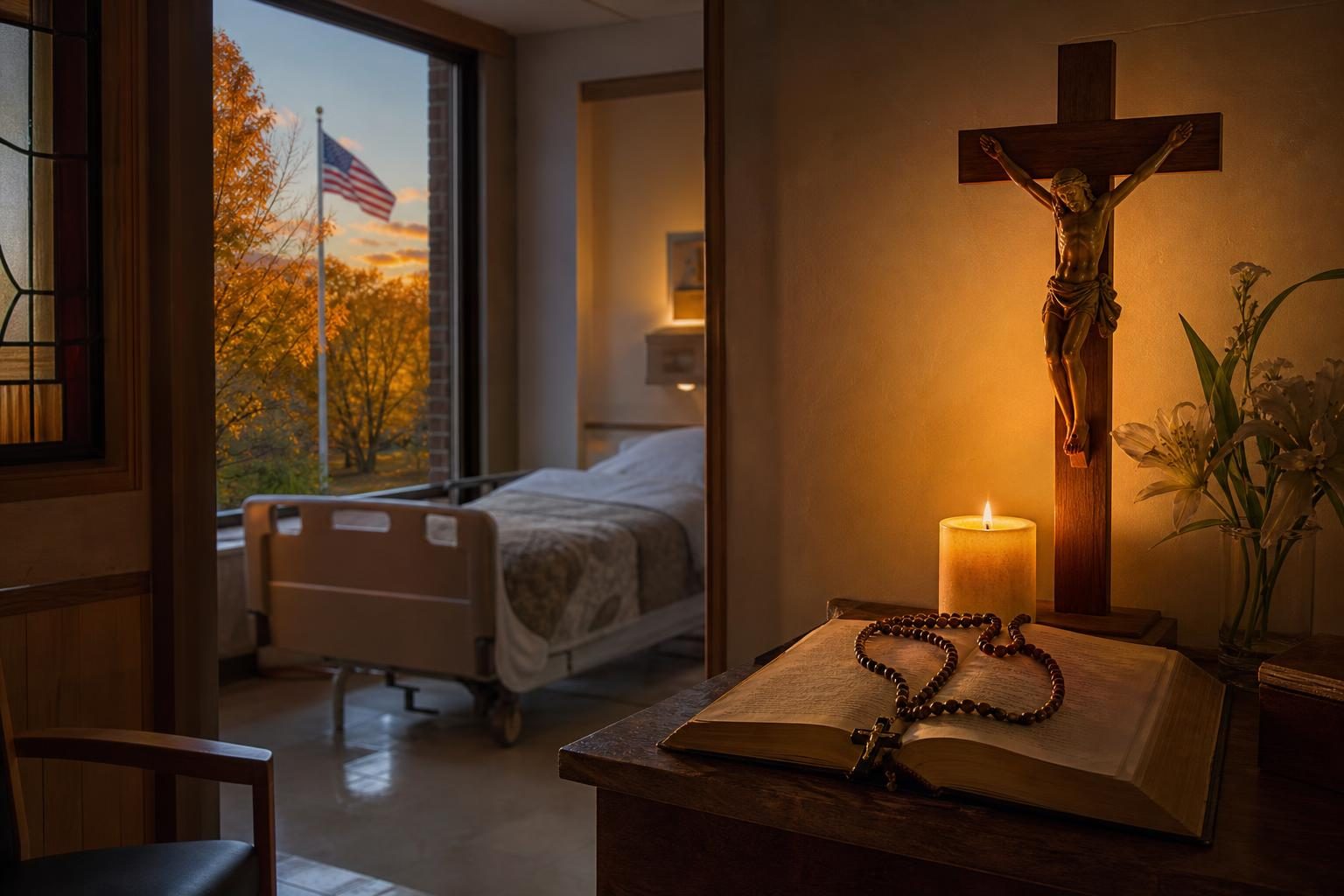
Illustration · Liberty Bell Report
New York's assisted-suicide law is only three months old, and the state's Catholic hospitals, hospices and nursing homes are already in federal court to keep it from reaching their bedsides. The latest to join them is New York's own archbishop.
As Catholic World Report reported, Archbishop Ronald Hicks announced on Oct. 30 that he and ArchCare, the archdiocese's health care network, had joined a lawsuit first brought by four orders of religious sisters and Catholic health ministries. They are asking the court to extend the same protection the original plaintiffs won to every Catholic health care entity in the archdiocese.
What New York Did, and What the Sisters Say It Requires
Gov. Kathy Hochul signed the Medical Aid in Dying Act in February, and it took effect Aug. 5, allowing doctors to prescribe lethal medication to terminally ill adults who request it. Supporters call it a compassionate option for the dying.
The sisters' objection centers on what the law asks of them. According to the plaintiffs, the law compels religious providers to counsel dying patients about assisted suicide, refer them to doctors who will take part and, in some cases, accommodate the act inside their facilities. The suit was filed July 17 in federal court in Albany, with the religious liberty law firm Becket representing the sisters and the Diocese of Rockville Centre.
On July 30, a federal judge, with the state's agreement, temporarily barred New York from enforcing those provisions against the plaintiffs while the case proceeds, as WXXI and the New York Public News Network reported. The same day, a separate challenge brought by disability rights advocates was dismissed for lack of standing. That second lawsuit is a reminder that the objection to assisted suicide is not only a religious one. People who live with disabilities have long warned about what happens when a state starts treating some lives as less worth protecting.
For Archbishop Hicks, joining the case puts the full weight of the nation's best-known archdiocese behind the sisters. His stand is not new. It reflects what the Church has taught for two thousand years, and what most of American law held until very recently.
The Law and History Are on the Sisters' Side
Start with history. In 1997, in Vacco v. Quill, the Supreme Court unanimously upheld New York's own ban on assisted suicide, ruling that the state could rationally distinguish between letting a patient die and helping a patient end his life. Albany has every right to change its mind on policy. But the state that once defended that line before the high court can hardly claim that people who still hold it are outside the mainstream.
Then look at the First Amendment. In 2018, in National Institute of Family and Life Advocates v. Becerra, the Supreme Court ruled that California likely violated the free speech rights of pro-life pregnancy centers by forcing them to tell clients about state-funded abortion. Requiring a Catholic nurse or doctor to counsel a dying patient about a lethal prescription, or to point the way to someone who will write it, raises the same problem in an even graver setting: the government putting its words in the mouths of people who believe those words lead to death.
Finally, consider how the Court has treated Catholic ministries in recent years. In Fulton v. City of Philadelphia in 2021, the justices unanimously ruled that Philadelphia violated the Free Exercise Clause when it cut off a Catholic foster care agency over its religious beliefs about marriage. Because the city's own rules allowed exemptions, it could not refuse one to a Catholic ministry acting on its faith. That principle fits a hospice run by nuns who have cared for the sick and elderly for generations.
Common sense points the same way. The sisters are not trying to stop anyone else from following New York law. They are asking to keep caring for the dying the way they always have: with pain relief, comfort, prayer and presence. A state that values choice should be able to respect theirs.
Who Is Pushing Back, and What Comes Next
The coalition is wide and growing. It includes four orders of religious sisters, Catholic health ministries, the Diocese of Rockville Centre and now the Archdiocese of New York and its health network. Disability rights advocates brought a challenge of their own, though a judge dismissed it on standing grounds.
The next steps will happen in Albany. The court must decide whether to grant the archdiocese and ArchCare the same protection the sisters already have, and then rule on the merits of the case. Until then, the temporary order keeps the original plaintiffs free to serve patients according to their faith.
New Yorkers should watch this case closely. The question is not whether the state may pass a law many of us believe is wrong. It already has. The question is whether it may force people of faith to become part of it. The Constitution, the high court's precedents and the long witness of Christian medicine all answer the same way.
Sources
- Catholic World Report: New York archbishop joins religious sisters in suing state over assisted suicide law (link)
- WXXI News / New York Public News Network: Catholic groups win injunction in right-to-die law case as another lawsuit is dismissed (link)
- Catholic Review (OSV News): Women religious sue New York over law they say would force them to assist in patient suicides (link)
- Justia, U.S. Supreme Court: Vacco v. Quill, 521 U.S. 793 (1997) (link)
- Supreme Court of the United States: National Institute of Family and Life Advocates v. Becerra (2018) (link)
- Supreme Court of the United States: Fulton v. City of Philadelphia (2021) (link)
— 30 —