Pushback
The U.N. Says Climate Money Beats Border Security. The Record on Disasters and Migration Says a Strong Nation Needs Both
At COP31, the head of the U.N. migration agency warned that more than 200 million people live in places at risk of climate displacement and urged governments to spend on adaptation instead of walls. Here is what the numbers actually show.
By COLE BRENNANStaff Correspondent · WASHINGTON · Nov 14, 9:30 AM · 3 min. read
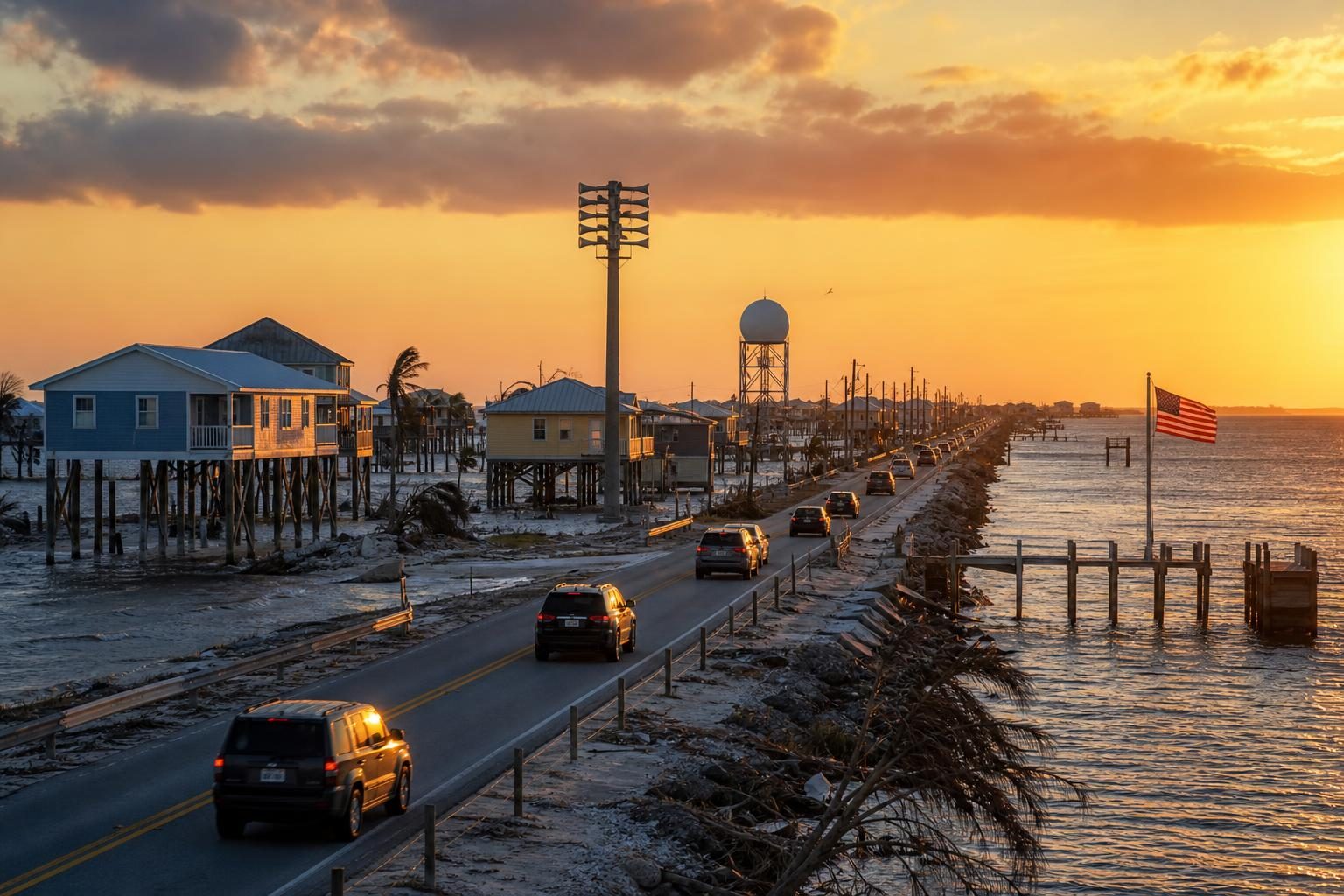
Illustration · Liberty Bell Report
Speaking at the United Nations climate conference in Antalya, Türkiye, on Friday, Amy Pope, the director general of the International Organization for Migration, warned that more than 200 million people are living in extremely climate-vulnerable communities and are at risk of being forced from their homes, CTV News and France 24 reported. She argued that governments should tackle the conditions that push people to move rather than only managing migration after it happens, and she contrasted the billions of dollars countries spend on border security with spending to protect vulnerable communities.
To be fair to Pope, her figure describes people living in places at risk today, not a forecast that 200 million people will cross borders. Helping poor communities withstand floods and droughts is a worthy goal, and American charities and churches do that work every day. The problem is the trade-off she implies: that money spent securing a border is money stolen from compassion. The record says otherwise.
The Big Numbers Have a History
Huge climate-migration figures have been around for decades, and they have a habit of missing. The U.N. migration agency's own 2008 research paper on the subject described 200 million climate migrants by 2050 as simply the "most widely repeated prediction," and noted how hard it is to tie migration directly to climate. Researchers have since cautioned that early projections of mass climate migration were, in many cases, made on the back of an envelope, Geographical magazine reported. In 2005 a U.N. University institute warned of 50 million environmental refugees by 2010, according to the same body of research. That deadline passed long ago, and researchers now treat such early projections with caution.
None of that means weather disasters are not real or not deadly. It means policymakers should be careful about building budgets, and border policy, on numbers that have repeatedly outrun the evidence.
What the Disaster Data Actually Show
The most important trend in this debate is one the conference rarely mentions. Death rates from natural disasters have fallen by more than 90% over the last century, according to Our World in Data. The researchers there credit early warning systems, better infrastructure, more productive farming and coordinated emergency response. They also note that the hazards themselves have not gone away. What changed is that people became richer, better informed and better protected.
The displacement numbers tell a similar story. Disasters triggered a record 45.8 million internal displacements worldwide in 2024, Scientific American reported, citing the Internal Displacement Monitoring Centre. But "internal" is the key word: these are people moving within their own countries, not across borders. And the country with the most disaster displacements that year was the United States, with about 11 million, driven largely by evacuations ahead of hurricanes such as Helene and Milton. The monitoring center said pre-emptive evacuations saved lives in places like the United States.
In other words, the world's biggest disaster "displacement" in 2024 was Americans following orders to get out of a storm's path, then going home. That is not a crisis of borders. It is a success of preparation, the very thing wealth, infrastructure and good government make possible.
Borders and Resilience Are Not Rivals
A nation that controls its border is better able to help others, not less. It can decide whom to admit, plan for them and keep faith with its own citizens who pay the bills. A nation that cannot control its border has no plan at all. Pope's own framing, that spending on adaptation is more humane and cost-effective than responding to irregular migration after the fact, actually concedes the point: unmanaged migration is costly and dangerous, for migrants above all.
The surest path to resilience is the one that cut disaster deaths by 90%: economic growth, affordable and reliable energy, sturdy buildings, roads and warning systems. Those are things that prosperous, sovereign nations build, and that American aid and American churches help poorer nations build. None of them requires weakening a border.
Who Is Pushing Back and What Comes Next
Pope's appeal is aimed at governments negotiating at COP31, where adaptation funding is one of the central fights. Nations that have tightened border enforcement in recent years, including the United States, have every reason to reject a framing that treats border security as the problem rather than part of the answer.
The better message for the delegates in Antalya is the one written in the data. Help vulnerable communities grow richer and better prepared, and they will be safer where they live. Protect borders, and nations will have the stability to keep helping. Compassion and sovereignty are not enemies. They never were.
Sources
- CTV News: Climate change could force more than 200 million from homes: UN migration chief (link)
- France 24: Climate could force more than 200 mn from homes: UN migration chief (link)
- International Organization for Migration: IOM Migration Research Series No. 31: Migration and Climate Change (link)
- Geographical: Are predictions of mass climate migration really accurate? (link)
- Scientific American: Disasters Displaced a Record 46 Million People Last Year (link)
- Our World in Data: Natural Disasters (link)
— 30 —