Media & Journalism
Joe Rogan Says Podcasters Belong Behind the Mic, Not in the White House Briefing Room
Rejecting David Sacks' idea of front-row seats for podcast hosts, Rogan says shows like his are commentary, not journalism, and warns listeners against treating hosts' opinions as gospel.
By LUKE HARRINGTONStaff Correspondent · WASHINGTON · Nov 14, 10:40 AM · 3 min. read
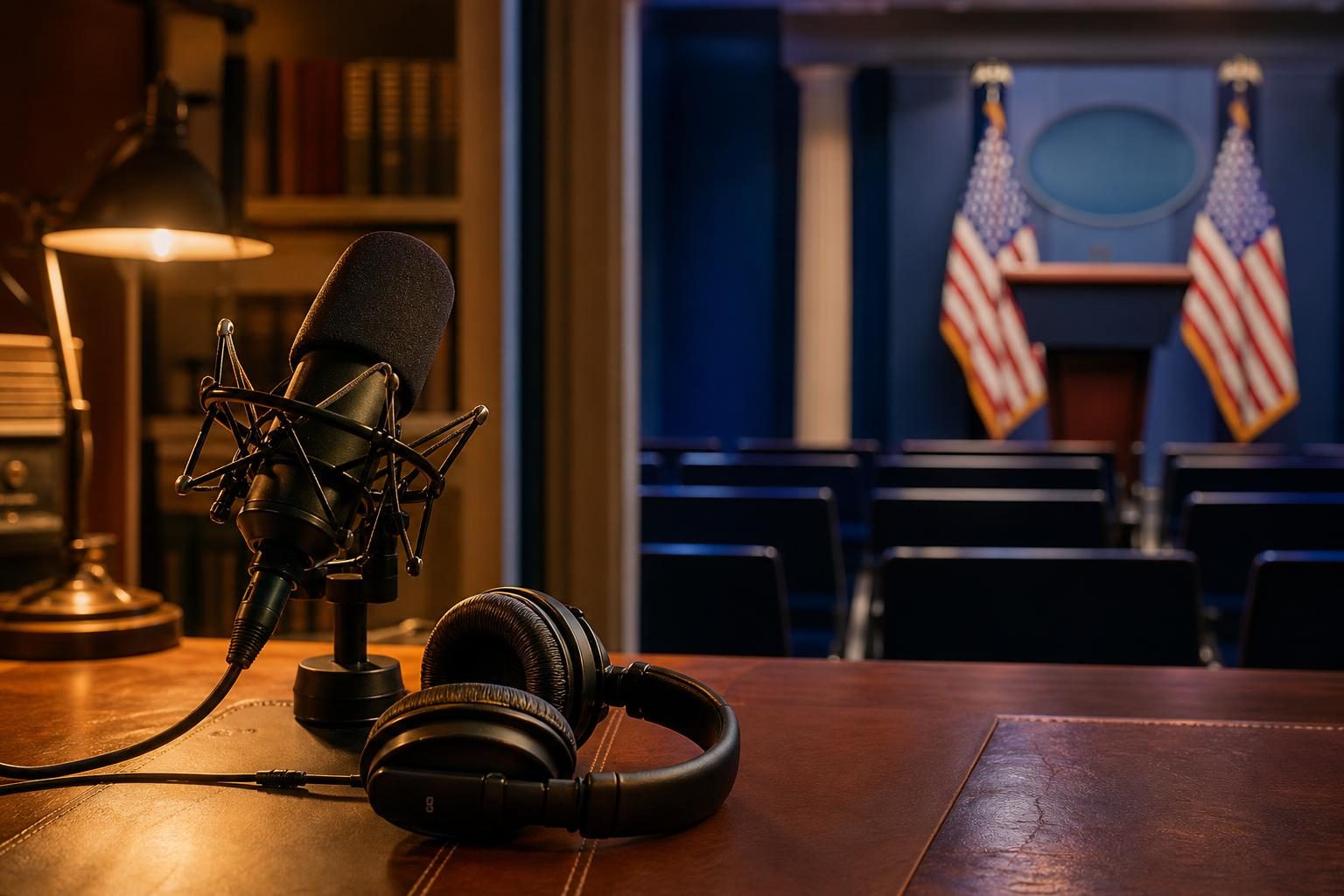
Illustration · Liberty Bell Report
Joe Rogan, host of one of the most popular podcasts in the country, has spent years telling his audience not to trust the legacy press. This week he told them something just as important: don't mistake him for it, either.
On his podcast, Rogan rejected a push by tech investor David Sacks to give podcasters front-row seats at White House press conferences, saying hosts like him are not journalists and have no business in the briefing room alongside reporters who cover the president for a living, Fox News reported in a story carried by Yahoo News. The New York Post reported that Rogan, in typically salty language, said he and his fellow hosts would not be sitting in the front row asking press secretary Karoline Leavitt questions.
Rogan went further. He described the habit of treating podcasters' opinions so seriously as a kind of sickness in society, and acknowledged that it works, unfortunately, according to Fox News. Coming from one of the medium's biggest names, that is a remarkable bit of self-awareness.
What Sacks Proposed
The exchange began on All-In, the business and politics podcast Sacks co-hosts. Sacks, a venture capitalist who has advised President Trump on artificial intelligence and crypto policy, argued that the administration had lost podcasters through its recent policies and should have given them all front-row seats in the press room, Fox News reported. In a clip posted by RealClearPolitics, Sacks said Republicans had lost Joe Rogan and that alternative media is a huge part of the party's base.
Sacks tied the rift to the Iran war. Benzinga reported that he said the conflict cost the president the podcast audience that helped elect him, and that he reached for Abraham Lincoln's warning that a house divided against itself cannot stand. Rolling Stone reported that the White House has been doing damage control with prominent podcasters amid the president's fallout with several right-wing media figures over the war, with Rogan as its chief target.
Why the Briefing Room Matters
The White House has already opened the door wider than any administration before it. After the president returned to office, Leavitt created a "new media seat" in the briefing room for independent journalists, podcasters and online outlets, Fox News noted. Legal Insurrection, a conservative legal blog, wrote at the time that the newcomers were shaking up a press corps long dominated by a handful of legacy outlets.
That was a healthy change. The old briefing room too often felt like a club, and Americans who get their news from independent shows deserved a voice in it. But Rogan's point is the right one. Opening the room to new outlets is different from handing the best seats to commentators because they help win elections. A seat earned by covering the White House is journalism. A seat handed out to keep a voting bloc happy is something else, and audiences can tell the difference.
The Value of Independence
Anyone who has spent years behind a radio microphone knows the temptation. Access feels like influence. A front-row seat, a phone call from a senior aide, a spot at the next event: those are the currencies of Washington, and they come with strings. The power of independent media has always been that it owes nothing to the people it talks about. Rogan's audience trusts him because he says what he thinks, including when it angers the president's allies, as his break with the White House over the Iran war has shown. Put him in the front row as a favor, and that trust starts to look borrowed.
Scripture puts it well: faithful are the wounds of a friend. Shows that support the president's goals help him most when they stay free to tell him when he is wrong, as Rogan has done over the Iran war. A podcast host who becomes part of the White House communications operation stops being a friend and starts being staff.
There is also a lesson here for listeners. Rogan's own warning, that people take podcasters' opinions too seriously, is a call to do the work of citizenship: read widely, check claims, weigh sources and think for yourself. Conservatives have long argued that Americans are capable of doing exactly that without gatekeepers. The same standard applies to the new gatekeepers, too.
What Comes Next
Sacks' idea came from a podcast studio, not from the press office. With the midterms over and the 2028 race beginning to take shape, the administration's relationship with independent media will matter more, not less. If it wants the podcast audience back, the surest path is the one Rogan described without meaning to: earn it with results, and let the hosts keep their independence.
Sources
- Yahoo News (Fox News): Joe Rogan says podcasters have no business at Trump press conferences alongside real journalists (link)
- New York Post: Joe Rogan says podcasters have no business at Trump press conferences alongside real journalists (link)
- RealClearPolitics: David Sacks: The Republicans Lost Joe Rogan, The Alternative Media A "Huge Part Of Our Base" (link)
- Benzinga (via TradingView): David Sacks Says Iran War Cost Trump 'All the Podcast Bros': 'A House Divided Against Itself Cannot Stand' (link)
- Rolling Stone: White House Tries to Appease Joe Rogan as Trump Feuds With Podcasters (link)
- Legal Insurrection: Newcomers to White House Press Corps Shake Up the Status Quo (link)
— 30 —