Pushback
No Seat Is Guaranteed in the Oval Office: Why the Law Backs the White House in the Press-Pool Fight
MS NOW reports the Justice Department insists it can keep MS NOW, CNN and Politico out of the press pool. A 2025 appeals ruling suggests the government holds the stronger hand.
By LAUREN PIERCEStaff Correspondent · WASHINGTON · Nov 18, 8:30 PM · 3 min. read
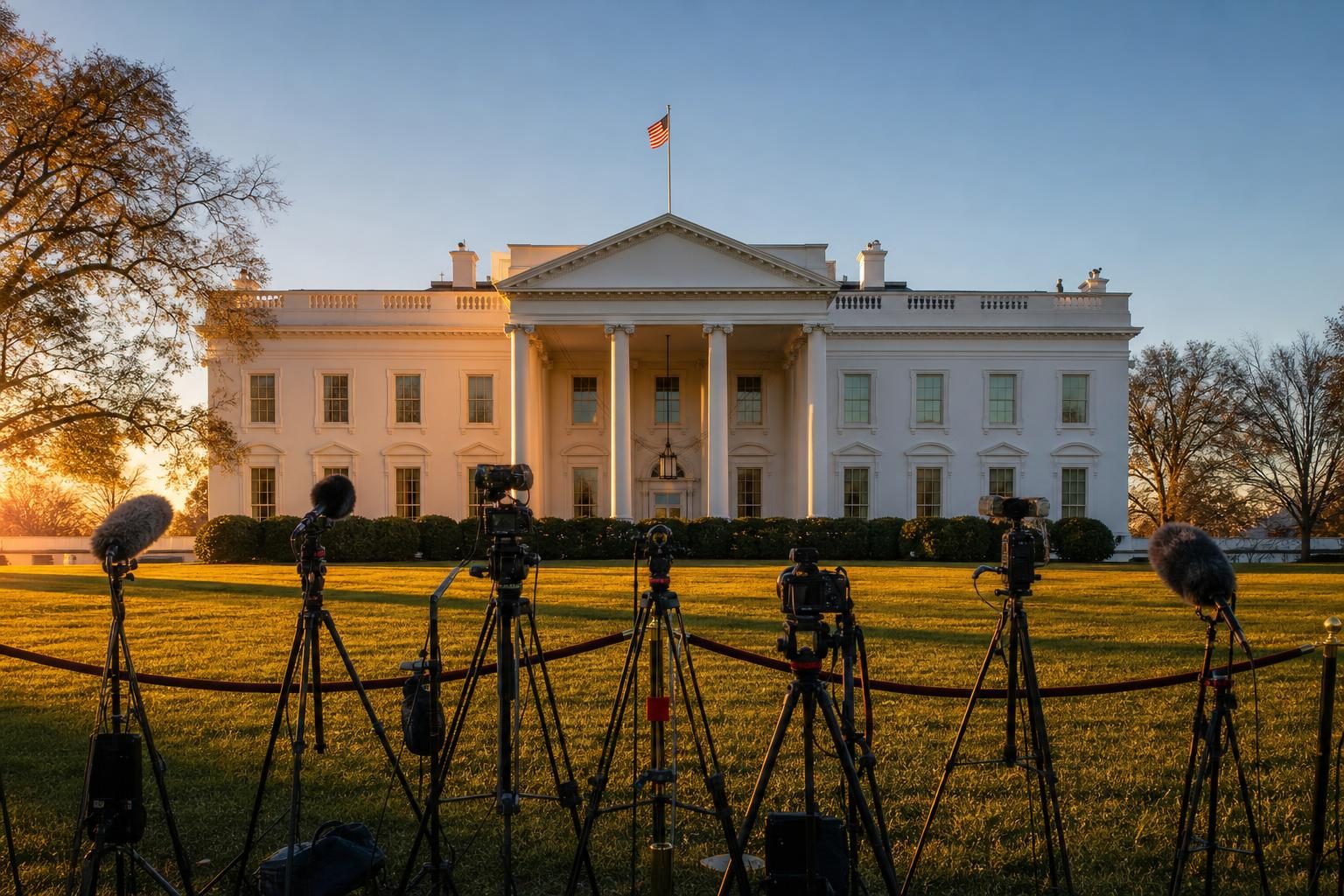
Illustration · Liberty Bell Report
MS NOW reported Wednesday that the Trump administration is insisting in court that it can keep MS NOW, CNN and Politico out of the White House press pool. In its newest filing, the Justice Department argued that a court order restoring the three outlets' access to the White House does not reach the places covered only by the pool, according to MS NOW. The outlets amended their lawsuit last month and are asking the court to restore their pool access as it stood before the ban took effect in September.
The outlets have a real ruling on their side. In October, U.S. District Judge Timothy Kelly ruled that the President cannot bar news organizations from covering him at the White House because he dislikes their coverage, at least while the case moves toward trial, NPR reported. The Justice Department has answered by citing national security and describing White House access as a privilege rather than a right, according to NBC News.
That is the claim. Here is why the law points the other way on the pool.
What the First Amendment actually protects
The First Amendment bars laws "abridging the freedom of speech, or of the press." It protects the right to gather news, to publish it and to criticize the government without being punished for it. Nothing in its text, and nothing in two centuries of practice, promises any particular company a chair in the President's private office or a seat on his plane.
The federal appeals court in Washington drew exactly that line just last year. In June 2025, a divided panel of the D.C. Circuit ruled that the White House could keep the Associated Press out of the Oval Office, Air Force One and similar spaces while the AP's lawsuit went forward, NBC News reported. The majority treated those places as non-public spaces, where the President has wide discretion over who is admitted.
The same ruling did not give the White House everything. The court left protection in place for larger events in the East Room, the AP itself reported. And when the AP asked the full appeals court to step in, the court declined to lift the restrictions, according to the Santa Clarita Valley Signal.
The distinction the Justice Department is drawing
Put those rulings next to Wednesday's filing and the government's position looks less like defiance and more like reading the law as the appeals court wrote it. Judge Kelly's order put the three outlets back inside the White House. The Justice Department is arguing that the tight, close-in spaces covered by the pool are a different category, the same category the D.C. Circuit carved out in 2025.
Common sense agrees. The pool is a small group of reporters who fly on Air Force One and crowd into the Oval Office and similar spaces when room is scarce. Someone has to decide who fills those few spots on a given day. A President working in the most sensitive rooms of the government is entitled to some say in who is standing a few feet from his desk, just as the courts have recognized.
None of this silences anyone. CNN, MS NOW and Politico are still reporting, still publishing and, under Judge Kelly's order, back on the White House campus. Their reporters can still cover the White House and report whatever they learn. What they do not have is a guaranteed rotation in the most exclusive spaces in the building.
Conservatives have good reason to care about a free press. We have watched powerful institutions try to shut down voices they disliked, and we should never want the government deciding which opinions can be printed. But a right to speak is not a right to be invited into every room. Confusing the two does not strengthen press freedom. It weakens the case for it, by turning a constitutional principle into a demand for preferred seating.
Who is pushing back, and what comes next
The Justice Department is defending the administration's position in Judge Kelly's courtroom, arguing that the existing order should not be stretched to cover the pool. The outlets argue that the ban punishes them for their coverage, the heart of the claim Judge Kelly credited in October, and they want the court to restore pool access as it was before September.
Judge Kelly will now have to decide whether his order extends to the pool. Whichever side loses is likely to look to the D.C. Circuit, where the 2025 Associated Press ruling already stands as the backdrop for any appeal. If the appeals court applies the reasoning it used last year, the White House will have strong ground to keep control of who travels in its closest quarters, while every outlet keeps what the Constitution truly guarantees: the freedom to report and publish.
Sources
- MS NOW: Trump administration insists it can ban MS NOW, CNN and Politico from White House press pool (link)
- NPR: CNN, MS NOW and Politico prevail against White House, for now (link)
- NBC News: Defending Trump media ban, DOJ cites national security and says White House access is a 'privilege' (link)
- NBC News: Trump can bar Associated Press from White House events for now, appeals court rules (link)
- Yahoo News (Associated Press): Appeals court hands AP an incremental loss in its attempt to regain its access to Trump events (link)
- The Santa Clarita Valley Signal: Appeals court declines to lift restrictions on AP access to White House (link)
— 30 —