Pushback
Hochul Wants Answers on an ICE Site in Batavia. New York's Own Law Is Why It's Being Built
The governor says the administration skipped a state approval process for a facility for women. DHS says Albany's ban on county ICE contracts forced its hand, and a Rikers release shows what is at stake.
By COLE BRENNANStaff Correspondent · NEW YORK · Nov 18, 3:30 PM · 3 min. read
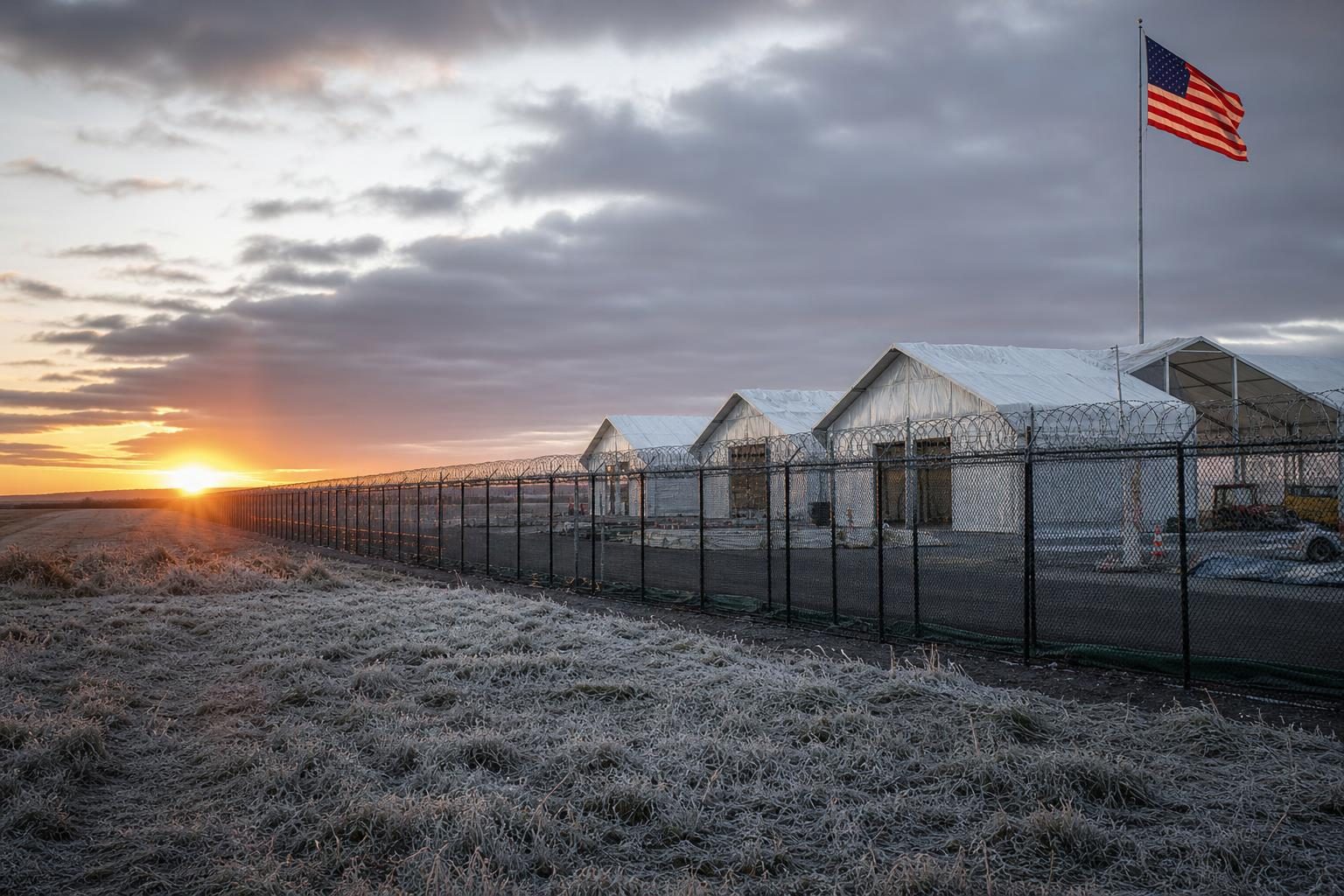
Illustration · Liberty Bell Report
New York Gov. Kathy Hochul wants answers from Immigration and Customs Enforcement. On Wednesday she released letters to the Trump administration demanding information from ICE, and from a Virginia-based construction company, about a new tent-style immigration detention facility being built to house women, ABC News reported. According to the Washington Examiner, Hochul accused the administration of bypassing the proper approval process for the soft-sided site in Batavia, which is expected to cost $17 million and hold up to 100 women.
Asking questions about a federal project in your state is fair. But the governor's letters leave out the most important fact about why this facility is being built at all: New York's own law.
Why ICE Is Building in Batavia
When the plans first surfaced, a Department of Homeland Security spokesperson said the new facility at the Buffalo Federal Detention Facility was needed because New York State laws now prohibit counties from contracting with ICE to house people in the country illegally, Spectrum News reported. As part of the state budget passed in May, New York barred counties from holding detainees for ICE, according to Spectrum, forcing counties with existing agreements to end them.
Some New York counties held immigration detainees for ICE under contract until the state ordered those agreements ended, an arrangement that kept detainees in established local jails and brought federal payments for the beds. Albany took that option away. When the state closes the county jails to federal detainees, the federal government still has to put them somewhere. Building on land the federal government already owns, next to a detention center it already runs, is the obvious answer.
That is the context missing from the complaint that ICE skipped a state approval process. The Constitution does not require Washington to seek a state's permission to carry out federal law on federal property. When New Jersey tried to ban immigration detention contracts inside its borders, a federal appeals court struck the law down in 2025, ruling that a state may not discriminate against or directly regulate the federal government's own operations. That principle flows from the Supremacy Clause, and it binds every state, New York included.
The Cost of Saying No to Detainers
New York's resistance to federal immigration enforcement is not only about where detainees sleep. It is also about who walks out the jailhouse door.
This week DHS said that New York City released a Guyanese man living in the country illegally from Rikers Island earlier this month, despite an active ICE detainer and multiple violent felony charges, the New York Post reported. According to the Post, the man faces charges that include attempted murder, and DHS said he remains at large.
A detainer is a simple request: notify federal officers before releasing a deportable person and hold him briefly so ICE can take custody safely, inside a jail rather than on a street or in a neighborhood. When a city refuses that request for someone accused of trying to kill another person, it is not protecting immigrant families. It is putting New Yorkers, many of them immigrants themselves, at greater risk.
To be fair to the state, Hochul's office has disputed DHS's numbers on ignored detainers before, saying New York always notifies federal immigration authorities when a noncitizen is serving a sentence in a state prison, Finger Lakes 1 reported. That policy covers state prisons. The case at Rikers involved a city jail, where local rules sharply limit cooperation, and the result was a man accused of a violent crime released without a handoff.
Who Is Pushing Back, and What Comes Next
DHS has defended the Batavia project as a response to state law and has publicly called out the Rikers release. The courts have already drawn the constitutional line on state attempts to control federal detention, and that ruling gives the administration firm footing as Hochul presses her case.
New Yorkers have reason to ask questions of their own. A state that will not let its counties rent beds to ICE, and a city that will not honor a detainer for a man charged with attempted murder, should not be surprised when the federal government builds its own facility and asks for cooperation in public.
The governor is right that the people of Genesee County deserve to know what is being built in their community. They also deserve to know why. The answer starts in Albany, with a law that pushed federal detainees out of county jails, and in New York City, with policies that let a man accused of violent crimes walk free. Enforcing the immigration laws Congress has written is not a scandal. Refusing to cooperate with that enforcement, and then complaining about the result, is a choice.
Sources
- ABC News: Hochul demands information from ICE about new immigration tent facility for women (link)
- Washington Examiner: Hochul presses DHS for information on soft-sided ICE detention center for women (link)
- Spectrum News: ICE cites New York law in planned 100-bed expansion at Batavia detention facility (link)
- New York Post: Illegal migrant accused of attempted murder at large after Rikers release despite ICE detainer: DHS (link)
- Finger Lakes 1: Hochul disputes DHS claim over 16,000 immigration detainers (link)
- New Jersey Monitor: NJ cannot ban companies from detaining immigrants, appeals court rules (link)
— 30 —