Pushback
Due Process Runs Both Ways: Why Lisa Cook Should Make Her Case on December 14
The Supreme Court said a Fed governor can be removed only for cause and only after a chance to respond. The White House has scheduled that chance. Her lawyer says she won't come.
By LAUREN PIERCEStaff Correspondent · WASHINGTON · Nov 17, 2:15 PM · 3 min. read
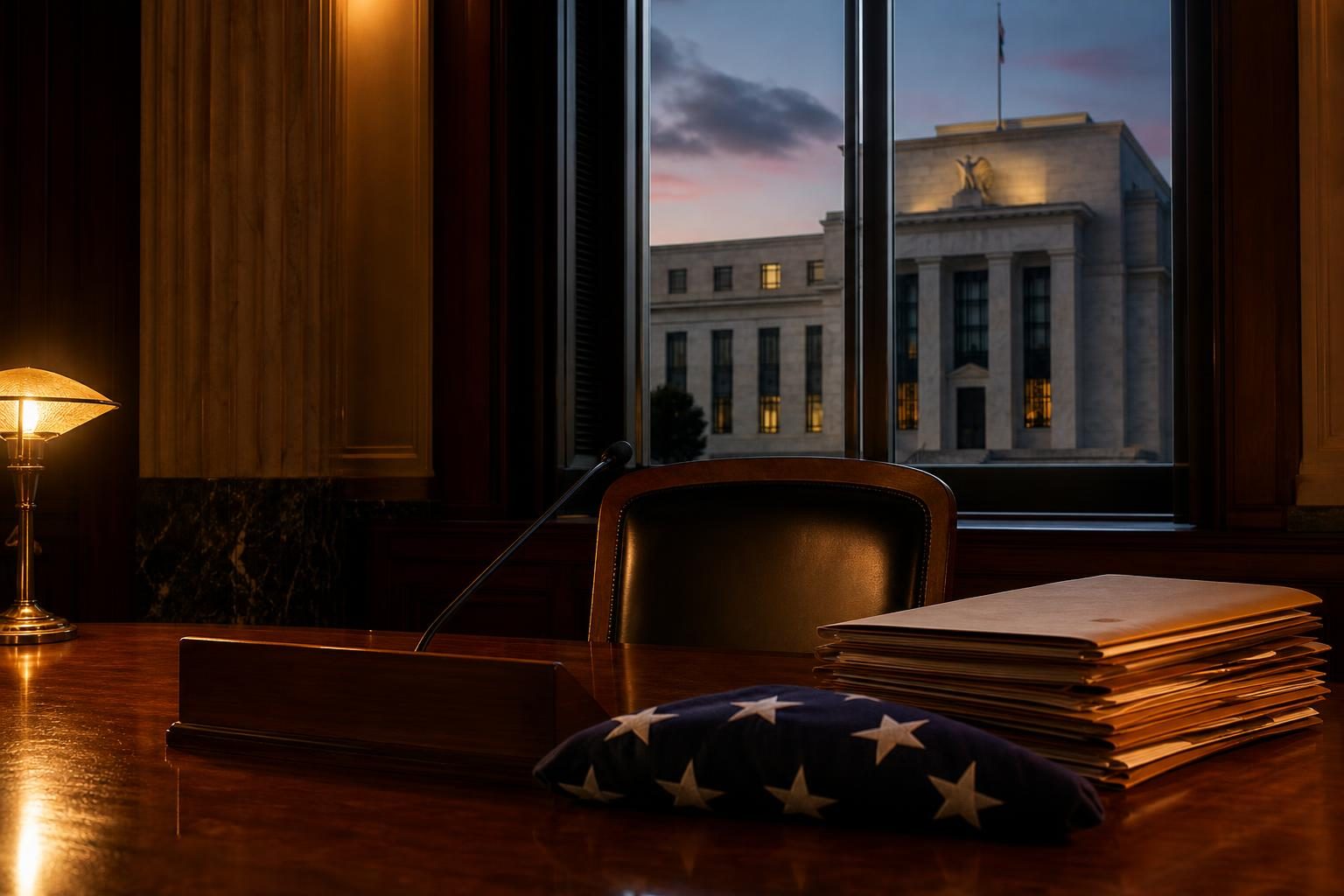
Illustration · Liberty Bell Report
Federal Reserve Governor Lisa Cook will not take part in a White House hearing set for December 14 on whether there are grounds to remove her, at least not in its current form, her lawyer told the administration in a letter made public Tuesday. In the letter, dated Monday and sent to White House counsel Will Scharf, attorney Abbe Lowell wrote that "Governor Cook has no legal obligation to participate in an unfair hearing".
Lowell's objections deserve to be stated fairly. He argues the three-member committee, which includes Kevin Hassett, has prejudged the outcome, pointing to Hassett's past public comments. He says the committee wants Cook's records immediately while sharing its own evidence only seven days before the hearing. And he says Cook would appear if the White House set up an unbiased panel with fair procedures. Cook has denied the mortgage-fraud allegations behind the effort to remove her and has said they are a pretext for punishing her views on monetary policy.
Those are real concerns, and a lawyer is right to raise them. But walking away from the hearing is the wrong answer, and the Supreme Court's own ruling explains why.
What the Court Actually Said
In Trump v. Cook, decided 5-4 on June 29, the justices left Cook in her seat while her lawsuit continues. They did not hold that she is untouchable. The Federal Reserve Act lets the president remove a governor for cause, and the Court upheld that for-cause protection rather than striking it down. What sank the first removal attempt was process. As the Congressional Research Service reads the decision, a president must give a governor notice and a hearing before a removal can take effect, and Cook was given no such chance to answer the mortgage-fraud allegations.
Analysts at the Brookings Institution noted that the ruling did not preclude a new attempt at removal if the president lays out the evidence and gives Cook a chance to respond. The Court also left open what counts as cause, and it did not decide whether the allegations are true.
In other words, the justices pointed to a path. Notice. Evidence. A hearing. A chance to be heard. The White House has now scheduled exactly that kind of proceeding.
Showing Up Is How You Win
In American law, a party who believes a tribunal is unfair usually says so on the record, shows up anyway, and puts on the best defense possible. That is how objections are preserved and how a record is built for the judges who review it later. Declining to participate does not stop the process. Trump officials have threatened to move ahead without her, and the committee has warned that it may draw adverse inferences if she does not participate.
If Cook's side is right that the allegations are weak, the strongest possible rebuttal is a calm, documented answer delivered in the room. If her side is right that the panel is biased, a refusal to participate makes that harder, not easier, to prove to a federal judge. A boycott invites the very predetermined outcome Lowell says he fears, and then asks the courts to undo it.
There is also a principle here that should matter to everyone who cares about the Federal Reserve. The Fed's independence on interest rates is valuable. But independence in setting monetary policy has never meant immunity from accountability for personal conduct. Congress wrote a for-cause standard into the law precisely so that governors could be removed for genuine wrongdoing, through a fair process, while being protected from removal over policy disagreements. A hearing is how those two goals are reconciled.
Who Is Pushing Back, and What Comes Next
White House counsel Will Scharf has rejected the request to replace Hassett, saying Cook is not entitled to choose the president's committee members, according to reports on the correspondence. The administration says the December 14 hearing will determine whether there are grounds for the president to proceed. Cook's challenge to the original firing remains pending in the courts.
Here is the fair-minded path forward. The White House should give Cook's lawyers the evidence early enough to answer it, which costs nothing and strengthens any decision it reaches. And Cook should take the seat that the Supreme Court effectively told the president to offer her. Due process is a promise to the accused, and it is also a responsibility. The country is better served when both sides keep it.
Sources
- U.S. News & World Report (Reuters): Lawyer for Fed's Cook Threatens to Not Take Part in 'Unfair' White House Hearing (link)
- ABC News (AP): Federal Reserve's Cook refuses to participate in White House hearing (link)
- Congressional Research Service: Trump v. Cook and For-Cause Removal of Federal Reserve Governors (link)
- SCOTUSblog: Court prevents Trump from firing Fed governor (link)
- CNBC: Lisa Cook lawyer signals Fed governor won't attend Trump committee's hearing (link)
- Brookings Institution: Fed independence after Trump v. Cook (link)
— 30 —