Pushback
D.C.'s New Delegate Says Statehood Is Coming. The Constitution Says It Takes More Than Two Extra Senators
Delegate-elect Robert White Jr. told the AP statehood is his first priority. The District Clause, the 23rd Amendment, a failed 1978 amendment and the voters all point to a harder road.
By SIENNA VANCEStaff Correspondent · WASHINGTON · Nov 17, 4:15 PM · 3 min. read
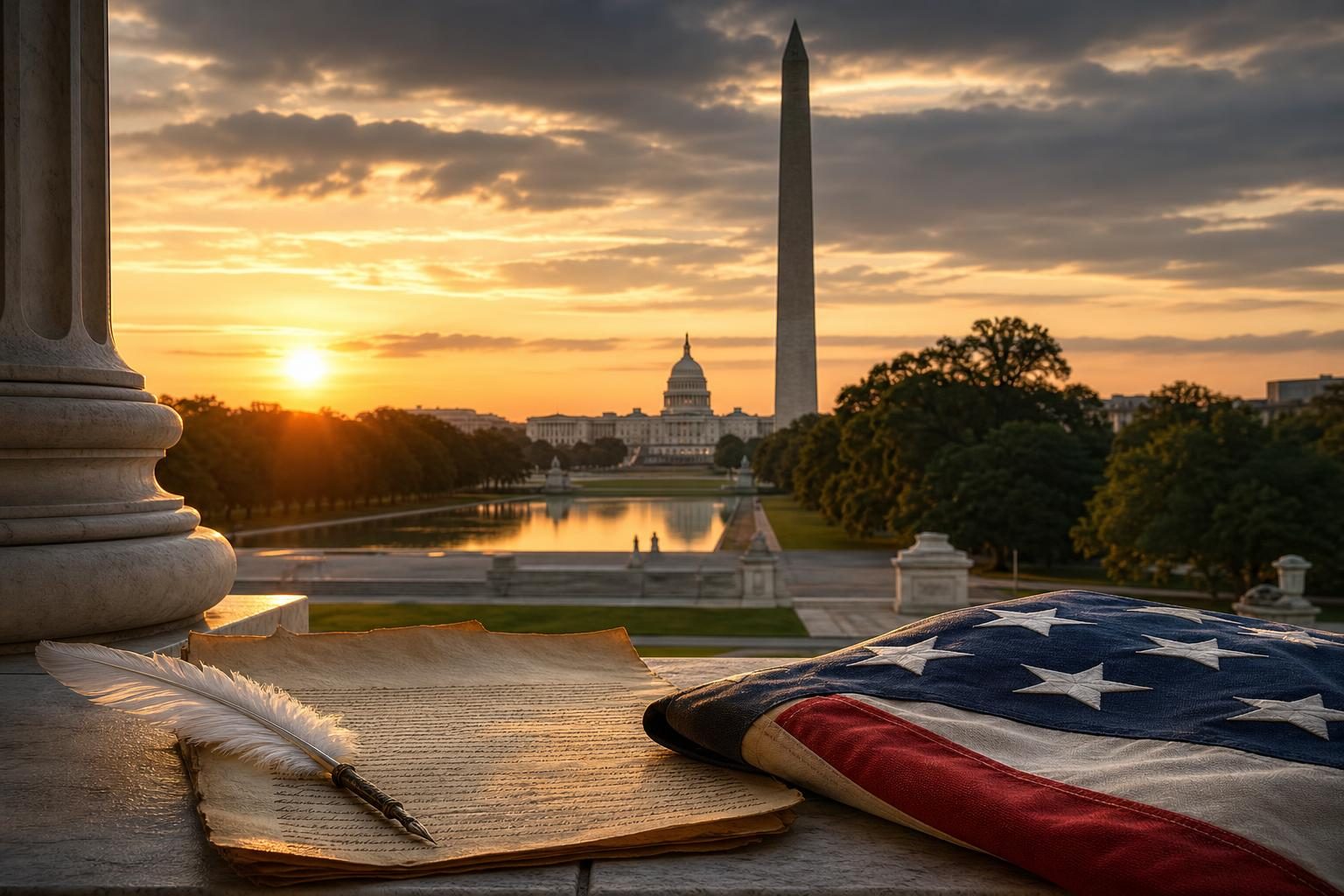
Illustration · Liberty Bell Report
Washington, D.C., is about to send a new delegate to Congress for the first time since 1991, and he has made clear what he wants first. Robert White Jr., elected to succeed the retiring Eleanor Holmes Norton, told the Associated Press in an interview published Tuesday that statehood for the District is his top priority, ahead of improving the city's economy.
White was candid about the plan. Delegates can introduce bills but cannot vote on final passage, so his strategy rests on persuading Democratic leaders to put the District at the center of their agenda, the AP reported. He said he has already begun telling new colleagues that two additional senators would be a game changer, and he argued that Democrats would be making a serious mistake if they failed to deliver statehood the next time they hold the House, the Senate and the White House. The AP noted that the Democratic House passed a statehood bill in 2021, when President Joe Biden was in office, but the measure stalled in the Senate, where the filibuster requires 60 votes to advance most legislation.
The desire of District residents to be heard in Congress is sincere, and it deserves a respectful answer. But the answer the Constitution gives is that a change this large cannot be done by a simple majority vote.
What the Constitution Says
The Founders did not leave the capital's status to chance. The District Clause of Article I gives Congress the power of "exclusive Legislation in all Cases whatsoever" over a federal district, not exceeding ten miles square, that serves as the seat of government. James Madison explained why in Federalist No. 43, writing of the need for "complete authority at the seat of government". Without it, he warned, the national government could find its proceedings interrupted and its members dependent on the goodwill of a single state for their protection, a danger to every other state in the Union.
The Twenty-Third Amendment, ratified in 1961, makes the problem harder still. It grants presidential electors to the District that is the seat of government, and the Congressional Research Service has noted that statehood by ordinary legislation might be incompatible with it. Shrinking the federal district to a small core of monuments and government buildings would not erase that amendment. Repealing it would require ratification by three-quarters of the states, as the Senate Republican Policy Committee pointed out when the last statehood bill moved. The CRS also lays out an argument some scholars raise that Maryland, which ceded the land, would have to consent to any new state carved from it.
History and the Voters Have Answered
Americans have walked this road before, and they walked it constitutionally. In 1978 Congress approved, by two-thirds of both chambers, a constitutional amendment to give the District full representation in Congress without making it a state. It went to the states, as Article V requires, and only 16 had ratified it when the seven-year deadline ran out. The country was asked, and the country declined.
That is not a failure of democracy. It is democracy working as designed, with the states, not one party's temporary majority, deciding a question about the structure of the Union itself.
The public remains skeptical. In Gallup's first national poll on the question, taken in June 2019 as Congress prepared for hearings on a statehood bill, 64% of Americans opposed making the District a state and just 29% supported it.
White's own words explain much of the resistance. When the case for a new state is framed around adding two more senators for one party, Americans in the other 50 states can be forgiven for seeing a power play rather than a civil rights cause. The Senate has added states before, but never by turning the national capital the Founders deliberately set apart into a partisan prize.
What Comes Next
White will take his seat in a new Congress where Democrats have more power, but the filibuster still stands between a statehood bill and the president's desk, and White said he is counting on future elections to change the math. He has also criticized the ongoing National Guard deployment in the city, which President Trump says is needed for public safety, as a waste of money.
Residents who want a stronger voice have a legitimate path, the one the Framers left in Article V. Persuade two-thirds of Congress and three-quarters of the states, as the 1978 effort tried to do. Until then, the capital belongs to all Americans, and its status should be settled the way the Constitution requires, not by a narrow vote and a hope that no court looks too closely.
Sources
- Associated Press (via U.S. News & World Report): First New DC Delegate Since 1991 Hopes That Democratic Victories Mean Statehood Is Coming (link)
- Congressional Research Service: DC Statehood: Constitutional Considerations for Proposed Legislation (link)
- The Avalon Project, Yale Law School: The Federalist No. 43 (link)
- WJLA: 51st state? Despite House passage, DC statehood bill faces many obstacles (link)
- Gallup: Americans Reject D.C. Statehood (link)
- Senate Republican Policy Committee: Practical and Legal Problems with DC Statehood (link)
— 30 —