Pushback
A Repair Check Is Not a Public Safety Plan: Seattle Keeps Paying for Broken Glass Instead of Stopping the Burglars
The City Council wants another $1 million for storefront repairs as break-ins pile up. Helping victims is decent, but the city's own numbers show the real problem is going unanswered.
By ELIJAH CARTERStaff Correspondent · WASHINGTON STATE · Nov 19, 11:31 AM · 3 min. read
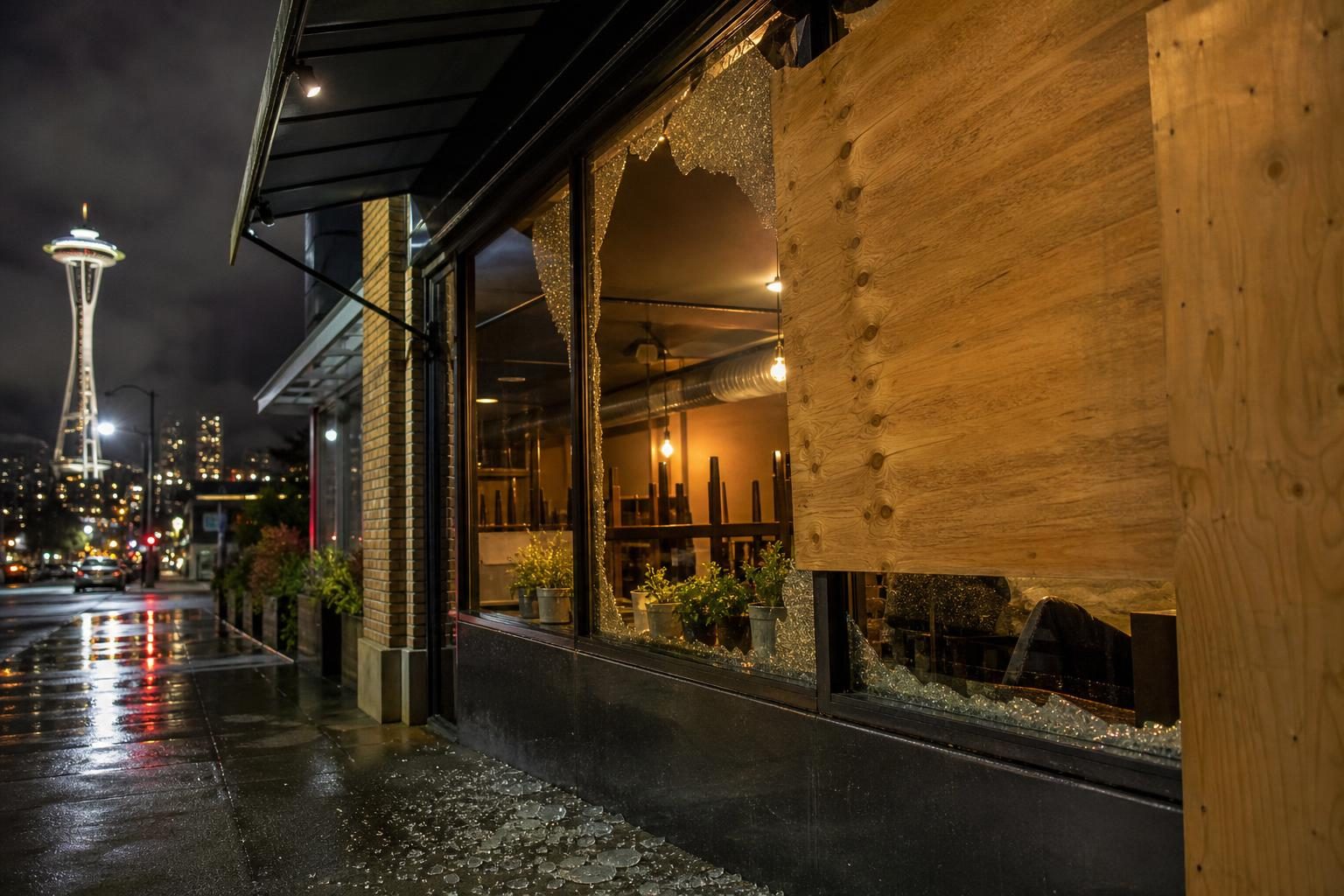
Illustration · Liberty Bell Report
Seattle has found a new line item for its crime problem: more money to sweep up the glass. Nine members of the Seattle City Council are backing a proposal to add $1 million to the city's Back to Business Fund, which reimburses small businesses for storefront damage from break-ins and vandalism, with a final budget vote expected Friday, the Westside Seattle newspapers reported.
The one-time boost would come on top of the program's baseline budget of $800,000, according to that report, and demand for the relief has already outstripped what the city set aside. The Independent summed up the situation bluntly, reporting that vandalism and break-ins in Seattle are so common that the city is weighing a $1 million fund to help stores rebuild.
That is the proposal, stated fairly. The councilmembers want to help small business owners who keep getting hit. That is a decent instinct, and those owners deserve help. But a repair check is not a public safety plan, and Seattle's own numbers show why.
The Program Keeps Growing Because the Problem Keeps Growing
The fund is not new. The city launched its storefront repair program in 2022 to help small businesses hurt by property damage, according to the mayor's office at the time. Four years later, it is still running, and it keeps getting bigger.
In June, the city raised the grants. Businesses can now receive up to $5,000 per incident, for up to three incidents a year, plus a one-time grant of up to $10,000 for security upgrades, up from $3,000 and $6,000, the city's Office of Economic Development announced.
Read that again: the city now plans for the same business to be broken into three times in a single year. When a government writes repeat victimization into the rules of a grant program, it is admitting that it does not expect to stop the crime.
The stories behind the numbers are worse. The Mioposto restaurant said in a social media post that it had suffered its eighth break-in at one of its locations in the past year, the Westside Seattle papers reported. KIRO 7 reported on business owners across the city grappling with repeated break-ins while the council debates more repair money.
Eight break-ins in a year is not bad luck. It is a sign that whoever is doing this expects to get away with it.
Treating the Wound Instead of the Cause
This is not the first time Seattle has reached for a check instead of a crackdown. Mayor Katie Wilson's grocery-store support plan in the 2026 budget, which steered money to stores dealing with theft and damage, drew criticism as a "bandage on a bullet wound," Fox News reported.
The phrase fits. A replaced window does nothing to stop the person who broke it. A security camera grant helps, but only if someone reviews the footage, makes an arrest and sees the case through to a consequence. Without that, the city is simply subsidizing the cost of lawlessness, and taxpayers end up paying twice: once for the damage, and again for the next round of repairs.
Common sense says the cycle breaks only when repeat offenders are caught and held accountable. A small number of people often commit a large share of property crimes. Taking them off the street protects every storefront on the block, not just the one that got a grant.
The Constitution's Preamble lists insuring domestic tranquility among the first purposes of government. A city's first job is to keep its people and their property safe. Everything else, including well-meant relief programs, comes after that.
Who Pays the Price
The burden of property crime does not fall on big corporations that can absorb losses. It falls on the family restaurant, the corner shop and the immigrant entrepreneur who poured savings into a dream. These are the people who sweep up the glass at 3 a.m., file the police report, wait for the insurance adjuster and open the doors again the next morning.
They are also the people the council says it wants to help. The kindest thing the city could do for them is to make sure the ninth break-in never happens.
What Comes Next
The council's final budget vote is expected Friday. Seattle residents who care about their neighborhood businesses should ask their councilmembers a simple question before then: what is the plan to stop the break-ins, not just pay for them?
Help for victims and enforcement against criminals are not opposites. A serious city does both. If Seattle adds another million dollars for repairs, it should match that commitment with a clear plan to catch, charge and stop the repeat offenders who keep sending owners back to the glass shop. Otherwise, next year's budget will need an even bigger fund, and the year after that, bigger still.
Sources
- Westside Seattle: Seattle Council eyes $1 million boost for storefront repairs; Mio Posto break-ins are a case in point (link)
- The Independent: Vandalism and break-ins in Seattle are so common city is weighing a $1M fund to help stores rebuild (link)
- KIRO 7: Seattle businesses grapple with repeated break-ins as city weighs more repair funding (link)
- City of Seattle Office of Economic Development: Back to Business Program expands with increase to grant amounts (link)
- Fox News: Socialist mayor's new answer to rampant retail crime ignites fury: 'Bandage on a bullet wound' (link)
- Office of the Mayor, City of Seattle: Seattle Launches Storefront Repair Fund to Support Small Businesses Impacted by Property Damage (link)
— 30 —