Immigration & Border Security
Razor Wire Stays: Texas Locks In 30-Year Border Deal
A settlement with federal immigration agencies bars agents from cutting the state's wire in the Del Rio Sector, and it binds the next governor too.
By COLE BRENNANStaff Correspondent · TEXAS · Nov 20, 10:37 PM · 2 min. read
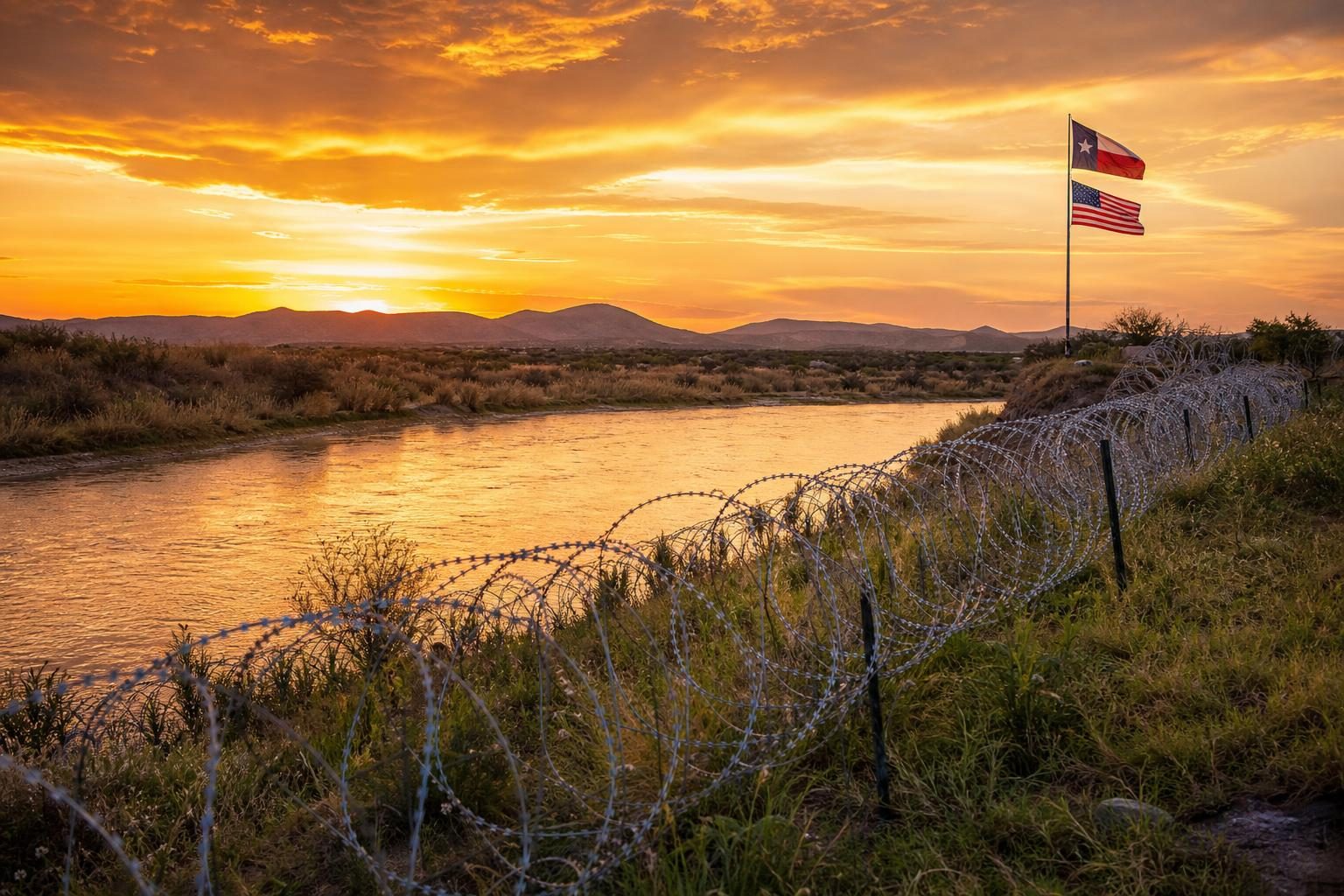
Illustration · Liberty Bell Report
Texas has won a deal that keeps its razor wire on the Rio Grande for as long as 30 years. Attorney General Ken Paxton announced Thursday that the state and federal immigration agencies settled his lawsuit over Border Patrol agents cutting the wire, KVIA reported.
Under the agreement, federal agents may not willfully cut or remove the state's concertina wire on non-federal land within 25 miles of the border in the Border Patrol's Del Rio Sector, the Texas Tribune reported in a story carried by KWTX. The sector covers about 245 miles of border along the Rio Grande and Lake Amistad and includes Eagle Pass, the town at the center of the long fight over the wire.
What the Deal Says
The agreement carves out exceptions. Agents may still act to give emergency aid, apprehend migrants, respond to public safety threats or repair federal infrastructure. When they do, federal officials must notify Texas within 72 hours and work to temporarily repair the barrier, and they must coordinate with the state ahead of any non-emergency work, according to KVIA.
Paxton, Gov. Greg Abbott, Homeland Security Secretary Markwayne Mullin and Customs and Border Protection Commissioner Rodney Scott are parties to the deal, and its terms bind their successors. That includes Governor-elect Gina Hinojosa, a Democrat who takes office in January. Newsweek reported that the agreement approved by Texas and federal authorities would keep razor wire along the border for 30 years, and The Epoch Times described it as a 30-year settlement that ends the dispute.
How Texas Got Here
Paxton sued the Biden administration in October 2023 after Border Patrol agents cut through wire the state had strung along the riverbank under Operation Lone Star. In November 2024, a federal appeals court sided with Texas and barred federal agents from destroying the wire near Eagle Pass while the case went on. The settlement now replaces that temporary protection with a written, long-term promise.
Why It Matters
For years, Texas and Washington fought over the same stretch of river, with state troopers stringing wire and federal agents cutting it. The new deal turns that standoff into a working partnership, signed by a federal government that now treats the wire as a tool rather than an obstacle.
The 30-year term is the heart of it. Border policy in Texas has swung with elections, and a new governor from the other party is weeks away from taking office. By binding successors, the agreement makes sure the barrier does not depend on who wins the next race in Austin or Washington.
The carve-outs matter too. Agents keep the ability to save lives and make arrests, while the state keeps a barrier that discourages dangerous crossings at the river. Protecting the people who live along the border and the migrants who risk their lives in the current are not competing goals, and this deal treats them as one job.
For the ranchers, landowners and small towns of the Del Rio Sector, the message is simple: the wire stays, and Texas and Washington are finally pulling in the same direction.
Sources
- KVIA: Settlement allows barbed wire on Texas border for up to 30 years (link)
- KWTX (The Texas Tribune): Ken Paxton, feds agree to keep razor wire at Texas border for the next 30 years (link)
- Newsweek: Texas Border Wall Could Keep Razor Wire for 30 Years Under New Agreement (link)
- The Epoch Times: Texas Secures 30-Year Settlement With Feds to Keep Wire Barrier at Border (link)
- Texas Border Business: Texas AG Reaches Settlement Allowing Concertina Wire on Border for Up to 30 Years (link)
- The Texas Tribune: Feds can't destroy razor wire Texas installed near Eagle Pass, appeals court rules (link)
— 30 —