Health & Medicine
For Veterans Fighting PTSD, Washington Takes Its First Real Step Toward Testing Ibogaine
Health Secretary Robert F. Kennedy Jr. announced up to $4.9 million to lay the groundwork for the first U.S. studies of the powerful psychedelic, plus a $20 million research network for fast-acting mental health drugs, while warning plainly of its heart risks.
By SAMUEL ADEYEMIStaff Correspondent · WASHINGTON · Nov 12, 8:30 PM · 5 min. read
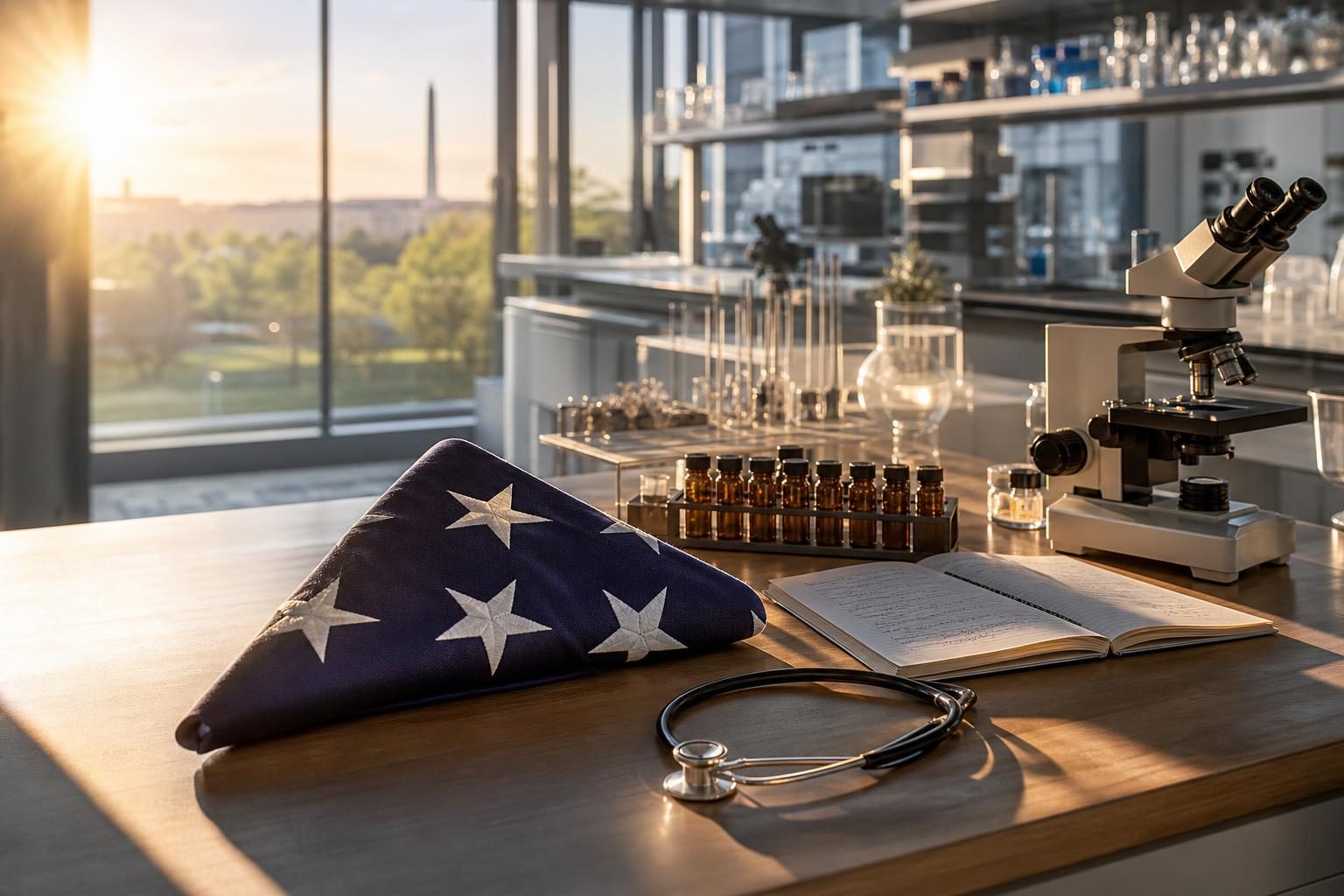
Illustration · Liberty Bell Report
The federal government on Thursday took its first concrete step toward testing ibogaine, a powerful psychedelic that many veterans say helped them overcome post-traumatic stress and addiction, when Health and Human Services Secretary Robert F. Kennedy Jr. announced new research funding the day after Veterans Day.
"Veterans kept their promise to this country. We must keep ours," Kennedy said in announcing the effort. Veterans Affairs Secretary Doug Collins joined him and said the work would focus first on safety and on the best research available, the Associated Press reported.
For a country that sends its sons and daughters to war and then too often leaves them to fight their hardest battles alone at home, this is a welcome sign of seriousness. It is also, by design, a careful first step rather than a leap.
What the Government Is Paying For
Through the Advanced Research Projects Agency for Health, known as ARPA-H, HHS will invest up to $4.9 million over five years to advance ibogaine as a potential treatment for PTSD and other serious mental illnesses, including in veterans, according to the department. Awards depend on meeting what HHS called aggressive and accelerated research milestones.
The money is groundwork, not treatment. HHS said the awards cover regulatory and manufacturing preparation only. They do not pay for patient treatment or human-subject research, do not authorize clinical trials and do not amount to approval by the Food and Drug Administration. The goal is to support Investigational New Drug applications, secure a supply of clinical-grade ibogaine and build domestic manufacturing. The AP likewise reported that the funds will lay the foundation needed to manufacture, dose and design studies.
Two awardees were named. The Mark Cuban Cost Plus Drug Company leads a team that will build the regulatory, chemical and engineering foundation for a domestically made, single-molecule ibogaine hydrochloride product for possible PTSD treatment, HHS said. Beond, Inc. will provide clinical data on ibogaine's safety, dosing, effectiveness and how long its benefits last. The AP described Beond as a Texas-based company that has treated more than 3,000 patients with ibogaine in Mexico. All awardees must make their research data open to the public.
Dr. Al Bugazia, a senior adviser at ARPA-H, is leading the work, and future awards will study ibogaine for substance use disorders, including opioid addiction. Kennedy predicted a fast process. "We're going to have, I think, a record drug approval process," he said, according to the AP.
A Second Track: Fast-Acting Mental Health Drugs
HHS also announced that the National Institute of Mental Health has opened a $20 million funding opportunity to build a research network studying rapid-acting psychotropic drugs, such as ketamine, esketamine and psilocybin. Award recipients are to be announced in the summer of 2027.
Together, the two efforts add up to close to $25 million, the overall figure the Washington Examiner highlighted in describing a multi-department push with the VA.
HHS also made two promises that should reassure skeptics. If a medicine is eventually approved, the department said, the goal is to price it at the cost of production plus a fair margin. And it committed to publishing the research findings whether they show benefit, no benefit or harm. That kind of honesty is exactly what a project like this needs.
The Risks Are Real
No one should mistake this for a green light to self-medicate. Ibogaine comes from a shrub native to West Africa and can cause intense hallucinations, nausea, vomiting, tremors and sometimes deadly irregular heart rhythms, the AP reported. HHS's own announcement warns that the drug carries serious safety risks, including potentially life-threatening heart rhythm problems, and says future studies must include careful screening, cardiac monitoring and independent safety oversight.
The drug is illegal in the United States and sits in the same tightly restricted class as LSD and ecstasy. The AP reported that the Multidisciplinary Association for Psychedelic Studies has linked it to more than 30 deaths in the medical literature, and that the National Institutes of Health briefly funded ibogaine research in the 1990s before stopping over concerns about heart toxicity.
Because of those limits, most of what is known comes from patients who traveled to Mexico or other countries where the drug is lightly regulated. Clinics there typically charge $10,000 to $20,000 for a course of treatment, often with heart monitoring and emergency workers standing by, the AP reported.
Why Veterans Kept Pushing
The push did not come from Washington. It came from veterans and their families. A Stanford University study of 30 veterans who arranged ibogaine treatment in Mexico found improvements in brain-injury symptoms, PTSD, depression and anxiety, though the study had no placebo group, the AP reported. Patients in that study received ibogaine with magnesium to reduce the risk to the heart.
Former Navy SEAL Marcus Luttrell, who received the Navy Cross and Purple Heart, testified in Texas that after an injury on a 2005 mission in Afghanistan he was introduced to opioids, and that after ibogaine treatment he no longer had an opioid addiction or a taste for alcohol, Texas Public Radio reported. He was in the Oval Office in April when President Trump signed an order to speed federal review of psychedelics. "You're going to save a lot of lives through it," Luttrell told the president.
That April 18 order directed the FDA to issue fast-track national priority vouchers for three psychedelics and cleared the way for the first human trials of ibogaine in the United States, according to the AP. Podcaster Joe Rogan has said he texted the president about ibogaine and got an enthusiastic reply. Three psychedelic drug applications, including the first potential psilocybin medicines and MDMA, are now pending at the FDA, with decisions possible within weeks or months.
Texas Led the Way
Texas moved first. In June 2025, Gov. Greg Abbott signed a $50 million bill to help carry ibogaine through FDA-approved clinical trials for opioid use disorder and other conditions, which advocates called the largest state-funded psychedelic research effort in history. "Texas is home to more veterans than any other state in the U.S.," Abbott said at the signing.
The Texas law pairs public money with private investment and gives the state a share of any revenue if a drug is approved. The Texas Tribune reported that the state is entitled to at least 20% of a successful ibogaine drug, with a quarter of that revenue going to a fund for Texas veterans. Former Gov. Rick Perry led that effort. The Tribune reported that the drug's effects, including a temporary paralysis, discourage recreational use, a point made by Bryan Hubbard of the American Ibogaine Initiative. "There is no street economy for this drug," Hubbard said.
What Comes Next
The road from here is long. Federal awardees must hit their milestones, produce a pure and consistent product, and file applications before the first American patient is ever dosed in a trial. HHS said it is pursuing multiple drug applications across more than one condition, and the mental health institute's research network will be chosen next summer.
This is how it should be done: carefully, in the open, with the data published for all to see. Scripture tells us to bear one another's burdens. For the men and women who carried the burden of war for the rest of us, a government willing to test every promising treatment, honestly and safely, is the least we owe.
Veterans in crisis, or those who love them, can reach the Veterans Crisis Line by dialing 988 and pressing 1.
Sources
- U.S. Department of Health and Human Services: HHS Announces ARPA-H Awards to Advance Ibogaine Development for PTSD & New $20 Million Funding Opportunity to Advance Rapid-acting Psychotropics (link)
- ABC News (Associated Press): Trump administration will fund new research on controversial psychedelic drug ibogaine (link)
- Washington Examiner: Trump administration fast-tracks ibogaine research for PTSD (link)
- ABC7 San Francisco (Associated Press): Trump signs order to speed review of psychedelics, including the controversial drug ibogaine (link)
- KSAT (The Texas Tribune): With Rick Perry's backing and $50 million from the state, Texas set to become a leader in psychedelics research (link)
- HPPR (Texas Public Radio): Abbott signs groundbreaking psychedelic research bill to help bring ibogaine through clinical trials (link)
— 30 —