Faith & Religion
From Pews to Petitions: How Colorado's Churches Helped Carry Three Child-Protection Measures in a Blue-Wave Year
Voters approved tougher trafficking penalties, protections for girls' sports and limits on surgeries for minors. Now the churches behind the campaign are asking Gov.-elect Weiser to honor the vote.
By ETHAN CALLOWAYStaff Correspondent · COLORADO · Nov 21, 9:30 AM · 3 min. read
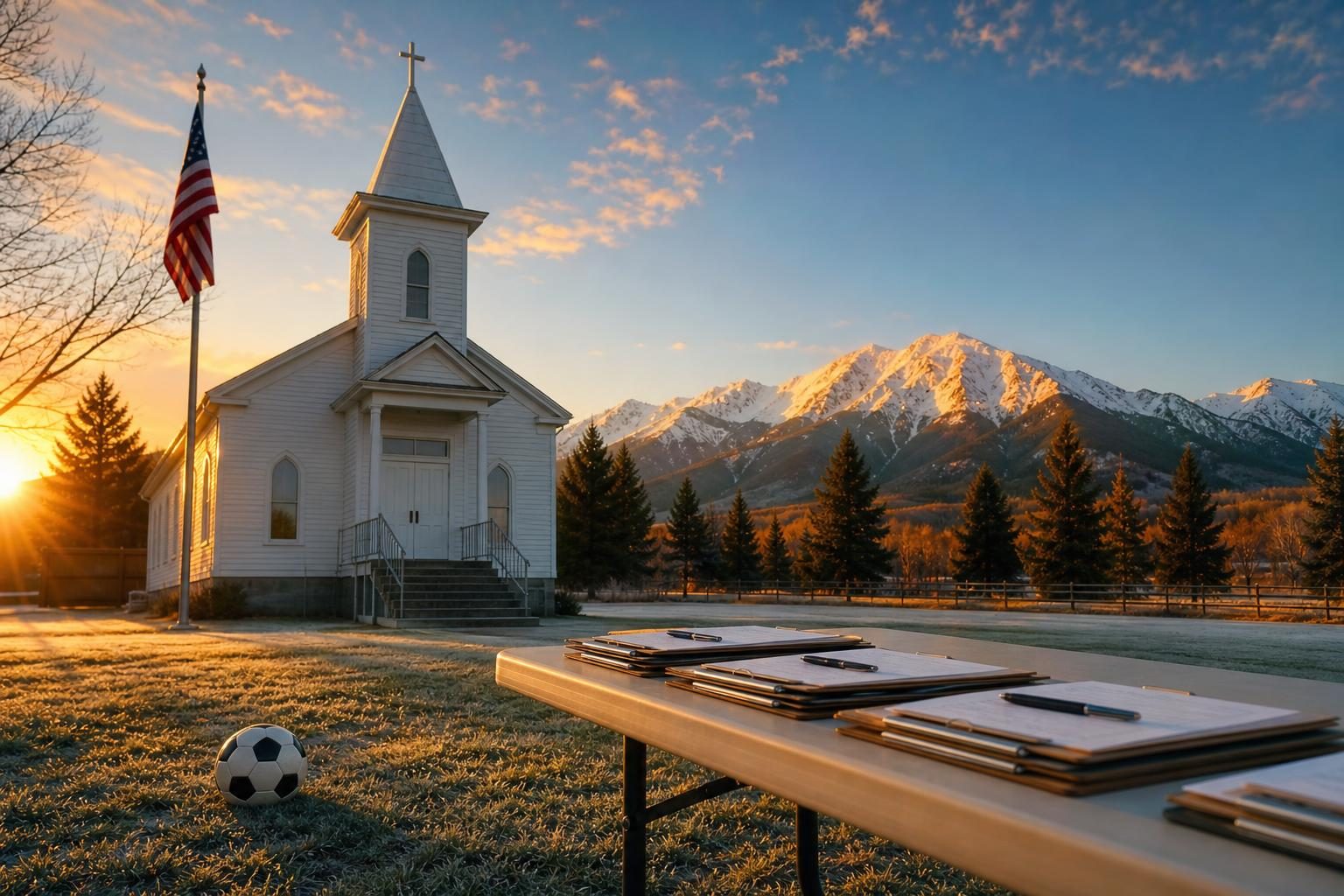
Illustration · Liberty Bell Report
In an election year when Democrats swept much of Colorado, voters still said yes to three citizen-led measures meant to protect children, and the people who carried them across the finish line say the state's churches made the difference. Writing in The Christian Post this week, Erin Lee, executive director of Protect Kids Colorado, described how congregations across the state turned Sunday fellowship into a grassroots campaign.
Now those same churches are watching the statehouse. Gov.-elect Phil Weiser and Democratic legislative leaders have signaled that they plan to make changes to some of the measures before they fully take effect, and supporters are urging them to honor what voters decided.
What Voters Approved
The three measures covered different ground. Proposition 133 toughened sentences for people convicted of child sex trafficking, and Colorado voters backed it by a wide margin, Colorado Politics reported. Proposition 134 requires school and college athletic teams to be designated male, female or coeducational, the change at the heart of the debate over girls' sports. Proposition 135 prohibits surgeries intended to alter a minor's biological sex characteristics, with certain medical exceptions, and bars public funding and insurance coverage for those procedures, KUNC reported.
Propositions 134 and 135 each passed with about 52 percent of the vote, according to KUNC. That is a narrow margin, but in a state where Democrats did so well, it is a remarkable one.
How the Churches Did It
In her account, Lee says the campaign was built from the ground up. She wrote that more than 3,300 volunteer petition carriers fanned out across all 64 Colorado counties and that at least 1,000 churches engaged with the effort. She also wrote that the campaign was heavily outspent by its opponents. Those figures come from the campaign itself, and they describe the kind of effort that rarely makes the evening news.
Catholic leaders were part of it from the start. Colorado's Catholic bishops publicly backed the measures and encouraged parishioners to help gather signatures at their parishes, Colorado Public Radio reported in March.
For many believers, this was not about partisanship. It was about the conviction that children are a gift entrusted to adults, and that the law should protect them from exploitation and from decisions with lifelong consequences that they are too young to make. Scripture's call to care for the vulnerable, and Jesus' warning about anyone who would cause a little one to stumble, have long shaped how Christians think about public policy toward children.
The Other Side
Opponents argued that Propositions 134 and 135 discriminate against transgender students and intrude on decisions they believe belong to families and doctors, KUNC reported. Those concerns were part of a long and spirited public debate, and voters weighed them before casting their ballots. A majority came down on the side of the measures.
A Test for the Next Governor
The question now is whether Colorado's leaders will respect that outcome. Weiser and statehouse Democrats are already discussing changes to the measures on transgender youth, as well as a voter-approved measure on fentanyl penalties, KUNC reported. Because the measures are ordinary statutes rather than constitutional amendments, the legislature has the power to amend or repeal them, Colorado Politics reported.
Protect Kids Colorado has responded with a petition asking the governor-elect and lawmakers not to repeal, weaken or rewrite Propositions 133, 134 and 135, and to carry them out as voters approved them. Lee accused Weiser of disregarding the will of voters when it does not suit him, according to Colorado Politics.
Supporters of the measures have a fair point. Implementing a law sometimes requires technical fixes, and no one should object to good-faith clarifications. But there is a difference between helping a voter-approved law work and quietly gutting it. Coloradans did their part at the ballot box. The burden is now on their elected leaders to show that their planned changes do not become a polite way of overturning the people's decision.
What Comes Next
The new legislature convenes in January, when any proposed changes will be debated in public. The churches that gathered signatures and turned out voters have made clear they intend to stay engaged.
That may be the most lasting lesson from Colorado's election. Faith communities that organize patiently, respectfully and lawfully can still move a state, even in a year when the political tide seemed to run the other way. Pastors and parishioners did not win by shouting. They won by showing up, one signature and one conversation at a time.
Sources
- The Christian Post: How Colorado churches won 3 ballot measures in a blue wave (link)
- KUNC: Colorado voters approve sports limits, surgery ban for transgender youth (link)
- Colorado Politics: Colorado voters back tougher sentences for sex traffickers (link)
- KUNC: Phil Weiser and statehouse Democrats are already planning tweaks to Colorado ballot measures on fentanyl, transgender youth (link)
- Colorado Politics: Petition launched to defend voter-backed Colorado measures (link)
- Colorado Public Radio: Colorado Catholic bishops back the transgender ballot measures (link)
— 30 —