Energy & Environment
Mines, Fires and a Missing Sailor: Iran Takes Its War to the Tanker Lanes of Hormuz, and Oil Markets Hold Steady
An LPG tanker with 24 Indian crew was attacked twice and Iran claims more ships hit mines, but Brent settled near $93 as forecasts of plentiful supply outweighed Tehran's threats.
By PRIYA DESAIStaff Correspondent · WASHINGTON · Nov 17, 11:25 PM · 3 min. read
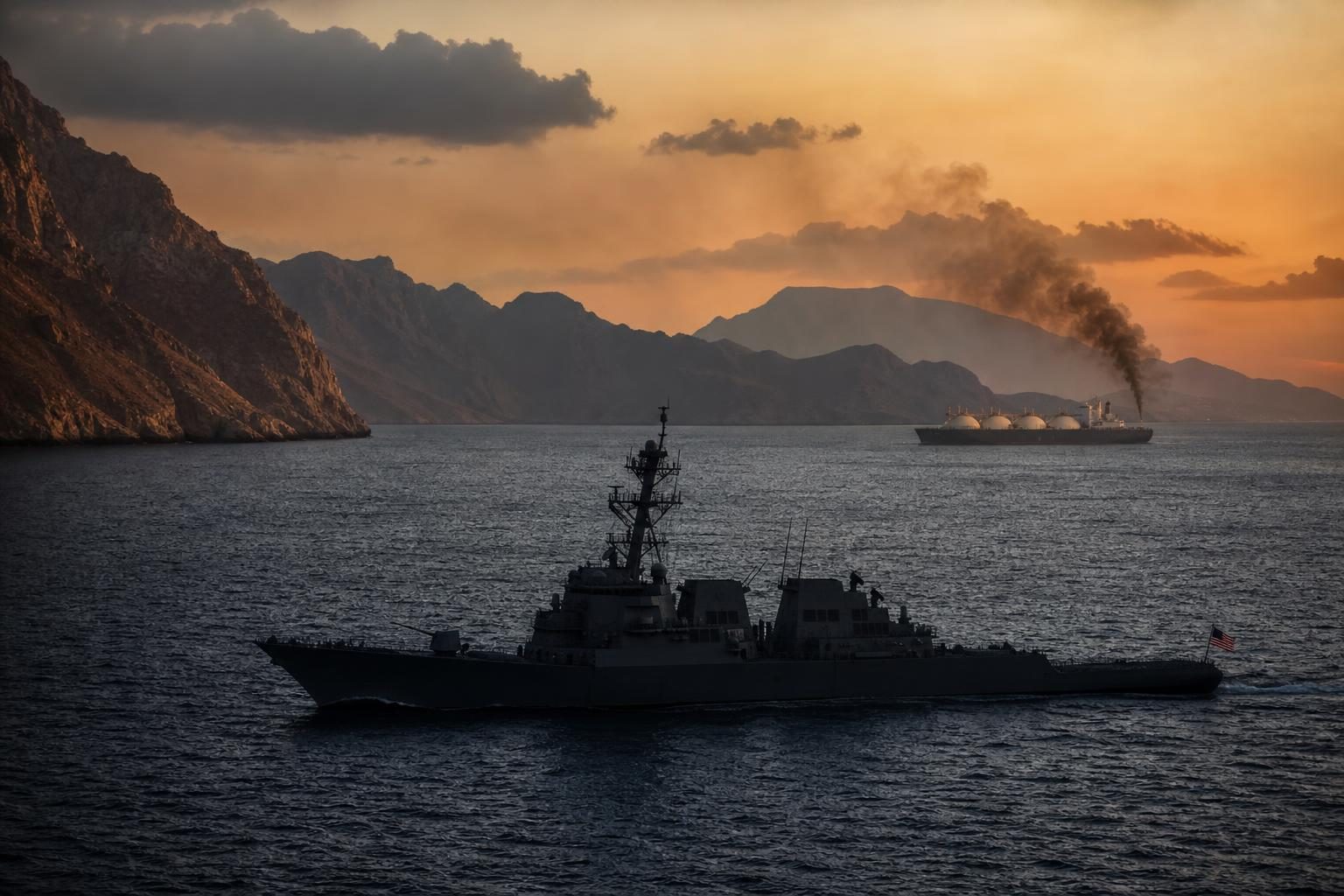
Illustration · Liberty Bell Report
The fight for the Strait of Hormuz moved onto the decks of merchant ships this week. A liquefied petroleum gas tanker with 24 Indian sailors aboard was attacked twice, one crew member is missing and two were wounded, India's foreign ministry said, while Iran's Revolutionary Guard claimed that more tankers had struck mines in the narrow waterway that carries much of the world's oil.
Oil traders, for their part, kept their heads. Brent crude settled a little above $93 a barrel on Tuesday, up modestly, as markets weighed the attacks against forecasts of plentiful supply.
A Tanker, a Missing Sailor and a Rescue at Sea
India's Ministry of External Affairs said the Panama-flagged LPG carrier MT Tara Gas was attacked in the strait on November 16. Of its 24 Indian crew members, 21 were evacuated to shore at Khasab, in Oman, after a second attack forced the crew to abandon the ship; one sailor remains missing and two were hurt. India condemned the attack and said it was working with the ship's managers, Omani authorities and regional rescue agencies to find the missing man. The ministry did not say who carried out the attack.
Early reports had said everyone aboard was safe, before officials revised the account, a reminder of how hard it is to get clear facts from a war zone at sea.
Iran's Mine Claims
Iran's Islamic Revolutionary Guard Corps Navy said this week that two tankers, a supertanker carrying more than two million barrels of crude and a liquefied gas carrier, had hit naval mines and been immobilized, Iran International reported. The IRGC also claimed the ships had been receiving support from American fighter jets. Its claims have not been independently verified.
Euronews reported that at least five ships caught fire after striking mines in the strait on Tuesday, before Iran said American forces struck targets on Qeshm Island off its southern coast. As this site reported Tuesday, U.S. jets hit an Iranian missile launch site on Qeshm after drones targeted American forces in Bahrain.
Why the Market Shrugged
If Tehran hoped to send energy prices soaring, it has not worked so far. The Telegraph reported that oil markets have been skeptical of the IRGC's insistence that it has mined the strait. And the International Energy Agency said the global oil market will return to surplus in the fourth quarter, as Middle East exports recover faster than demand despite the attacks on shipping, Investing.com reported.
That is good news for American families heading into the holidays: a steady crude market gives drivers and heating-oil customers some breathing room even as the war continues.
It is also a sign of how much American energy production has changed the picture. A generation ago, mines in Hormuz would have sent the U.S. economy into a panic. Today, with the United States among the world's largest producers of oil and natural gas, a crisis in the Gulf still matters, but it no longer holds the country hostage.
What Tehran May Be After
The Jerusalem Post, citing a report, said Iran has drawn up plans to escalate the war after the U.S. midterm elections, including stepping up attacks on tankers in Hormuz, in hopes of pushing Washington back to the negotiating table on better terms. If that is the strategy, it depends on two things: that shipping companies scare easily and that Americans lose their nerve. So far, neither has happened.
Freedom of navigation is one of the oldest principles of American foreign policy, going back to the Barbary Wars. The sailors aboard the Tara Gas were not soldiers; they were civilian merchant crew hauling liquefied gas. Attacks on civilian crews in international waters are an assault on the global commerce that every nation, including Iran's own trading partners, depends on.
What Comes Next
The search for the missing Indian sailor continues, with Oman and India coordinating the rescue effort. Investigators and navies in the region will want to determine what struck the Tara Gas and whether Iran's mine claims hold up. Markets will keep watching both the strait and the supply numbers; for now, the IEA's forecast of a surplus is doing more to set prices than the IRGC's threats.
For Americans, the takeaway is steadier than the headlines. The danger in Hormuz is real, especially for the crews who sail it, but a strong U.S. military presence and abundant American energy mean Tehran's leverage is smaller than it once was.
Sources
- Hindustan Times: India condemns attack on LPG tanker carrying 24 Indians in Hormuz; MEA says 1 missing (link)
- Iran International: IRGC says two tankers hit mines in Strait of Hormuz (link)
- Euronews: US strikes targets in Qeshm Island after Iranian mines hit five ships in Hormuz (link)
- The Telegraph: The IRGC insists it has mined the Strait of Hormuz. The oil markets disagree (link)
- Investing.com: Brent settles higher in choppy trade amid Hormuz attacks, U.S.-Iran tensions (link)
- The Jerusalem Post: Iran hardens negotiating stance after US midterms, weighs Strait of Hormuz escalation - report (link)
— 30 —