Elections
Proof of Citizenship to Register: The Arizona Voting Case the Supreme Court Hears on Dec. 8, and What It Could Mean Nationwide
The justices will decide whether federal law stops Arizona from requiring documents that prove a new voter is a citizen, and whether the state may clean its rolls in the run-up to an election.
By SOPHIA REYESStaff Correspondent · WASHINGTON · Nov 23, 9:30 AM · 3 min. read
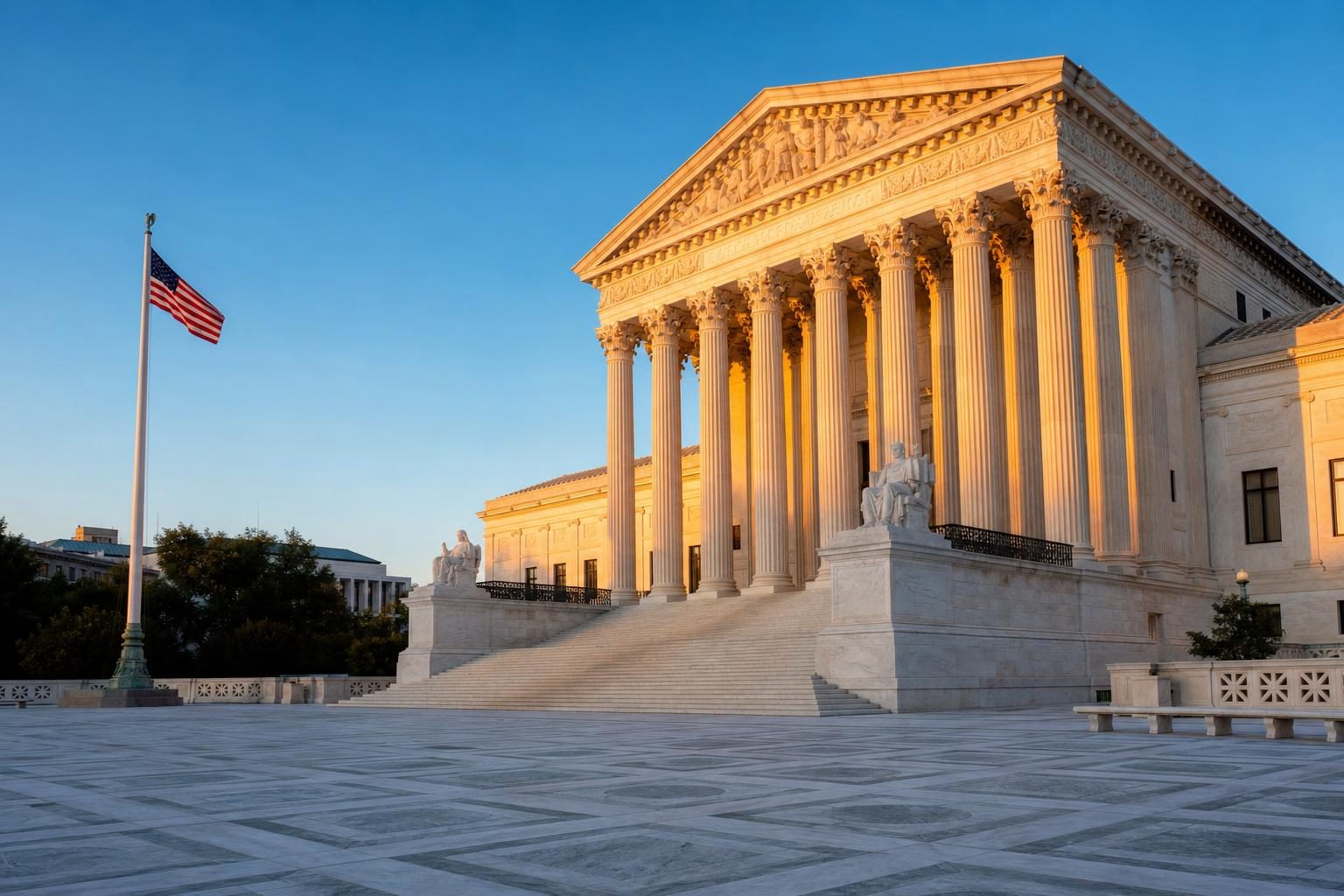
Illustration · Liberty Bell Report
The Supreme Court will take up one of the most consequential election-integrity cases in years on Tuesday, Dec. 8, when it hears arguments over Arizona's requirement that new voters show proof that they are American citizens.
The case, Republican National Committee v. Mi Familia Vota, asks two questions, according to the Court's docket as summarized by SCOTUSblog. First, whether the National Voter Registration Act bars Arizona from requiring a document proving citizenship, such as a birth certificate or passport, to register to vote in federal elections. Second, whether that same federal law prevents Arizona from systematically removing voters suspected of being ineligible from its rolls during the 90-day quiet period before an election.
How the case got here
Arizona lawmakers passed the law at the center of the case in 2022. It directs election officials to reject registration applications on the state's form that arrive without documentary proof of citizenship. Voting-rights groups sued, and a federal district court blocked key parts of the law. A divided panel of the Ninth Circuit affirmed that injunction in February 2025.
The Supreme Court has already been involved once. In 2024, it allowed Arizona to reject state-form registration applications that lack proof of citizenship while the litigation continued, rather than registering those applicants as voters for federal races only. The justices agreed in late June to hear the full case. The Court also granted the Justice Department's request to share argument time, a sign of how closely the administration is following the case.
The fight sits on top of an earlier precedent. In 2013, in Arizona v. Inter Tribal Council of Arizona, the Court held that the National Voter Registration Act requires states to accept and use the federal registration form, which asks applicants to swear they are citizens but does not demand documents. That case grew out of Proposition 200, the 2004 ballot measure in which Arizona voters first required proof of citizenship to register. Arizona responded to the ruling by creating a two-track system: proof of citizenship for state and local elections, and the federal form for federal races. Over the years, the state has accepted a range of documents to satisfy the requirement, including passports, birth certificates, naturalization papers and Arizona driver's license records, so most longtime residents can meet it without ever handling a paper certificate.
The 2022 law tried to go further by tightening how the state handles applicants who use the federal form without documents. That is the part of the dispute now before the justices, along with the timing rules for cleaning the rolls.
The arguments on each side
The Republican National Committee and Arizona's defenders argue that a state has every right to make sure the people registering are eligible, and that asking for the same kind of document Americans use to get a passport or a job is a modest safeguard. The Brennan Center for Justice, which opposes the law, argues that documentary requirements burden eligible citizens who lack ready access to birth certificates or passports, and that federal law sets the rules for federal registration.
The second question, about list maintenance, matters just as much in practice. Federal law restricts "systematic" removals in the final 90 days before a federal election. The RNC argues that the restriction should not stop a state from removing people it has reason to believe are not citizens at all.
Why it matters beyond Arizona
Only citizens may vote in federal elections. That is the law, and Americans of both parties say they support it. Confidence in elections depends on voters believing the rolls are accurate, and polling after this month's midterms found that many Republicans doubt the results were fair. A clear ruling on what states may require could settle a long-running fight and give other states a road map. A ruling for the challengers would leave the federal form's sworn statement as the main check on citizenship in federal registration.
What comes next
The December sitting runs from Nov. 30 through Dec. 9, according to the Court's calendar, with the Arizona case set for Dec. 8. A decision is expected by the end of June 2027, well ahead of the 2028 presidential election.
Sources
- SCOTUSblog: Republican National Committee v. Mi Familia Vota (25-1017) (link)
- Supreme Court of the United States: December 2026 Argument Calendar (link)
- Cornell Legal Information Institute: Arizona v. Inter Tribal Council of Arizona, Inc. (link)
- Brennan Center for Justice: Republican National Committee v. Mi Familia Vota (link)
- NPR: Trump initially accepted the midterm results, but most GOP voters doubt they were fair (link)
- The Center Square: Supreme Court's December calendar: Guns, immigration, parental rights (link)
— 30 —