Elections
DNC: Renounce Dark Money to Make the Debate Stage
Democrats set 12 primary debates for 2028, starting in June 2027, and will require candidates to disavow super PAC and secret-donor spending. The record shows why voters should watch the enforcement.
By SOPHIA REYESStaff Correspondent · WASHINGTON · Nov 23, 5:37 AM · 2 min. read
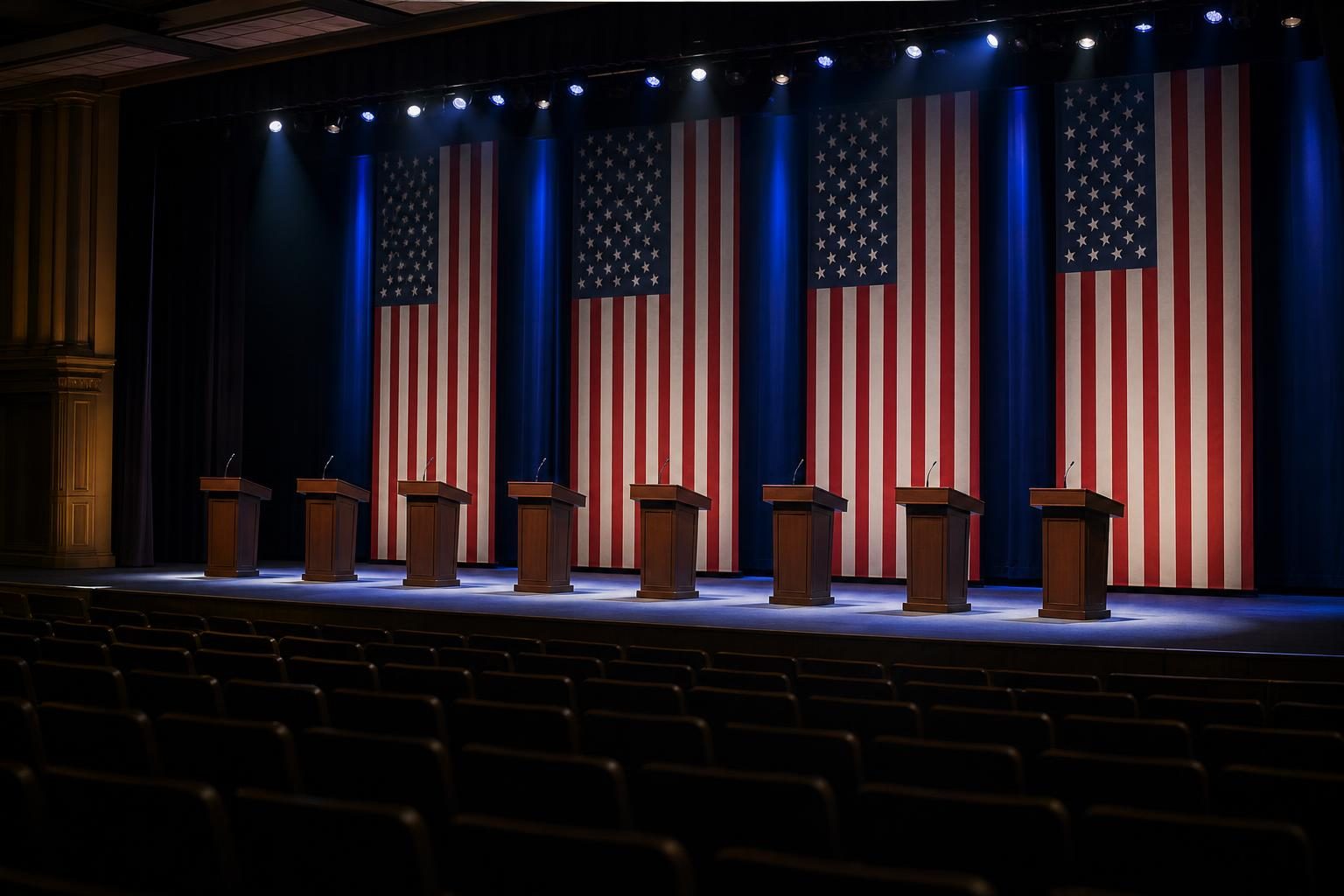
Illustration · Liberty Bell Report
The Democratic National Committee on Monday laid out the road to its 2028 presidential nomination: 12 primary debates, the first in June 2027, and a new entry ticket for anyone who wants a podium. Candidates will have to sign a pledge disavowing so-called dark money and super PAC spending on their behalf during the primary, according to reports from NBC News, The Hill and ABC News.
The party plans five debates in 2027 and seven in 2028, with the last one set for March 2028, The Hill and ABC News reported. Early debates could be split across two consecutive nights, and the total field on stage would be capped at 20 candidates. Polling and grassroots fundraising will be among the benchmarks for qualifying, and the DNC said it will release precise criteria, dates and locations in January.
What the Pledge Requires
According to NewsNation, the pledge covers both super PACs and nonprofit groups that do not disclose their donors. Candidates must disavow outside spending from both kinds of groups during the primary and must publicly denounce new outside spending that pops up to help them. Spending by an outside group does not by itself break a candidate's pledge, because candidates cannot control it; what counts is whether the candidate speaks out against it. The rule also leaves outside groups free to spend against Republicans while the primary is underway.
The DNC has no legal power to ban super PACs or dark money groups, which is why it chose a pledge tied to the debate stage instead, ABC News reported. Reports described the rule as a major departure from the 2020 primary, when many Democratic candidates leaned on friendly outside spending operations.
A Party Grading Its Own Homework
The pledge is a welcome step toward transparency, and voters should hold the party to it. But the record explains why Republicans will watch with raised eyebrows. A New York Times analysis published in 2022 found that 15 of the most politically active nonprofits aligned with Democrats spent more than $1.5 billion in 2020, compared with roughly $900 million for a comparable group of 15 Republican-aligned organizations. The same report found that one Democratic-aligned network, the Sixteen Thirty Fund, spent $410 million that year.
In other words, the party that spent years warning about secret money in politics also benefited from it in the election that put Joe Biden in the White House. Monday's rule covers only the presidential primary, and only the candidates' own conduct. It does not touch the general election, congressional races or the network of groups that spend against Republicans.
What Comes Next
The real test arrives in January, when the DNC publishes its qualifying rules, and again next summer, when the first candidates walk on stage. A rule like this works only if it is enforced. If a front-runner benefits from a flood of undisclosed money and the party looks the other way, the pledge will be remembered as a talking point. If the DNC enforces it evenly, it will have set a standard both parties can be measured against.
Judge the party by what it does with the rule, not by the press release.
Sources
- NBC News: Democratic National Committee sets broad rules for the party's 2028 presidential debates (link)
- The Hill: Democrats plan 12 presidential debates, with first in June (link)
- ABC News: Democrats holding 12 debates in 2028 cycle, requiring candidates denounce 'dark money' (link)
- NewsNation: Democrats unveil plan for presidential debates, dark money pledge (link)
- Honolulu Star-Advertiser (The New York Times): Democrats decried dark money. Then they won with it in 2020 (link)
— 30 —