Consumer News
Shoppers Tap the Brakes in October: Retail Sales Rise Just 0.2% as High Prices Shadow the Holiday Season
Spending growth slowed sharply after September's gas-fueled jump, and with inflation still running hot, families heading into Christmas have good reason to plan carefully.
By MEGAN O’BRIENStaff Correspondent · CALIFORNIA · Nov 17, 3:00 PM · 4 min. read
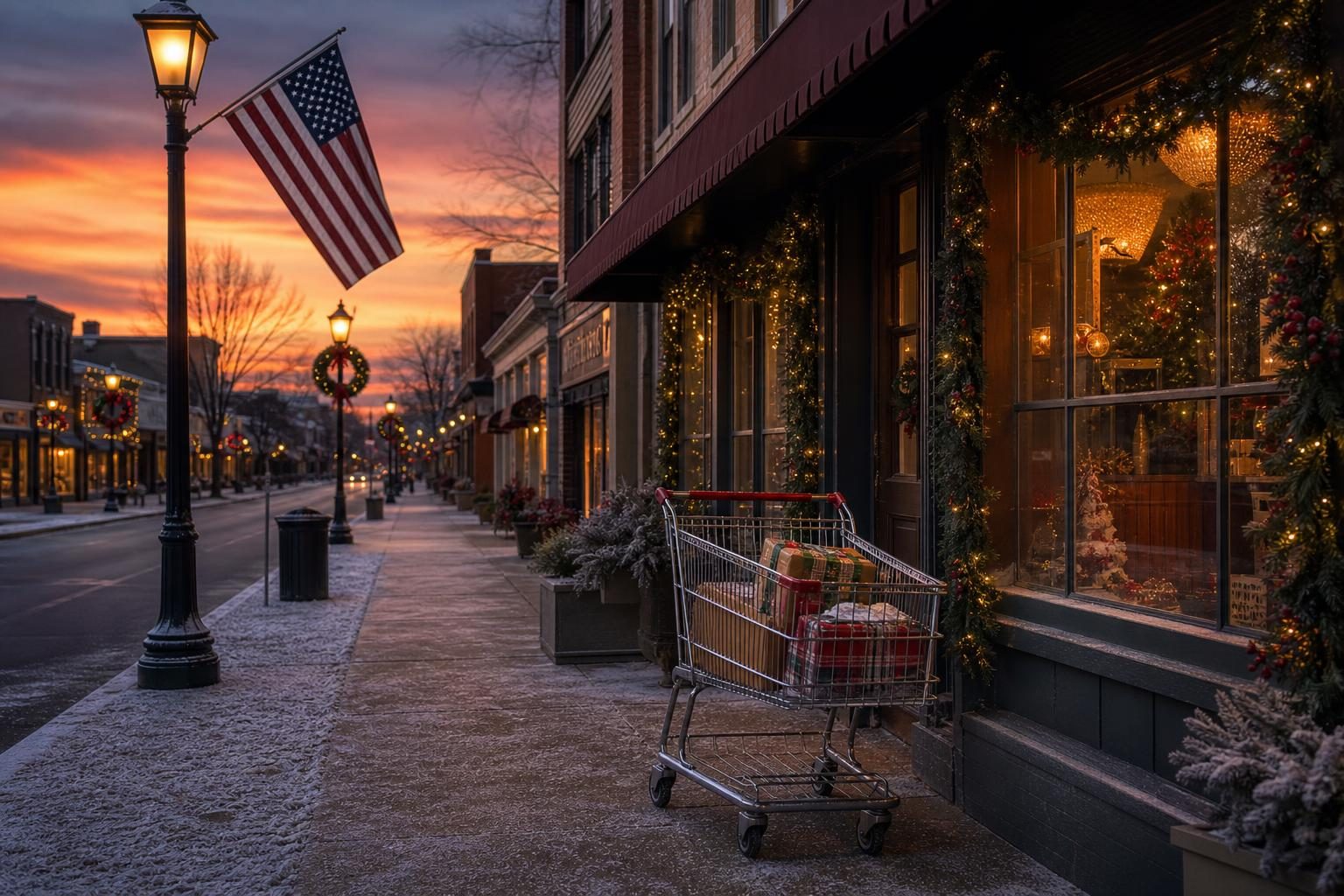
Illustration · Liberty Bell Report
Americans kept spending in October, but at a much slower clip, and the numbers carry a clear message for families drawing up their Christmas budgets: high prices are still doing a lot of the work at the cash register.
Retail sales rose 0.2% in October, the Commerce Department reported on Tuesday, a sharp slowdown from a revised 0.8% gain in September. The Associated Press, in a report carried by PBS News and ABC News, said economic uncertainty and high prices led more Americans to pull back on a variety of purchases. Take gas stations out of the picture, and sales grew just 0.1%. Quartz, reviewing the Census Bureau figures, described the month as a slowdown heading into the holidays.
Where the Money Went, and Where It Didn't
Much of September's jump was fueled at the pump. Sales at gas stations rose 1.5% in October after spiking 30.3% the month before, ABC News reported. The AP noted that a gallon of gas still costs nearly 20% more than it did at this time last year. Every extra dollar spent on fuel is a dollar that never reaches the toy aisle or the dinner table.
The pullback showed up most clearly in bigger purchases. Business at furniture and home furnishings stores fell 2.3%, and clothing and accessories stores slipped 0.7%, according to the Los Angeles Times. CNN reported that the slowdown was concentrated in more expensive items such as cars and furniture. Online retailers were a bright spot, with sales up 1.2%.
These figures are adjusted for seasonal swings but not for inflation. The Consumer Price Index rose 0.4% in October, hotter than economists expected, according to government data released last week. That means part of October's modest gain reflects higher price tags rather than more goods in the cart. Heather Long, chief economist at Navy Federal Credit Union, said that once higher prices are taken into account, consumer spending was "negative," ABC News reported.
Not every economist reads the report as a warning sign. Elizabeth Renter, an economist quoted by CNN, suggested that savvy families may simply be holding off on purchases to catch holiday sales. Economists at EY-Parthenon described consumers as still willing to spend but more selective about what they buy, CNN reported.
The Holiday Outlook
Retailers are still betting on a solid finish to the year. The National Retail Federation forecast on Oct. 15 that sales during November and December will grow 4.2% over last year, to about $1.013 trillion. Holiday sales last year rose 3.1% to $972 billion, according to the trade group. NRF's chief economist said nearly half of this year's projected growth should come from real gains in spending rather than from price increases, while the group expects core goods inflation to average 2.5% in 2026, up from 1.6% in 2025. NRF also expects retailers to hire between 325,000 and 375,000 seasonal workers.
Stores are already working hard for every shopper's dollar. The AP reported that retailers are expecting a surge over the Thanksgiving weekend and have heavily advertised deals to lure customers who increasingly buy when they believe prices have dropped.
What Families Should Know
For households trying to make Christmas special without starting January in a financial hole, the data offer a few practical lessons.
First, the price pressure is real. With consumer prices rising 0.4% in a single month and fuel still well above last year's level, a gift budget set in dollars will buy less than it did a year ago. Families who settle on a firm number before the shopping starts, and stick to it, protect themselves from the most expensive part of the season: the credit card balance that lingers into spring.
Second, patience may pay. Retailers are leaning on promotions to win over cautious customers, and they expect the busiest stretch around Thanksgiving weekend, which begins next week. If the economists who see October's slowdown as shoppers waiting for bargains are right, many families are already following that strategy.
Third, big-ticket purchases deserve a second look. The steepest declines came at furniture stores, clothing retailers and car dealers. A household weighing a new couch or a new vehicle may be in a stronger bargaining position than it was a few months ago, and it may also find that the wiser choice is to wait.
Fourth, watch the gas budget. Fuel has been the single biggest swing factor in recent months, with gas station sales jumping more than 30% in September. For families planning long holiday drives to see grandparents, it pays to build that cost into the plan rather than discover it at the pump.
None of this has to dim the season. Thrift and generosity have always gone together in American homes, and the families who plan carefully this year will have more room to give where it matters most, whether at church, to a neighbor in need, or around their own table. Black Friday and the weekend that follows will offer the first real test of whether October's caution was a brief pause or the start of a tighter holiday season.
Sources
- PBS News: Retail spending slowed in October as high prices gave shoppers pause (link)
- ABC News: Shoppers slowed spending in October with high prices leading to caution (link)
- Los Angeles Times: Shoppers slowed spending as high prices lead to caution ahead of holidays (link)
- CNN: American shoppers are showing signs of strain heading into the holiday season (link)
- National Retail Federation: NRF Forecasts 2026 Holiday Sales Growth as Consumers Remain Resilient (link)
- Quartz: U.S. retail sales edged up 0.2% in October, Census Bureau data shows (link)
— 30 —