
 Today on American Story with Joe Redhawk
Omaha Nation Celebrates a Barbie Honoring Dr. Susan La Flesche Picotte, America's First Native Woman Doctor
Mattel's new doll, made with Picotte's great-granddaughter, was unveiled at a reservation school in Macy and celebrated at Omaha's Joslyn Art Museum during Native American Heritage Month.
Filed November 13, 2026 · 📍 Omaha, NE 68102
Were you there? Share your story
Key points
- Mattel added Dr. Susan La Flesche Picotte, an Omaha Tribe member and the first Native American woman to earn a U.S. medical degree, to its Inspiring Women series.
- The doll was unveiled Nov. 9 at Umonhon Nation Public School in Macy, Nebraska, and celebrated Nov. 11 at the Joslyn Art Museum in Omaha.
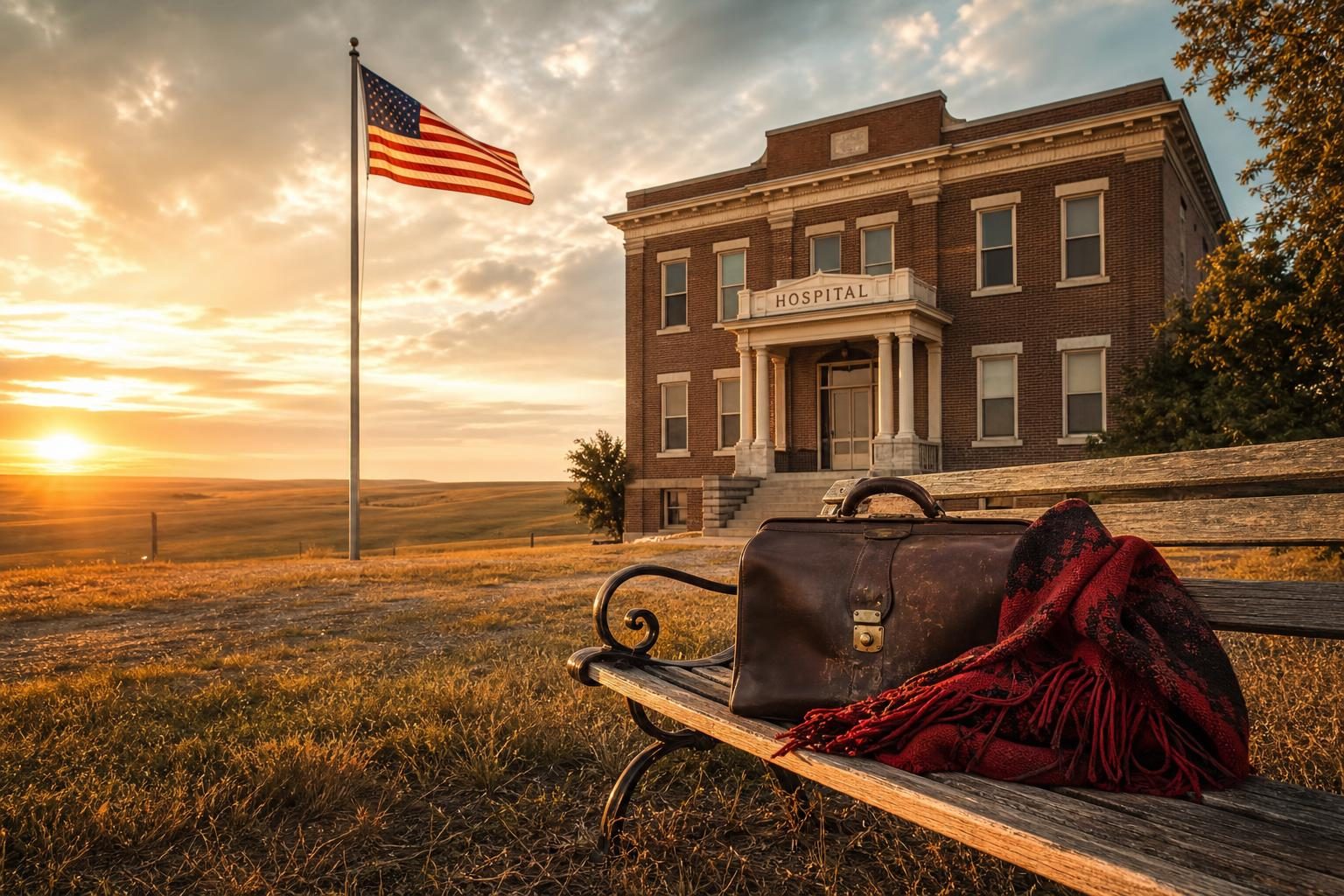
- Mattel worked with Picotte's great-granddaughter and the Picotte Center on the design, which features a Umonhon Nation shawl and a doctor's bag.
- Picotte earned her degree in 1889, practiced in Bancroft and built a hospital in Walthill, Nebraska.
The Omaha Nation spent the second week of Native American Heritage Month celebrating one of its own. Mattel has released a Barbie doll honoring Dr. Susan La Flesche Picotte, the Omaha Tribe member who became the first Native American woman in the United States to earn a medical degree, and her people turned out to welcome her home in miniature [1][4].
The doll was unveiled Monday, Nov. 9, at an event hosted by the Picotte Center at Umonhon Nation Public School in Macy, Nebraska, according to reports [3][4]. A second celebration followed Wednesday evening at the Joslyn Art Museum in Omaha, where KETV reported the program featured live traditional music and dancing before the doll was formally revealed [1].
It is the kind of story that rarely makes national headlines, and that is exactly why it deserves one. A little girl on the reservation can now hold a doll of a woman from her own tribe who became a doctor at a time when few women of any background could.
A Doll Made With Her Family
Picotte is the newest addition to Barbie's Inspiring Women series, KOLN reported [2]. Mattel worked with Picotte's great-granddaughter, Susan Picotte, and with the Picotte Center to sculpt the doll in her likeness, KETV and the Lincoln Journal Star reported [1][3]. The outfit draws on a bronze sculpture of the doctor in Nebraska: a Umonhon Nation shawl worn over a black-and-white dress, with a physician's bag in her hand [3][4].
KETV reported that the doll was designed by Carlyle Nuera, the lead designer for the Barbie Signature line, and that it sells for $38 [1]. KOLN reported that it is available through Mattel Creations while supplies last, as well as through major retailers including Amazon, Walmart and Target [2].
The Journal Star noted that Picotte joins a short list of Native women honored in the line. Wilma Mankiller, the first female principal chief of the Cherokee Nation, received a doll in late 2023, and Osage Nation prima ballerina Maria Tallchief followed in November 2024 [3]. The paper described Picotte as one of the most famous women in Nebraska history [3].
For families on the reservation, the hope behind the doll is simple. KOLN reported that tribe members want young people who learn about Picotte to be inspired to pursue dreams of their own [2].
Who Was Dr. Picotte?
Her life story is worth retelling. According to the National Library of Medicine, Picotte was born on the Omaha Reservation in northeastern Nebraska to Chief Joseph La Flesche, known as Iron Eyes, and his wife, Mary, known as One Woman [5]. She attended school on the reservation until she was 14 [5].
The library's biography states that in 1889 she earned her medical degree from the Woman's Medical College of Pennsylvania, becoming the first American Indian woman in the United States to receive one [5]. She later credited a tragedy she had witnessed as her inspiration to become a physician, so that she could care for the people of the Omaha Reservation [5].
She did exactly that. After she married Henry Picotte in 1894, the couple moved to Bancroft, Nebraska, where she opened a private practice that treated patients of every background, white and Native alike, the library reported [5]. KETV noted that she went on to build a hospital in Walthill, Nebraska, a rare achievement for any doctor of her era, let alone a Native woman [6]. She died in 1915, according to the National Library of Medicine [5].
Why Her Story Still Matters
There is a lesson in Picotte's life that every American family can appreciate. She did not wait for someone else to fix the problems she saw at home. She studied, she earned her place at the top of a demanding profession, and then she brought those skills back to serve her own people and her neighbors in rural Nebraska.
That is a model of service, hard work and duty to community that crosses every line we draw. It is also a reminder that the history of Native America is full of builders, healers and leaders whose names too few schoolchildren know. When a doll on a store shelf sends a child to the library to read about a frontier doctor who served the people of the prairie, that is a good thing.
The tribe's celebrations this week, first at a school in Macy and then at one of Omaha's best-known museums, showed a community proud of a daughter who never forgot where she came from [1][4]. In a month set aside to honor the first Americans, Dr. Susan La Flesche Picotte is a fine place to start.
Sources
- [1]Opens in a new tab ↗
- [2]KOLN (1011now)Barbie honors Omaha Nation trailblazer Dr. Susan La Flesche Picotte, America's first Native American physicianOpens in a new tab ↗
- [3]Lincoln Journal StarNebraska's pioneering Native doctor gets her own Barbie dollOpens in a new tab ↗
- [4]Native News OnlineBarbie Releases Doll of First Native American Woman PhysicianOpens in a new tab ↗
- [5]National Library of MedicineBiography: Dr. Susan La Flesche PicotteOpens in a new tab ↗
- [6]Opens in a new tab ↗
Which Native success story should American Story cover more?
- Tribal businesses
- Native veterans
- Tribal colleges
- Housing and family
More in Native America
A Homeland Made Whole: Quinault Nation Buys Back 11,000 Acres as the Seneca Nation Swears In Its First Woman President
This morning on American Story with Joe Redhawk
Minnesota's Peggy Flanagan Becomes First Native Woman Elected to the U.S. Senate
Yesterday on American Story with Joe Redhawk
Tribes Honor Native Warriors on Veterans Day, Carrying On a Proud Tradition of Service
On Wednesday on American Story with Joe Redhawk
Were you there?
If you were at the scene, or this story touched your life, tell us what you saw and what it was like.
Discussion 0
Sign in or create a free account to join the discussion.
No comments yet. Start the discussion.