
 Overnight on Command Post with Dan Whitaker
Pakistan Sends Troops to Help Shield Saudi Arabia From Houthi Fire
Islamabad's army deploys soldiers to the kingdom under a defense pact, a sharp turn from its decision to stay out of the Yemen fight in 2015.
Filed November 29, 2026 · 📍 Washington, DC 20001
Were you there? Share your story
Key points
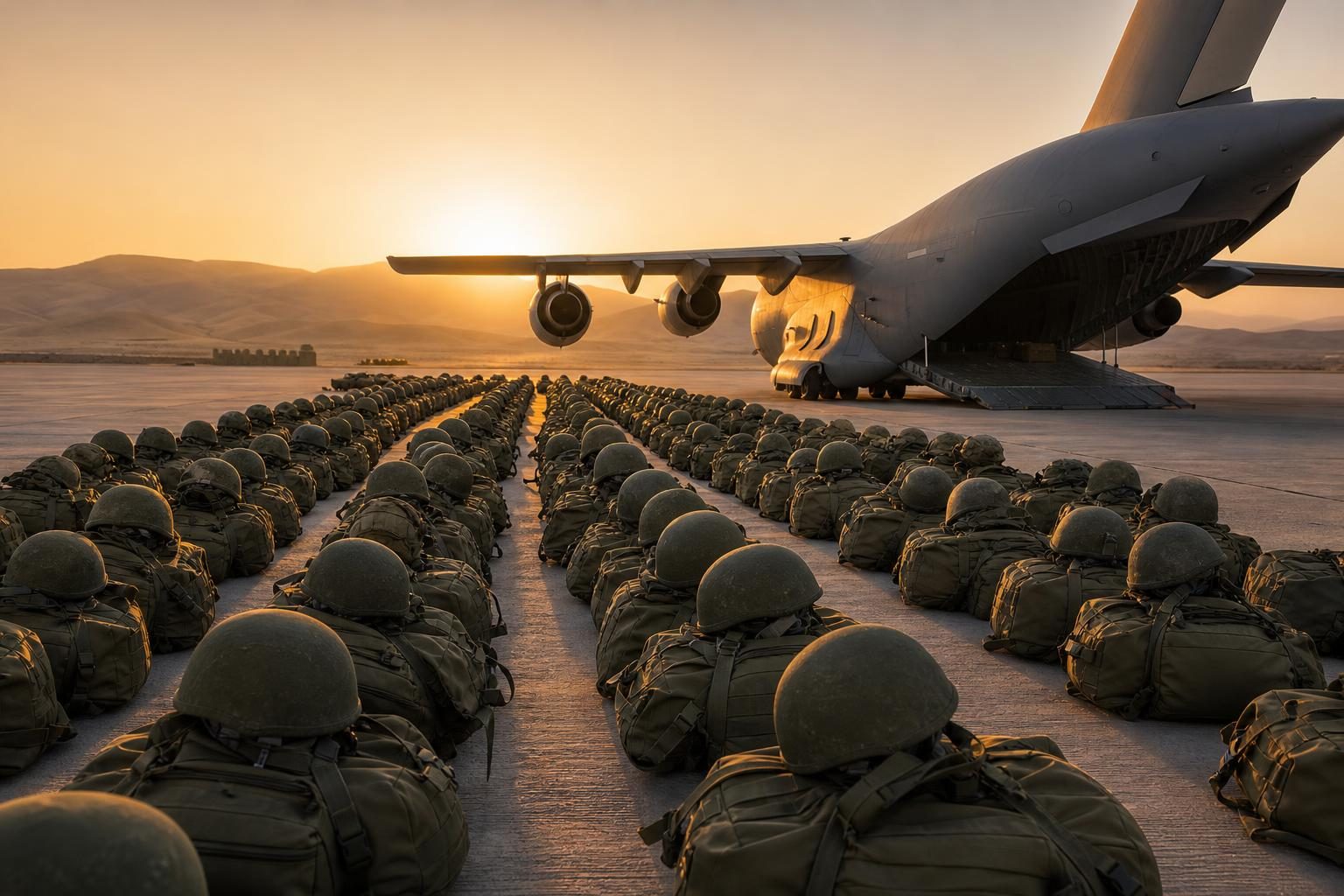
- Pakistan's military says army troops are deploying to Saudi Arabia to bolster its defenses after Houthi attacks
- The move follows an Islamabad meeting reaffirming a Pakistan-Saudi-Turkey pact that treats an attack on one as an attack on all
- Troop numbers, locations and the length of the mission were not disclosed
- In 2015, Pakistan's parliament voted to stay out of the Saudi-led fight against the Houthis
Pakistan is sending army troops to Saudi Arabia to help defend the kingdom against a growing campaign of missile and drone attacks by Yemen's Iran-backed Houthi rebels, Pakistan's military announced Sunday, according to the Associated Press, as carried by ABC News, and NBC News [1][2].
The soldiers will carry out their assigned duties inside Saudi territory under the two countries' existing defense commitments, the army said [1][3]. A send-off for the departing troops was held Saturday in Rawalpindi, home of the army's headquarters, with Defense Minister Khawaja Asif as chief guest, Dawn reported, citing the military's media wing [3].
The military did not say how many troops are going, where in the kingdom they will be based or how long they will stay, according to Dawn [3].
Why Now
The Houthis have stepped up their strikes on Saudi Arabia's oil and economic infrastructure, the AP reported [1]. Late this week, Saudi Arabia reported intercepting more missiles as the Houthis claimed attacks on Riyadh's airport and on energy sites, The Hindu reported [6]. Pakistan's statement, as reported by the AP, tied the deployment directly to those attacks and to the kingdom's need to strengthen its defenses [1].
Sunday's announcement came two days after defense and military officials from Pakistan, Saudi Arabia and Turkey met in Islamabad and reaffirmed their three-way pact, under which an attack on one member is treated as an attack on all, according to the AP [1].
That agreement was signed in Mecca in August. At the time, Pakistan described the pact as purely defensive and open to other nations in the region, the AP reported [4]. Pakistan and Saudi Arabia had already concluded a separate mutual defense pact last year, the AP noted in Sunday's report [1].
A Turn From 2015
The move is a striking change from a decade ago. When Riyadh asked for Pakistani troops for its campaign against the Houthis in 2015, Pakistan's parliament voted to stay out of the fight, in part because Pakistan shares a border with Iran and has a sizable Shiite minority, Gulf News reported [5].
Islamabad has long tried to walk a careful line between Riyadh and Tehran, and the wording of this deployment reflects that. The army framed the mission around protecting the kingdom's own soil under agreed commitments, not joining offensive operations inside Yemen [1][3].
What It Means for America
For American families with sons and daughters serving in the Middle East, this is a development worth watching closely.
A sound principle is at work here: nations that are threatened should carry a real share of their own defense. When a regional power puts its own soldiers on Saudi soil to help stop Iran's proxies, more of that burden is carried by the region itself rather than by American troops alone. That is the kind of burden-sharing American leaders of both parties have asked of allies and partners for years, and it is welcome.
There are fair questions, too. Washington will want to know how the new Pakistani deployment fits alongside American forces already working in and around the Gulf, and who answers to whom if the Houthis strike again. A three-nation pact that promises to treat an attack on one as an attack on all can deter an enemy, but it can also widen a war if it is ever invoked. Steady, clear coordination among partners matters more than ever when missiles are flying.
What Comes Next
Pakistan has not released the size of the force or where it will serve, and those details will show how large a role it intends to play [3]. Also worth watching: how Iran and the Houthis respond to Pakistani soldiers on Saudi soil, and whether Turkey, the third member of the pact, follows with forces of its own [1].
For now, the message from Islamabad is plain. Saudi Arabia will not face the Houthi attacks alone.
Sources
- [1]ABC NewsPakistan says it will send troops to Saudi Arabia to bolster defenses following Houthi attacksOpens in a new tab ↗
- [2]NBC NewsPakistan says it will send troops to Saudi Arabia to bolster defenses following Houthi attacksOpens in a new tab ↗
- [3]Opens in a new tab ↗
- [4]KSAT (Associated Press)Pakistan says new defense pact with Saudi and Turkey is purely defensive and open to othersOpens in a new tab ↗
- [5]Opens in a new tab ↗
- [6]Opens in a new tab ↗
Should U.S. military aid to Israel end early?
- Yes, Israel can afford its own weapons
- Phase it out slowly
- No, keep it while Iran is a threat
More in Military & Defense

The Enemy Logged On: Report Says Iran Turned Starlink Against U.S. Forces in the War's First Days
Last night on Command Post with Dan Whitaker

CENTCOM Calls Iran's Tanker Raid Story a 'Fabricated Lie'
Yesterday on Command Post with Dan Whitaker

Putin's Zircon Sub Joins the Fleet as U.S. Sub Building Lags
Yesterday on Command Post with Dan Whitaker
Were you there?
If you were at the scene, or this story touched your life, tell us what you saw and what it was like.
Discussion 0
Sign in or create a free account to join the discussion.
No comments yet. Start the discussion.