
 Overnight on Command Post with Dan Whitaker
U.S. Forces Downed Drones Over an English Air Base; Iran Suspected
A Financial Times report says American troops at RAF Lakenheath stopped about six drones this month. None were recovered, and it is the second Iran-linked scare at a U.S. base in Britain this fall.
Filed November 28, 2026 · 📍 White House, DC 20500
Were you there? Share your story
Key points
- U.S. forces used counter-drone gear to stop about six drones over RAF Lakenheath this month, the FT reported.
- None were recovered, so their origin and payload are unknown; Iran is suspected but has denied past involvement.
- Britain's Ministry of Defence says police and U.S. Air Force security responded and the base returned to normal.
- In October, President Trump said B-1 bombers left RAF Fairford over threats he linked to Iran.
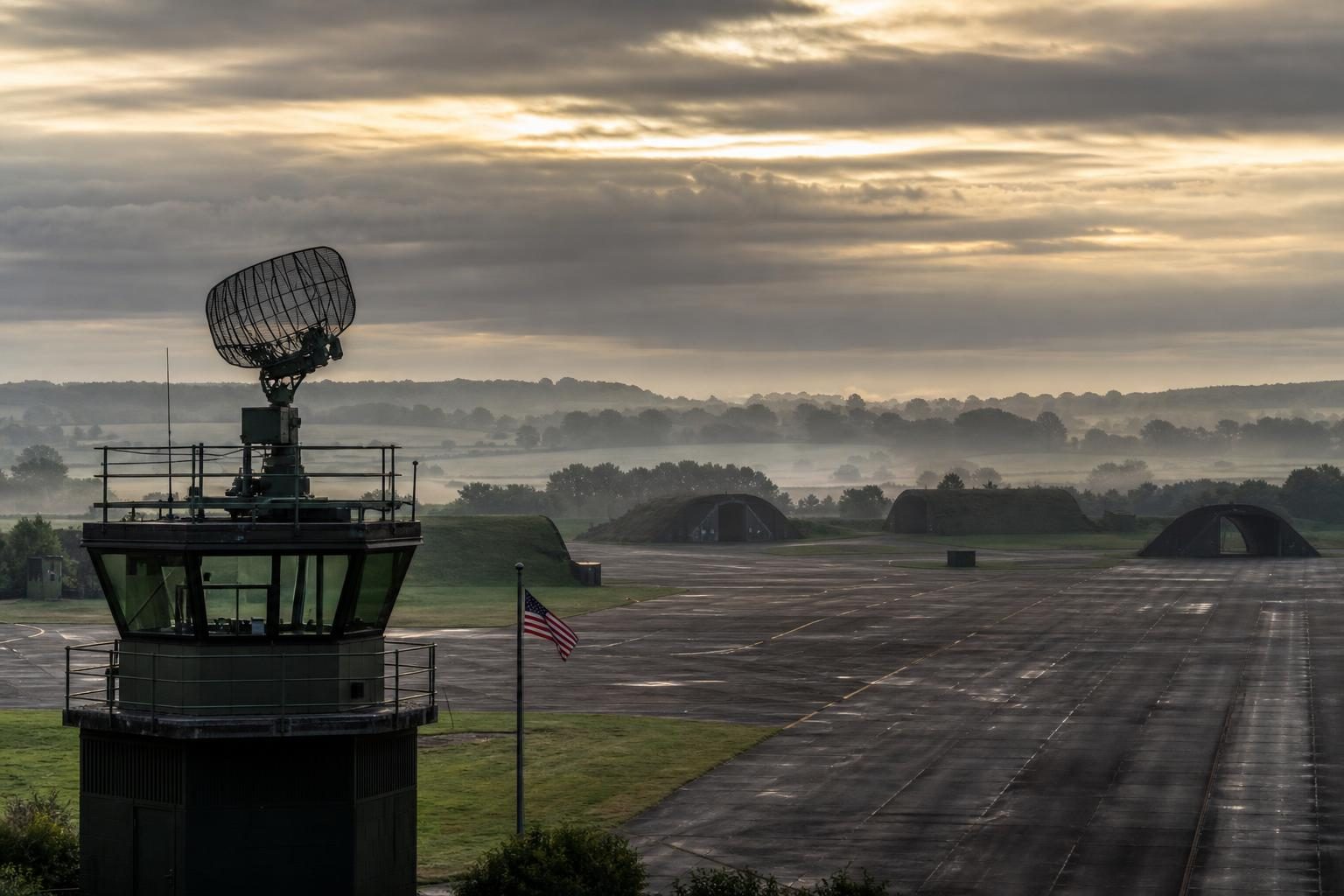
American forces at a major U.S. fighter base in England quietly fought off a small swarm of drones earlier this month, and officials suspect Iran was behind it, according to a Financial Times report carried by Reuters and other outlets [1][3].
About six drones were spotted over RAF Lakenheath in Suffolk, the New York Post reported, citing the FT [2]. U.S. forces used counter-drone equipment to bring them down, but none of the aircraft were recovered, so investigators still cannot say where they came from or whether they carried cameras or anything more dangerous [1][3]. The account comes from people familiar with the matter, and Iran's involvement is suspected, not proven [1][2].
What Officials Have Said
Britain's Ministry of Defence confirmed that civilian police and U.S. Air Force security forces responded to the incident and said the base quickly returned to its normal security posture [1][3]. The White House and the Pentagon did not immediately respond to requests for comment, Reuters reported [1]. Tehran has rejected accusations that it was involved in earlier trouble at a British base or in any other hostile activity in the United Kingdom [1][3].
The report lands at a tense moment. On Thanksgiving Day, U.S. Central Command released video of a strike that disabled a commercial vessel in the Gulf of Oman after it tried to evade the American naval blockade of Iranian ports, Fox News reported [6]. With that standoff still unfolding, a drone attack on American personnel anywhere would raise the stakes sharply.
Not the First Warning in Britain
This is the second time this fall that an American base in England has been tied to a suspected Iranian threat. In early October, President Trump said the U.S. had pulled its B-1 bombers out of RAF Fairford after threats he believed were linked to Iran, Euronews and ABC News reported [4][5]. That move followed the arrest of five men on terror charges near the Gloucestershire base the month before [5].
At the time, the administration's explanations varied. Vice President Vance pointed to Iran and said the decision was made out of caution, while Secretary of State Marco Rubio described it as a routine rotation and declined to tie it directly to the suspected plot, according to reports at the time [5]. The Pentagon said all of the bombers had returned to their home bases in the United States [5]. Iran's embassy in London strongly denied any role [4].
Two incidents at two different bases in a matter of weeks is a pattern that deserves a clear public answer, even if the full intelligence picture stays classified.
Why It Matters
For the families of the American airmen stationed in Suffolk, and for the British towns that have lived alongside them for generations, the question is simple: who sent the drones, and could the next ones carry explosives?
The incident also shows how cheap, small drones have become one of the hardest threats for any military to stop. Nations and terror groups alike can launch them from almost anywhere, and a base that can shrug off a jet fighter still has to spot and stop something the size of a model airplane. The fact that U.S. forces brought these down is good news. The fact that none were recovered, and nobody can say who sent them, is not [1][3].
It also raises a fair question for our allies. Britain has been a close partner for decades, but American troops on British soil depend on British police and intelligence to catch plots before they reach the fence line. The Fairford arrests suggest that system can work [5]. Lakenheath suggests the threat has not gone away.
What Comes Next
Watch for an official statement from the Pentagon or U.S. Air Forces in Europe confirming the details, any announcement from British police about suspects, and questions from Congress about counter-drone defenses at overseas bases. Iran has denied involvement in earlier incidents in Britain, and no evidence tying Tehran to the Lakenheath drones has been made public [1][4].
Sources
- [1]Reuters (via WHBL)US military repelled drones at UK airbase this month, FT reportsOpens in a new tab ↗
- [2]Opens in a new tab ↗
- [3]Opens in a new tab ↗
- [4]EuronewsTrump says US moved their B-1 bombers from RAF Fairford airbase after additional threats were madeOpens in a new tab ↗
- [5]Opens in a new tab ↗
- [6]Fox NewsUS military disables tanker ship attempting to slip through Iran blockade on Thanksgiving DayOpens in a new tab ↗
Should U.S. military aid to Israel end early?
- Yes, Israel can afford its own weapons
- Phase it out slowly
- No, keep it while Iran is a threat
More in Military & Defense

CENTCOM Calls Iran's Tanker Raid Story a 'Fabricated Lie'
Today on Command Post with Dan Whitaker
Putin's Zircon Sub Joins the Fleet as U.S. Sub Building Lags
Today on Command Post with Dan Whitaker

Cyber Command Called In After Hackers Reach the Air Force's Core Cloud
Yesterday on Command Post with Dan Whitaker
Were you there?
If you were at the scene, or this story touched your life, tell us what you saw and what it was like.
Discussion 0
Sign in or create a free account to join the discussion.
No comments yet. Start the discussion.