
 Tonight on Border Watch with Cole Brennan
IRAN SUSPECTED IN CYBERATTACKS ON UP TO 50 TANKERS
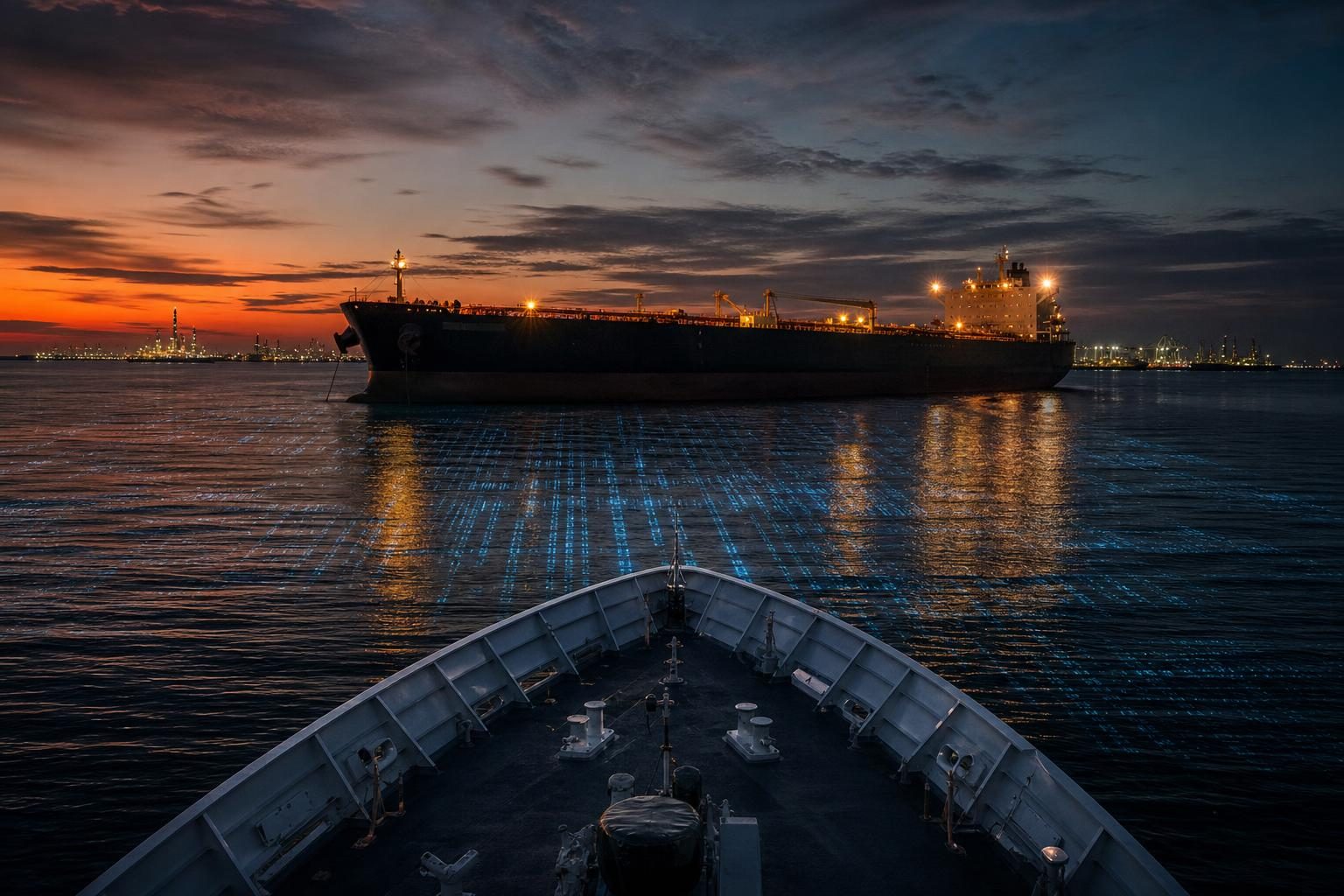
U.S. officials are investigating whether Tehran hacked dozens of energy ships, some of which also received bomb threats, according to The Wall Street Journal.
Filed November 23, 2026 · 📍 Wall Street, NY 10005
Were you there? Share your story
Story tracker
Our anchors are following this story. New details will appear here as they come in.
Key points
- U.S. officials suspect Iran in cyberattacks on as many as 50 ships carrying oil, gas, chemicals and other explosive cargo, the Journal reported.
- Some vessels were also sent warnings and bomb threats; investigators are weighing Russia as another possible culprit.
- The Coast Guard has sent cyber teams to at least four affected ships approaching U.S. ports in recent weeks.
- No agency has publicly named a culprit, and Reuters said it could not immediately verify the report.
American investigators are trying to determine whether Iran is behind a new wave of cyberattacks on as many as 50 commercial ships hauling oil, liquefied petroleum gas, chemical products and other explosive cargo, The Wall Street Journal reported Monday, citing U.S. officials and others familiar with the matter [1]. Reuters, which carried the Journal's findings, said it could not immediately verify the report [1].
Iran is the leading suspect, according to the officials, but U.S. authorities are also considering Russia as a possible culprit [2][3]. Several of the targeted vessels were also sent warnings and bomb threats suggesting they could be blown up [2]. No U.S. agency has publicly named who is responsible, and the officials who described the investigation did so without being named [2].
Coast Guard Teams Sent to Ships Nearing U.S. Ports
The U.S. Coast Guard has dispatched cybersecurity teams to help at least four affected vessels as they approached American ports in recent weeks, Israel's Ynet reported, drawing on the Journal's account [2]. The Coast Guard declined to discuss individual incidents but urged shipping companies to report any suspected breach [2].
This is not the first warning sign. In August, the FBI and the Coast Guard boarded two foreign-flagged commercial ships after receiving indications that their computer networks had been compromised [2]. In September, Military Times reported that the Coast Guard had boarded U.S.-bound vessels that officials said appeared to have been hacked [4].
A Second Front Far From the Gulf
The ports that receive those ships are under pressure as well. The Hill reported that a number of U.S. ports are facing an onslaught of cyberattacks as AI-enabled hacking of critical infrastructure grows, and that the Port of Corpus Christi in Texas, the country's largest gateway for oil exports, said it had been targeted by hundreds if not thousands of attempts [5].
The investigation comes as the war with Iran drags on. Tehran said this week it would use all available means to break the U.S. naval blockade around the Strait of Hormuz, after President Trump warned that ships trying to run it would be sunk [6]. Iran has kept up attacks on vessels in and around Hormuz, and the reporting notes that hacking loaded tankers could shake world energy markets and raise the danger of a spill [2].
Why It Matters
For American families, the stakes are not abstract. A tanker is a floating store of fuel and chemicals, and the computers that steer it, run its engines and talk to the shore are now part of the battlefield. If the officials' suspicions hold up, the regime in Tehran is reaching thousands of miles from the Gulf to test the defenses of ships headed for American harbors, and doing it with keyboards instead of missiles.
The practical questions now fall to Washington: how quickly the Coast Guard and FBI can confirm who is responsible, whether shipping companies report breaches fast enough, and how the administration answers if the trail leads back to Iran. Liberty Bell Report will follow the investigation as officials release more details.
Sources
- [1]Al-Monitor (Reuters)US eyes Iran as possible culprit in dozens of new cyberattacks against ships, WSJ reportsOpens in a new tab ↗
- [2]Ynet NewsReport: Iran suspected in wave of cyberattacks on dozens of oil and gas tankers as US investigatesOpens in a new tab ↗
- [3]Israel National NewsUS suspects Iranian cyberattacks on up to 50 energy tankersOpens in a new tab ↗
- [4]Opens in a new tab ↗
- [5]Opens in a new tab ↗
- [6]Opens in a new tab ↗
Should U.S. military aid to Israel end early?
- Yes, Israel can afford its own weapons
- Phase it out slowly
- No, keep it while Iran is a threat
More in Military & Defense

NATO Sends Radar Plane to Poland as Russian Pressure Builds Along the Eastern Flank
Tonight on Command Post with Dan Whitaker
Flight Trackers Catch F-35 Squawking Emergency Over UAE
Today on Command Post with Dan Whitaker

Trump Says a Nuclear Deal Will Be 'Very Hard' as China's Buildup Runs 'Hot and Heavy'
Today on Command Post with Dan Whitaker
Were you there?
If you were at the scene, or this story touched your life, tell us what you saw and what it was like.
Discussion 0
Sign in or create a free account to join the discussion.
No comments yet. Start the discussion.