
 Tonight on Money Wire with Victoria Chen
Seven Straight Losses and a Brutal Week: The AI Selloff Pushes the S&P 500 and Dow Into Correction as Nvidia Sinks 14%
The S&P 500 fell 3.6% on Friday and about 8.5% for the week, the Nasdaq erased its 2026 gains, and the Fed is still expected to raise rates in December. Here is what drove it and what it means for your savings.
Filed November 20, 2026 · 📍 Wall Street, NY 10005
Were you there? Share your story
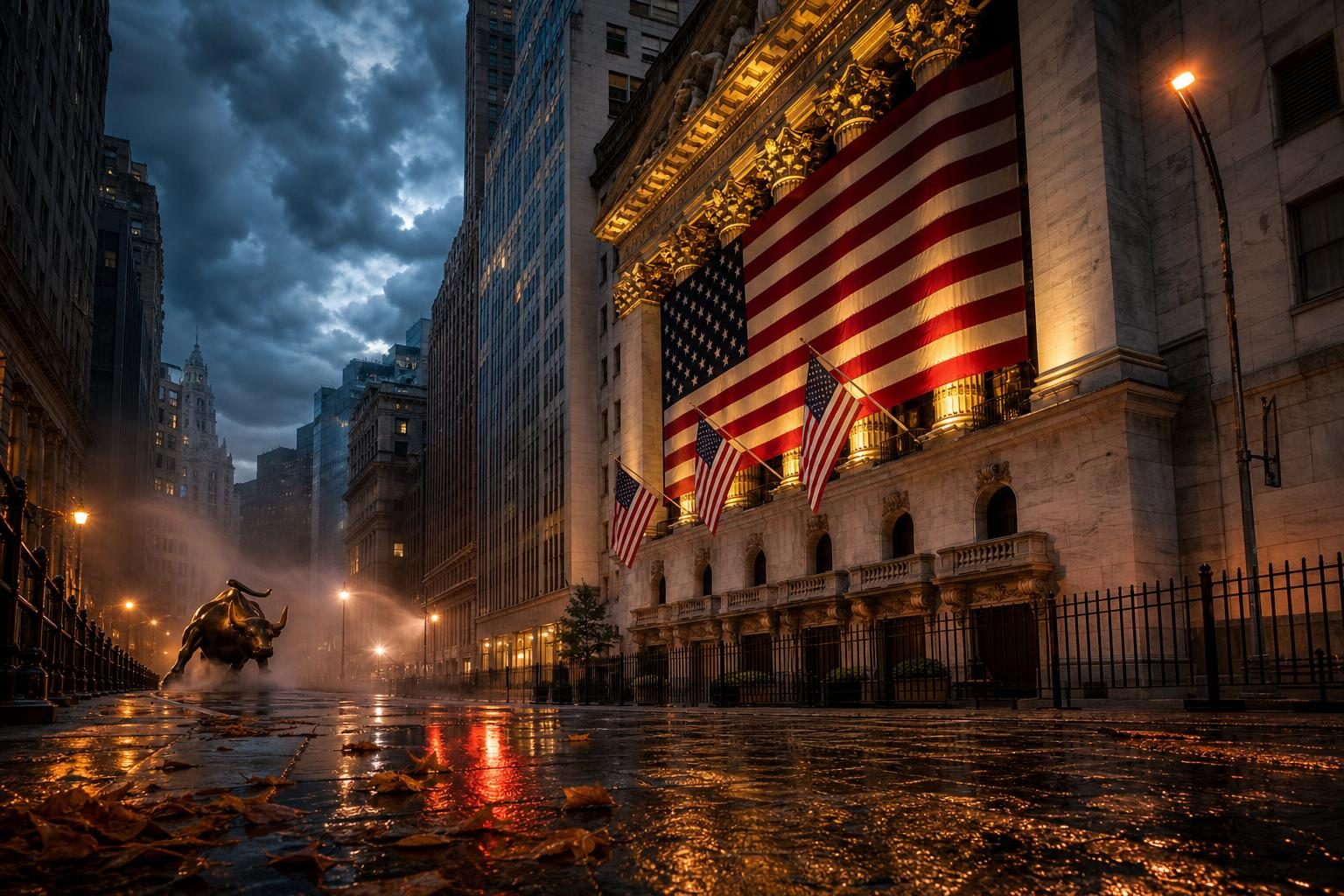
Part of our continuing coverage: Dow Drops 1,100 Points and Closes Below 50,000 as AI Selloff Stretches S&P 500 Losing Streak to Six Days
Key points
- The S&P 500 fell 3.59% to 6,918.45 for its seventh straight loss; the Nasdaq dropped 5.13%
- The S&P 500 and the Dow are now more than 10% below their record highs, a correction
- Nvidia fell about 14%, its worst day since DeepSeek, after a report of an SEC accounting probe
- Traders still see about a 97% chance of a Fed rate increase in December
Wall Street's selloff in artificial intelligence stocks turned into a rout on Friday, capping a brutal week and confirming that two of the three major U.S. stock indexes are now in correction.
The S&P 500 fell 257.38 points, or 3.59%, to 6,918.45, according to preliminary closing figures reported by Reuters [3]. The Nasdaq composite, home to most of the big technology names, dropped 1,225.05 points, or 5.13%, to 22,654.15, and the Dow Jones Industrial Average lost 908.88 points, or 1.85%, to 48,188.18 [3]. It was the S&P 500's seventh straight losing session, and both the S&P 500 and the Dow now sit more than 10% below their record closing highs, the usual definition of a correction, Reuters reported [3]. The Nasdaq's slide wiped out its gains for the year, CNN reported [2].
The week as a whole was even harsher. A week ago, the S&P 500 closed at 7,561.67, the Nasdaq at 25,136.27 and the Dow at 52,347.55, CNBC reported at the time [6]. Measured from those levels, the S&P 500 lost about 8.5% this week, the Nasdaq nearly 10% and the Dow nearly 8% [3][6]. Seven days ago, all three indexes had just finished a winning week [6].
Nvidia led the way down. The chipmaker fell about 14% on Friday, its worst day since the DeepSeek selloff of January 2025, wiping out roughly $450 billion in market value, Yahoo Finance reported [4].
How the AI Trade Cracked
For most of the past two years, the market's climb rested on a simple bet: that artificial intelligence would keep producing bigger profits for the companies building it. This week, that bet was tested from several directions at once.
The first test was supposed to be a triumph. Anthropic raised $81.3 billion in the largest initial public offering on record, CNN reported [2]. Instead of reviving the AI trade, the debut became a symbol of investors' doubts, as the shares quickly fell back [1][2]. By early Friday afternoon, Anthropic's stock had dropped about 26% from the brief peak of $115.10 it reached the day before, the Associated Press reported [1]. Reuters said the offering, together with Nvidia's quarterly report earlier in the week, failed to ease fears about the risks of artificial intelligence and the enormous sums companies are spending to build it [3].
The second test came Friday, when Reuters reported that SEC enforcement staff are examining potential accounting issues at Nvidia, the chipmaker that has been the face of the AI boom [3]. Chip stocks took the brunt of the selling, with the PHLX Semiconductor Index sinking about 9% by early afternoon and Advanced Micro Devices and Broadcom each falling more than 12%, according to the AP [1]. CNN reported that Nvidia was on pace for its worst week since November 2018 [2], and the AP noted that the stock was falling for the ninth time in 10 trading days [1].
When the market's biggest winners fall this hard, they pull the indexes down with them, because the largest companies count the most in how those indexes are calculated. That is the price of concentration: when the story behind a few giants changes, the whole market feels it.
It Was Not Just Tech
The selling spread well beyond Silicon Valley. Even the Dow, which leans less on technology than the other two indexes, lost nearly 2% on the day [3]. Overseas, Japan's Nikkei and South Korea's Kospi each fell more than 5% overnight before U.S. trading began, according to the AP [1].
That breadth matters. A selloff confined to a few expensive stocks is a correction in sentiment. A selloff that reaches banks and foreign markets is a sign that investors are reducing risk across the board, and it tends to take longer to heal.
Not everyone thinks the worst is over. A chief market technician at BTIG said the charts suggest the selloff is not finished yet, the AP reported [1].
Bubble, or Reset?
The question on many investors' minds is whether this is the moment the AI boom finally pops, or a painful reset in prices that ran too far, too fast. Honest observers should admit nobody knows yet. What is clear is that the market is no longer willing to pay any price for a good story. Investors want proof that the billions being spent on data centers and chips will turn into steady profits, and they want clean books from the companies asking for their trust [1][3].
That is a healthy instinct, even if it is a costly one this week. Markets work best when they reward results rather than hype. The companies that can show real earnings, honest accounting and products customers keep paying for are likely to come out of this stronger. The ones that cannot will be repriced, as they should be.
The Fed Is Not Coming to the Rescue
In past selloffs, investors could count on the Federal Reserve to ease their pain. This time, the central bank is moving the other way. Traders were pricing in about a 97% chance of a quarter-point rate increase at the Fed's December meeting, according to CME FedWatch data cited by FXStreet, with only a small chance, about 2.7%, of a larger half-point move [5].
Higher rates make borrowing more expensive for households and businesses, and they make bonds and savings accounts more attractive compared with stocks. They also hit the most richly valued growth stocks hardest, because those companies' profits are expected far in the future. In plain terms, the Fed's fight against inflation and the AI selloff are pulling in the same direction.
That is not a reason for panic. Inflation is a tax on every family's paycheck, and a central bank willing to fight it is doing its job. But it does mean investors should not expect a quick rescue from Washington.
What It Means for Your 401(k)
For the millions of Americans who own stocks through retirement accounts, a week like this is unsettling. It helps to remember what a correction is: a decline of 10% or more from a recent high, which the S&P 500 and the Dow have now crossed [3]. Corrections are painful, but they are a normal part of investing over a lifetime.
A few principles hold up in weeks like this one. Know what you own, and check how much of your account rides on the same technology names that led this selloff. Keep enough cash for emergencies so you are never forced to sell stocks at a bad time. Keep contributing if your job and budget allow it, because buying steadily through downturns is how long-term savers come out ahead. And resist the urge to make big decisions based on one frightening headline.
The old virtues of patience and prudence are not exciting, but they work. Markets have punished those who chased the hottest story at the top and rewarded those who stayed steady through the storm.
The Week Ahead
Next week is a short one, with U.S. stock markets closed Thursday for Thanksgiving and closing early the day after. Holiday weeks often bring thin trading, which can make moves in either direction look larger than usual.
Investors will be watching whether the AI selling finally exhausts itself, whether Nvidia offers any clarity on the reported SEC inquiry and its delayed quarterly filing, and whether the Fed's December decision looks any less certain [3][5]. After a week like this one, a quiet Thanksgiving would be a welcome gift.
Sources
- [1]Associated Press (via The Philadelphia Inquirer)U.S. stocks tumble, and the S&P 500 drops as the sell-off for AI stocks acceleratesOpens in a new tab ↗
- [2]Opens in a new tab ↗
- [3]Reuters (via MarketScreener)Wall St slides on mounting AI selloff, S&P 500, Dow set to confirm correctionsOpens in a new tab ↗
- [4]Opens in a new tab ↗
- [5]Opens in a new tab ↗
- [6]CNBCNasdaq falls on Friday as Nvidia sells off, but index notches best week since August: Live updatesOpens in a new tab ↗
Are AI stocks in a bubble?
- Yes, and it's popping
- Some are, some aren't
- No, AI is the real deal
- Not sure
More in Markets & Investing

The AI Selloff Goes Global: SoftBank Sinks 14%, Korea Trips a Circuit Breaker and Asia Heads for Its Worst Week Since 2020
This morning on At the Bell with Jake Morrison
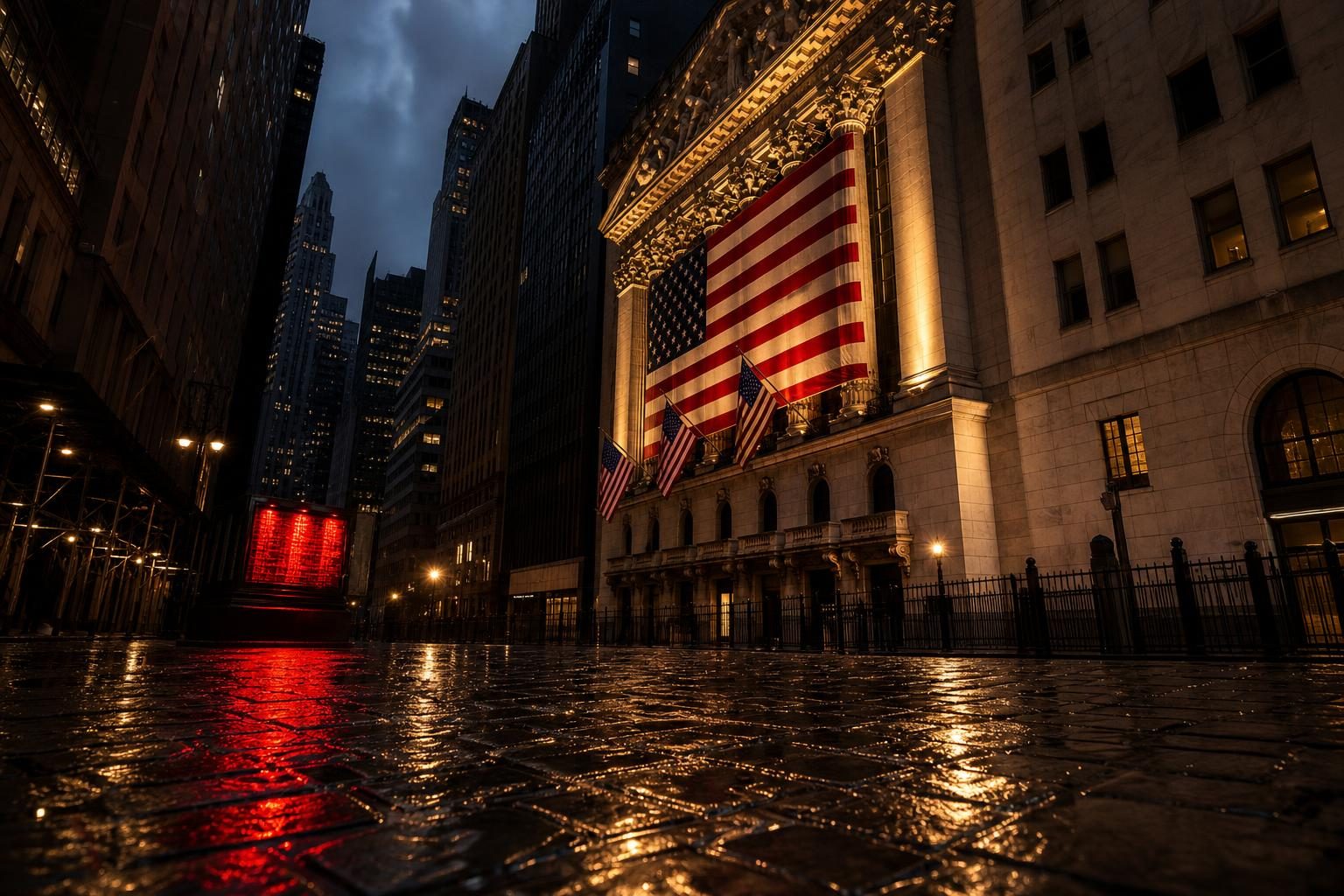
Dow Drops 1,100 Points and Closes Below 50,000 as AI Selloff Stretches S&P 500 Losing Streak to Six Days
Last night on Ray’s Trading Desk with Ray Castellano
ANTHROPIC SOARS 34% AT THE OPEN IN RECORD DEBUT
Yesterday on Money Wire with Victoria Chen
Were you there?
If you were at the scene, or this story touched your life, tell us what you saw and what it was like.
Discussion 0
Sign in or create a free account to join the discussion.
No comments yet. Start the discussion.