
 This morning on At the Bell with Jake Morrison
The AI Selloff Goes Global: SoftBank Sinks 14%, Korea Trips a Circuit Breaker and Asia Heads for Its Worst Week Since 2020
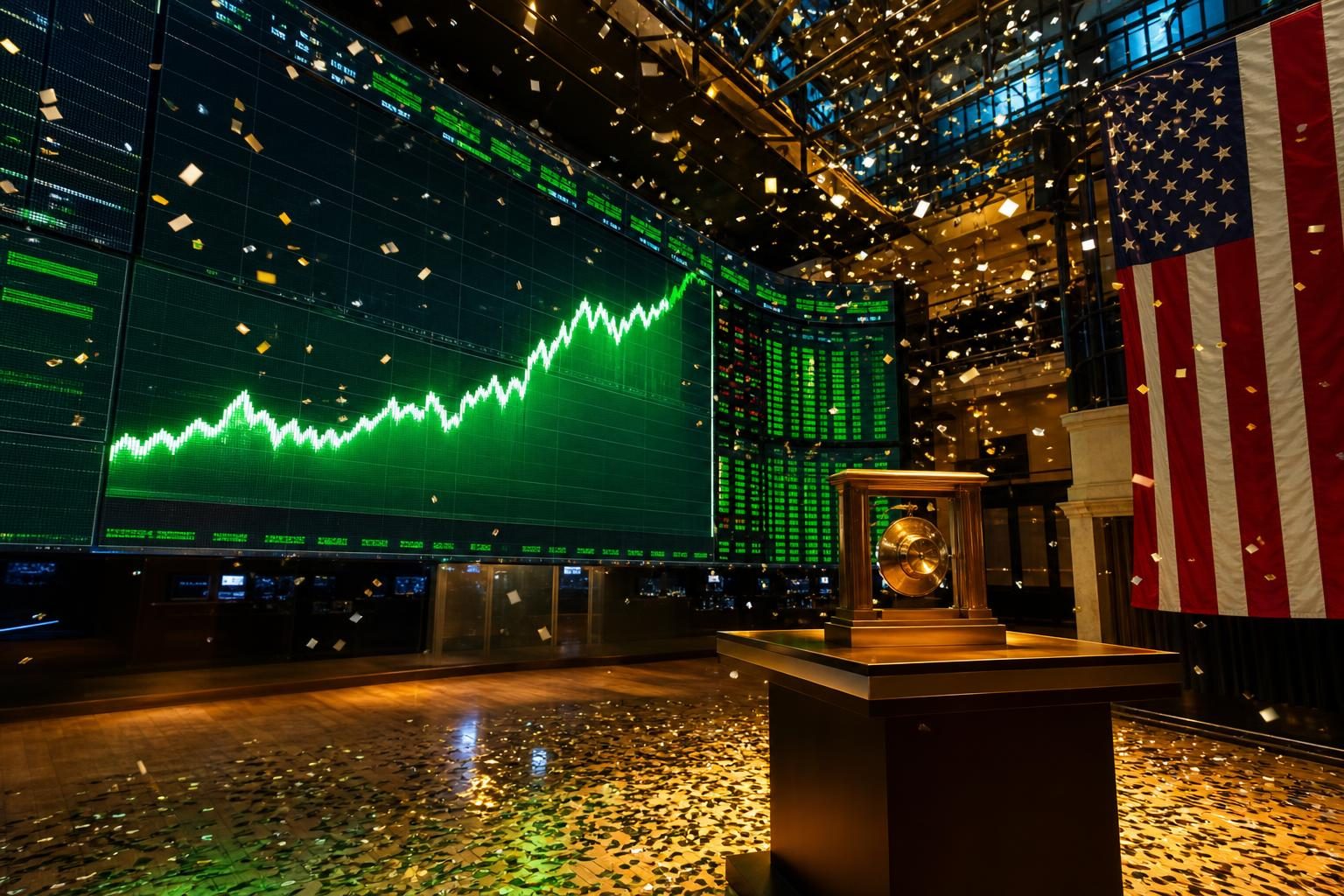
Japan's Nikkei and South Korea's Kospi each lost about 5% on Friday after another tech slide on Wall Street. Here is what happened overnight and what traders are watching at the opening bell.
Filed November 20, 2026 · 📍 Wall Street, NY 10005
Were you there? Share your story

Part of our continuing coverage: Dow Drops 1,100 Points and Closes Below 50,000 as AI Selloff Stretches S&P 500 Losing Streak to Six Days
Key points
- Japan's Nikkei closed down about 5.1% and Korea's Kospi about 5.2%; Taiwan fell 6.2%.
- SoftBank Group shares lost more than 14%, their worst day since August 2024.
- The Kospi's drop below 5,000 triggered circuit breakers.
- Analysts say fears about whether AI spending will pay off, not one piece of news, drove the selling.
The selling that knocked the Dow below 50,000 on Thursday did not stay on Wall Street. It crossed the Pacific overnight and hit Asia's technology-heavy markets even harder.
Japan's Nikkei 225 fell about 5.1 percent on Friday and South Korea's Kospi about 5.2 percent, Al Jazeera reported, while Taiwan's Taiex plunged 6.2 percent and Hong Kong's Hang Seng lost 1.9 percent [1]. Asian stocks were headed for their worst week since 2020, The Guardian reported [5].
The Damage by the Numbers
The Nikkei closed down 5.06 percent at 56,436.65, and the Kospi closed down 5.21 percent at 4,869.96, according to TradingKey [4]. The Kospi's slide below the 5,000 mark triggered circuit breakers, the automatic pauses exchanges use to cool panic selling [4].
SoftBank Group, one of the world's biggest investors in artificial intelligence, was hit hardest among the big names. CNBC reported the stock plunged more than 16 percent during the session [2], and it closed down 14.48 percent, its worst day since August 2024, according to TradingKey [4]. Memory-chip maker Kioxia slumped 11 percent, and Samsung and SK Hynix each fell more than 6 percent, according to TradingKey [4].
Why the Selling Spread
The trigger was in New York. The Nasdaq Composite fell more than 2 percent on Thursday, and Asian chipmakers followed, 24/7 Wall St. reported [3]. Thursday's slide sent the Dow down 1,100 points to close below 50,000 and stretched the S&P 500's losing streak to six days, as this site reported.
Analysts quoted across the coverage tied the selling to doubts about whether the enormous sums being poured into AI will pay off, rather than to any single company's news [1][3]. One strategist cited by Al Jazeera described fears that the industry's peak growth phase may have passed [1].
Thursday's blockbuster stock market debut by AI developer Anthropic did not calm the mood. The company priced what this site reported as the biggest initial public offering in history at $83 a share, and its stock jumped 34 percent at the open, but the enthusiasm did not carry over to the rest of the sector. Business Insider reported that the company's shares were down more than 6 percent in premarket trading early Friday after their first day of trading [6].
What the Trading Floor Is Watching
Three things matter as the U.S. market opens this morning.
The first is whether the selling in Asia turns into a full-blown rout in New York or whether bargain hunters step in. Six straight down days for the S&P 500 is the kind of streak that tempts buyers, but a seventh would deepen the worry.
The second is the chip stocks. When the companies that build the hardware for AI fall 10 percent or more in a single session, as Kioxia and SoftBank did in Asia, it tells you investors are rethinking how fast the spending will continue. Watch how American chipmakers trade in the first hour.
The third is the calendar. It is the Friday before Thanksgiving week, when trading volume tends to thin out. Thin markets can make big moves bigger in both directions.
The Long View for Ordinary Investors
None of this changes the basics for families saving for retirement or a child's education. Markets that run up quickly can come down quickly, and this year's AI-fueled run has been one of the fastest in memory. Selloffs like this one are painful, but they are also a normal part of investing.
The worst decisions are usually made in moments like these: selling in a panic at the bottom, or borrowing to chase a bounce. A steady plan, a diversified mix and a long horizon remain the investor's best friends. As the old trading-floor saying goes, the market climbs a wall of worry.
Volatility like Friday's in Asia is a reminder that no single technology, however promising, makes a market risk-free. The opening bell will tell us whether Wall Street follows Asia lower or finds its footing.
Sources
Are AI stocks in a bubble?
- Yes, and it's popping
- Some are, some aren't
- No, AI is the real deal
- Not sure
More in Markets & Investing

Dow Drops 1,100 Points and Closes Below 50,000 as AI Selloff Stretches S&P 500 Losing Streak to Six Days
Last night on Ray’s Trading Desk with Ray Castellano
ANTHROPIC SOARS 34% AT THE OPEN IN RECORD DEBUT
Yesterday on Money Wire with Victoria Chen

Anthropic Prices the Biggest IPO in History at $83 a Share, and Wall Street Waits to See if the AI Trade Comes Back
Yesterday on Money Wire with Victoria Chen
Were you there?
If you were at the scene, or this story touched your life, tell us what you saw and what it was like.
Discussion 0
Sign in or create a free account to join the discussion.
No comments yet. Start the discussion.