
 This morning on Health Check with Samuel Adeyemi
Nearly 300 Beachgoers Say They Got Sick After Surfing a Popular Bay Area Beach. DNA Tests Now Point to Human Waste
A volunteer survey at Pacifica's Linda Mar Beach logged sinus, ear, stomach and skin infections, and new genetic testing suggests sewage is reaching the surf through a nearby creek, while another California beach stays closed over E. coli.
Filed November 15, 2026 · 📍 San Francisco, CA 94102
Were you there? Share your story
Key points
- Nearly 300 people, most of them surfers, told a volunteer survey they got sick after entering the water at Linda Mar.
- Reported illnesses include sinus and ear infections, stomach problems, staph and urinary tract infections.
- DNA tests by a volunteer coalition point to human waste in creek water flowing onto the beach.
- Separately, nine children were sickened in an E. coli outbreak tied to Capitola Beach, which remains closed.
Surfers at one of the San Francisco Bay Area's most popular breaks have been saying for years that the water makes them sick. Now they have numbers, and a possible culprit.
A survey by a volunteer group found that nearly 300 people, most of them surfers, reported health problems they believe are linked to going into the water at Linda Mar Beach in Pacifica, the San Francisco Chronicle reported [1]. The reported illnesses include sinus and ear infections, stomach problems, staph infections and urinary tract infections [1].
What the DNA Tests Found
New DNA testing by the volunteer Linda Mar Water Quality Coalition has pointed to a potential source: human waste in water that flows onto the beach from nearby San Pedro Creek, the Chronicle reported [1]. The tests look for a genetic sequence that comes from bacteria found in the human gut, which allows researchers to tell human pollution apart from waste left by birds, dogs or other animals [1].
That distinction matters. For years, local officials have blamed the problem on runoff into San Pedro Creek or on sewage overflows after heavy storms, according to the Chronicle [1]. A DNA signal pointing to human sources raises a harder question about the pipes and sewer lines that serve the neighborhoods upstream.
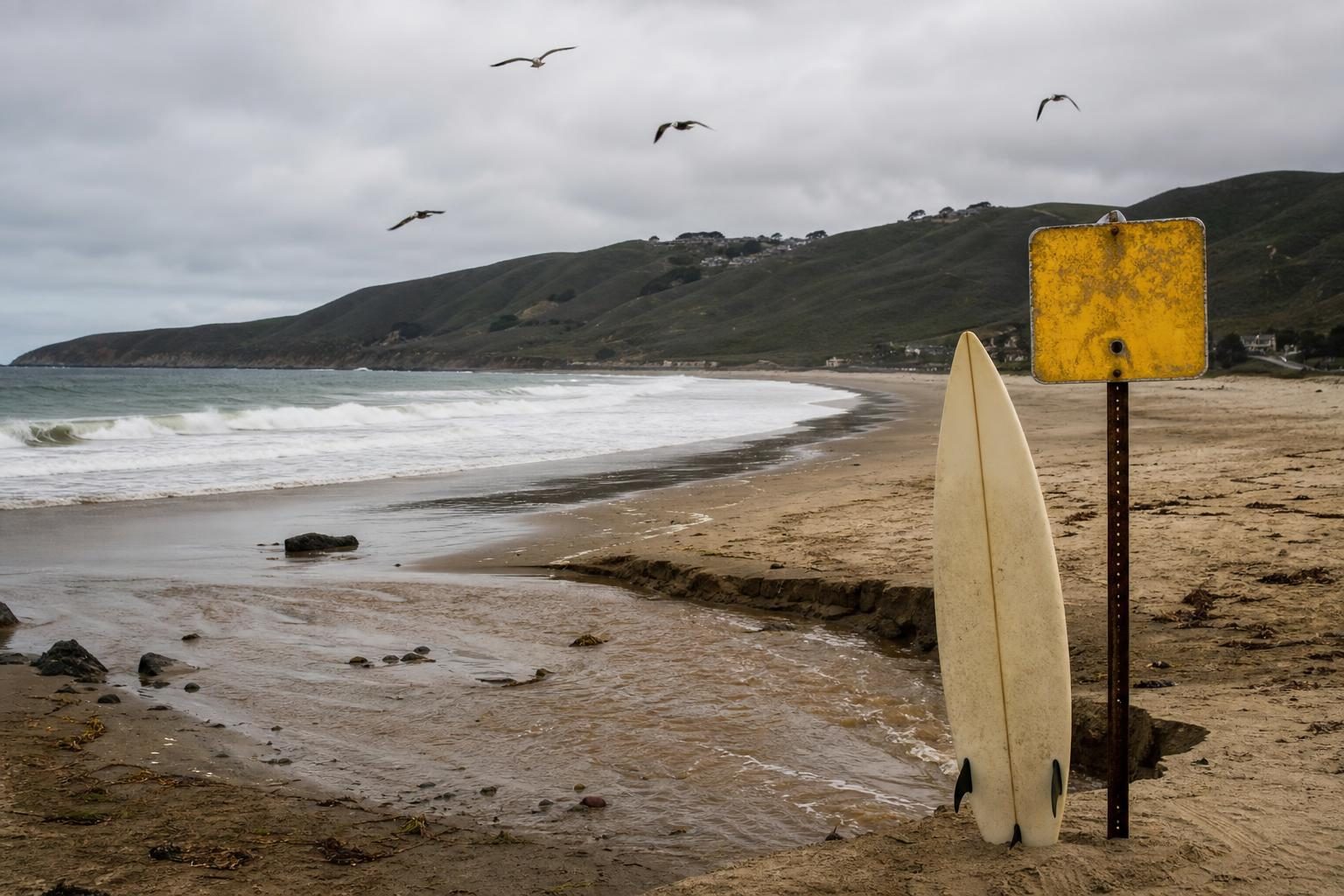
The beach has carried a reputation for poor water quality for some time. San Mateo County posts a sign at the beach warning that bacteria levels exceed health standards, but many surfers go in anyway, the Chronicle reported [1]. One surfer told the paper he became violently ill one evening after a 2024 session [1].
A Second Scare Down the Coast
Linda Mar is not the only California beach in the news. An E. coli outbreak linked to Capitola Beach in Santa Cruz County has sickened nine children, two of whom were hospitalized, and the beach has been shut down, Yahoo News reported [3]. The closure has no set reopening date [3].
E. coli O157 is a particularly dangerous strain. In young children it can lead to a serious kidney complication called hemolytic uremic syndrome, which is why parents should take any case of bloody diarrhea after a beach day seriously and call a doctor right away.
Why It Matters
Clean water is not a partisan issue. It is a basic job of local government, like paved roads and safe streets. Californians pay some of the highest taxes in the country, and they have a right to expect that the sewer lines under their streets are not leaking into the ocean where their children swim.
It is also a story about citizens stepping up. The testing at Linda Mar was done by volunteers, including local surfers and community groups, who decided to find answers for themselves rather than wait [1]. Surfrider Foundation volunteers have also run water testing in San Mateo County through the group's Blue Water Task Force [2]. That kind of neighbor-to-neighbor problem solving is the best of American civic life.
What Beachgoers Can Do
Until the source is found and fixed, a few common-sense steps can lower the risk:
Check the county's beach advisories before going in, and take posted warning signs seriously, especially near creek mouths where runoff enters the ocean [1].
Stay out of the water for a few days after heavy rain, when runoff is at its worst.
Keep cuts and scrapes covered, rinse off with clean water after surfing or swimming, and avoid swallowing seawater.
See a doctor if you develop a fever, a stubborn ear or sinus infection, a skin infection or digestive illness after a beach day, and mention where you were in the water.
Parents of young children should be especially careful at any beach under an advisory, given the Capitola outbreak [3].
What Comes Next
The coalition's DNA findings now put the question to local and county officials: where exactly is human waste entering San Pedro Creek, and what will it take to stop it [1]? For the surfers who have been getting sick, and for the families who visit Linda Mar on weekends, the answer cannot come soon enough. In Capitola, health officials will decide when the beach is safe to reopen [3].
Sources
- [1]San Francisco ChronicleSurfers keep getting sick at this Bay Area beach. DNA tests offer a new clueOpens in a new tab ↗
- [2]Surfrider FoundationThe Blue Water Task Force in San Mateo County, CaliforniaOpens in a new tab ↗
- [3]Yahoo NewsAnother outbreak of E. coli rocks California as nine kids struck and popular beach shut downOpens in a new tab ↗
What worries you most about health care?
- Cost
- Getting an appointment
- Quality of care
- Government getting more involved
More in Health & Medicine

Wegovy Pill Holds Up in the Real World: Patients Lose About 6% of Their Weight in Three Months
Last night on Heart of the Matter with Michael Grant

More Than 10,000 Death Claims: The 9/11 Toll Still Rising a Quarter-Century After the Towers Fell
Last night on Health Check with Samuel Adeyemi
America Loses Its Measles-Free Status After 26 Years: What Changed, What Didn't, and How Families Can Protect Their Children
Yesterday on Health Check with Samuel Adeyemi
Were you there?
If you were at the scene, or this story touched your life, tell us what you saw and what it was like.
Discussion 0
Sign in or create a free account to join the discussion.
No comments yet. Start the discussion.