
 Last night on Health Check with Samuel Adeyemi
More Than 10,000 Death Claims: The 9/11 Toll Still Rising a Quarter-Century After the Towers Fell
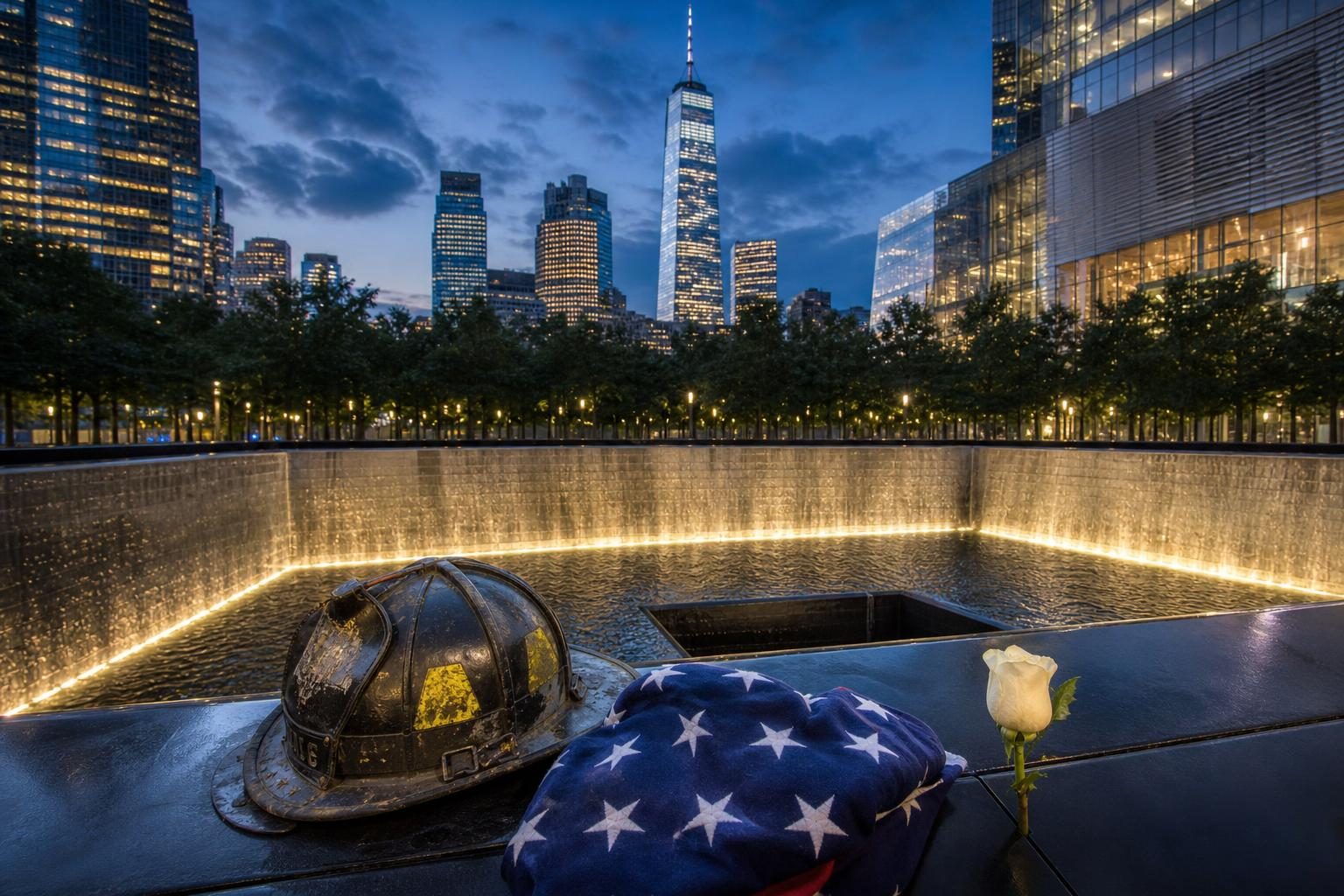
Death claims tied to Ground Zero illnesses have passed 10,000 for the first time, with cancer behind the vast majority of awards, as the heroes of that day keep paying for their service.
Filed November 14, 2026 · 📍 New York City, NY 10007
Were you there? Share your story
Key points
- Claims for deaths from 9/11-related illnesses have topped 10,000 for the first time, the New York Post reported.
- Cancer appears in more than 94% of the compensation fund's awards, according to the Post.
- The fund has awarded more than $16.8 billion to over 71,000 claimants since reopening in 2011.
- More than 143,000 responders and survivors are enrolled in the federal World Trade Center Health Program.
Twenty-five years after the towers fell, the attacks of September 11 are still claiming American lives. Claims filed on behalf of people who died of illnesses tied to the World Trade Center site have passed 10,000 for the first time, the New York Post reported Saturday [1]. The Post reported that cancer is present in more than 94 percent of the awards made by the September 11th Victim Compensation Fund [1].
Nearly 3,000 people were murdered on the morning of the attacks. The new milestone means the number of families who have come forward to say a loved one later died of a 9/11 illness is now more than three times that toll. Behind each of those claims is a firefighter, a police officer, a construction worker, a volunteer or a neighbor who breathed the dust of Lower Manhattan, and a family that buried them years later.
What the New Numbers Show
The Victim Compensation Fund, run by the Justice Department, pays awards to people who were hurt or made sick by the attacks and their aftermath, and to the families of those who died. Its most recent annual report shows how fast the caseload is still growing. As of the end of 2025, the fund had received more than 105,000 claims and had awarded more than $16.8 billion to more than 71,000 claimants since it reopened in 2011 [2].
The pace is not slowing. The fund reported that 10,461 claims were filed in 2025 alone, and that new claims rose from an average of about 700 a month in 2024 to about 900 a month in 2025 [2]. During 2025 it issued more than 9,800 award determinations worth roughly $1.8 billion [2].
The headline number needs to be read carefully. The 10,000 figure counts claims filed on behalf of people who have died. It is not an official death count, and not every one of those claims has been decided [1]. Even so, the direction is unmistakable: every year, more families come forward with the same heartbreaking story.
Cancer, Year After Year
The medical side of the story is told by the World Trade Center Health Program, the federal program that monitors and treats responders and survivors. As of June 30, 2026, it counted more than 143,000 enrolled members, including more than 88,000 responders and nearly 55,000 survivors who lived, worked or went to school near the site [3].
Cancer is the heaviest burden. Medical Daily, reviewing the program's data, reported that 57,044 members have had a cancer certified over the life of the program, split almost evenly between 28,131 responders and 28,913 survivors, and that 10,393 of those certifications came in the last 12 months alone [4]. The most common were non-melanoma skin cancer, with about 18,380 members, and prostate cancer, with about 13,170, followed by breast cancer, melanoma and lymphoma [4]. The fund's 2025 report also noted a policy update for claimants who suffer complications after treatment for an eligible prostate cancer [2].
A certification is the program's formal finding that a member's cancer is covered. It is not a count of new diagnoses, and the program does not track the cause of death for members who have died [4]. But more than 10,000 certifications in a single year, a quarter-century after the dust settled, tells its own story about how long the damage from that day can take to surface.
Many of the people who are sick today were the first to run toward the danger. Firefighters, police officers, ironworkers, sanitation crews and volunteers worked for months on the smoldering pile at Ground Zero, searching for the missing and then clearing the wreckage so the city could rebuild. Office workers, residents and schoolchildren returned to the neighborhood as soon as they were told it was safe. The debt the country owes all of them did not end when the last beam was hauled away.
How Congress Kept Its Promise
The fund's history is a story of a promise kept, though sometimes only after a long fight. Congress created the original fund after the attacks, and it reopened in 2011 to cover the growing number of people made sick by the toxic dust [2]. For years it operated on temporary authority and limited money, and by 2019 it had begun cutting awards because it was running short [5].
That changed when President Trump signed the Never Forget the Heroes Act on July 29, 2019 [5]. The Justice Department announced that the law pushed the deadline to file claims from December 18, 2020, to October 1, 2090, provided whatever money is needed to pay every approved claim, ended the award reductions and required that families whose awards had been cut be paid the difference [5]. In plain terms, no one who qualifies will be turned away for lack of funds.
The health program needed its own fix. Rep. Andrew Garbarino, a New York Republican, announced that an effort led by the New York congressional delegation to secure lifetime funding for the World Trade Center Health Program was included in the federal spending law President Trump signed this year [6]. That repair means the clinics that treat responders and survivors can plan for the long haul instead of lurching from one budget scare to the next.
Why It Matters
For Christians, caring for the wounded and the grieving is not a political talking point. It is a command. Scripture tells believers to bear one another's burdens, and the men and women of Ground Zero bore the country's burden when it mattered most. They are owed more than a moment of silence every September.
The new figures are also a sober reminder of what courage costs. Many responders went back to the site day after day because there were still people to find and a city to rebuild. Now their families are the ones filing these claims, often with hospital records instead of medals.
There is a lesson for Washington, too. The 2019 law passed because members of both parties set aside their fights and did right by people who had served without being asked. That spirit is worth remembering in a capital that rarely agrees on anything, and it should guide how Congress treats every program that serves the heroes of that day.
What Comes Next
The fund now has the authority to accept claims until 2090 and the money to pay them [5]. The open question is how high the toll will climb. With new claims arriving at about 900 a month in 2025 [2] and more than 10,000 new cancer certifications in a single year [4], the numbers point in only one direction.
The fund serves people who were at the World Trade Center, the Pentagon or the Shanksville crash site and later became sick, along with the families of those who died [2]. Families who have lost someone to a 9/11 illness can file a claim on that person's behalf. The deadline is generous, but waiting can make medical and work records harder to gather, so families are wise not to put it off.
A quarter-century later, the heroes of September 11 are still answering the call, and still paying for it. The country's job is to keep its promise to every one of them, and to never forget why they ran toward the fire.
Sources
- [1]Opens in a new tab ↗
- [2]September 11th Victim Compensation FundVCF 2025 Annual ReportOpens in a new tab ↗
- [3]CDC World Trade Center Health ProgramQuarterly Program Summary, June 30, 2026Opens in a new tab ↗
- [4]Medical DailyMore Than Ten Thousand New Cancer Certifications in a Single Year Show the 9/11 Health Toll Keeps GrowingOpens in a new tab ↗
- [5]U.S. Department of JusticeSeptember 11th Victim Compensation Fund to End Award Reductions and Restore Previously Reduced AwardsOpens in a new tab ↗
- [6]Office of Rep. Andrew GarbarinoGarbarino and NY Congressional Delegation Lead Effort to Secure Lifetime FundingOpens in a new tab ↗
What worries you most about health care?
- Cost
- Getting an appointment
- Quality of care
- Government getting more involved
More in Health & Medicine

Wegovy Pill Holds Up in the Real World: Patients Lose About 6% of Their Weight in Three Months
Last night on Heart of the Matter with Michael Grant

America Loses Its Measles-Free Status After 26 Years: What Changed, What Didn't, and How Families Can Protect Their Children
Yesterday on Health Check with Samuel Adeyemi

Flu Season Arrives Early and Hits the South and West First: What Seniors and Families Should Know
Yesterday on Heart of the Matter with Michael Grant
Were you there?
If you were at the scene, or this story touched your life, tell us what you saw and what it was like.
Discussion 0
Sign in or create a free account to join the discussion.
No comments yet. Start the discussion.