
 Tonight on On Scene with Beau Thibodeaux
One Storm, One Coast: Florida's Panhandle Took the Only Hurricane of a Record-Quiet Season That Ends Monday
Isaias came ashore near Destin in October as the year's lone Atlantic hurricane. As the season closes, the Emerald Coast has reasons for thanks and work still to finish.
Filed November 26, 2026 · 📍 Tallahassee, FL 32301
Were you there? Share your story
Key points
- The 2026 Atlantic hurricane season ends Nov. 30 with 10 named storms and only one hurricane.
- Isaias set a 121-year record as the latest first hurricane, AccuWeather reported.
- It made landfall near Destin Oct. 9 as a Category 2 with 105 mph winds.
- Nearly 900,000 lost power in Florida and Alabama; at least four deaths were linked to the storm.
For most of Florida, the 2026 hurricane season will be remembered for what did not happen. For the families of the Panhandle, it will be remembered for one Friday night in October.
The Atlantic season officially ends Monday, Nov. 30, but forecasters at AccuWeather have already declared tropical activity over for the year [1]. The season produced 10 named storms and just one hurricane, Isaias, which did not form until October and broke a 121-year-old record for the latest first hurricane of a season, AccuWeather reported [1]. That is far below the long-term averages of roughly 14 named storms and seven hurricanes [1].
Why the Atlantic Stayed Calm
The main reason was El Niño. Strong upper-level winds tied to the Pacific pattern kept tearing storms apart before they could organize, a pattern that held into November, Nature World News reported [6]. AccuWeather's lead hurricane expert, Alex DaSilva, said "El Niño has played a significant role in limiting tropical activity" across the Atlantic [1].
It was an unusually long wait. Forecasters spent much of the summer and early fall watching storm after storm fizzle in the open Atlantic [2][6].
Isaias was the exception. It broke through those hostile conditions to become the season's first hurricane in what WLRN called an extremely quiet year [2], and it strengthened to Category 3 over the Gulf before coming ashore, according to FOX Weather [5].
One Night on the Emerald Coast
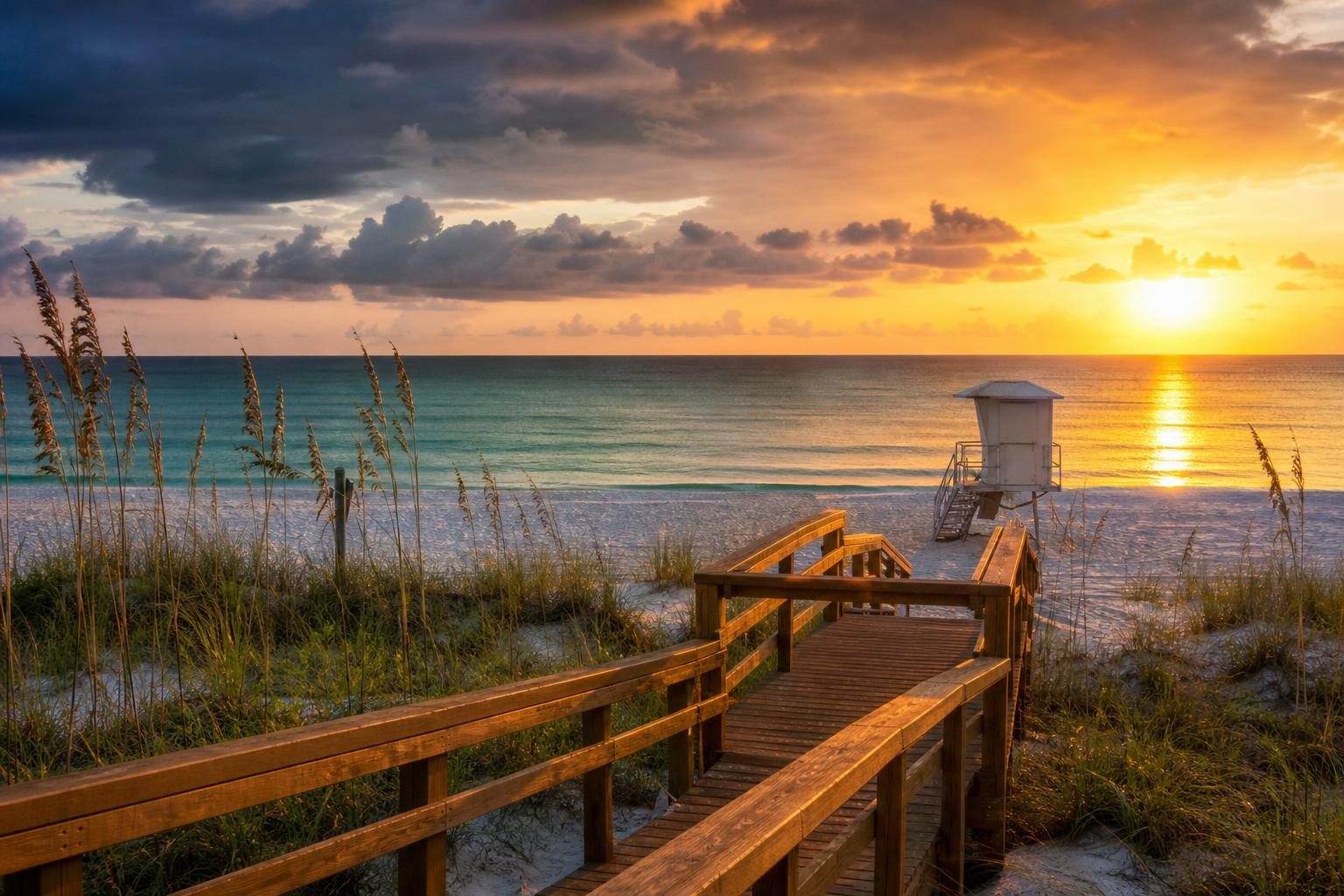
Mandatory evacuations went into effect in Okaloosa County as the storm approached [5]. Isaias made landfall near Destin around 9:30 p.m. Eastern time on Friday, Oct. 9, as a Category 2 hurricane with maximum sustained winds of 105 mph, WLOX reported [3]. It was the first hurricane to strike the Gulf Coast since Milton [3].
Destin saw flooding, downed power lines and debris, with storm surge overtopping fences and beach walkways, and wind damage was reported in Fort Walton Beach and on Okaloosa Island [3]. Nearly 900,000 customers lost power across Florida and Alabama, and at least four deaths were linked to the storm across the region, including two in Alabama, WGCU tallied [4]. Emergency declarations were approved for Florida, Georgia and Alabama to open the way for federal recovery aid [3].
By hurricane standards, the toll was modest. By the standards of the families who lost loved ones, homes or businesses, it was not modest at all, and the work of repairing roofs, docks and walkways along the coast does not end when the headlines move on.
A Season to Be Thankful For
Floridians have earned a quiet year. The state has absorbed one destructive season after another in recent memory, and a year with a single hurricane gave families, insurers and local governments a chance to catch their breath. That deserves to be said plainly on a Thanksgiving week: for most of the state, this was a season of answered prayers.
It also deserves a caution. Quiet seasons have a way of breeding complacency, and the Panhandle's October showed how quickly a calm year can turn. One storm was enough to send hundreds of thousands into the dark [4].
What Comes Next
The season closes Monday [1], and the next one begins June 1. A quiet year in the Atlantic says little about the next one, since the Pacific pattern that protected Florida this year can shift within months. The months in between are the best time to do the work that is hard to do with a storm on the radar: review insurance policies, photograph homes and belongings, trim trees, check shutters and generators, and talk with neighbors, especially older ones, about who will check on whom when the next warning comes.
For Destin, Fort Walton Beach and the rest of the Emerald Coast, the coming months are also a chance to finish rebuilding before visitors return in the spring. If past storms are any guide, that recovery will lean on what the Panhandle always leans on: churches that open their doors, neighbors who clear each other's yards and local crews who work long days to keep the lights on.
The Atlantic may have spent most of 2026 asleep. Florida knows better than to count on that next year.
Sources
- [1]AccuWeatherThe 2026 Atlantic hurricane season is overOpens in a new tab ↗
- [2]Opens in a new tab ↗
- [3]Opens in a new tab ↗
- [4]Opens in a new tab ↗
- [5]FOX WeatherHurricane Isaias from start to finish as deadly storm leaves trail of destruction across Gulf CoastOpens in a new tab ↗
- [6]Nature World NewsAtlantic has produced just one hurricane in 2026 as El Nino wind shear holds with four weeks leftOpens in a new tab ↗
Should Florida ban new data centers until it studies power and water use?
- Yes
- No, bring the jobs
- Only near neighborhoods
More in Florida & Southeast News
Boxes of Hope and Longer Pantry Hours: Florida Charities Step Up as Thanksgiving Need Grows
Today on Kitchen Table with Megan O’Brien
Rick Scott Says Florida Stopped Chasing Jobs Under DeSantis and Bets on Donalds to Win Them Back
This morning on Sunshine State Report with Tomás Ortega
At Mar-a-Lago, Trump and NATO's Rutte Warn Moscow Not to Widen the War
Overnight on Sunshine State Report with Tomás Ortega
Were you there?
If you were at the scene, or this story touched your life, tell us what you saw and what it was like.
Discussion 0
Sign in or create a free account to join the discussion.
No comments yet. Start the discussion.