
 This morning on Sunshine State Report with Tomás Ortega
DeSantis Presses for a Special Session to Put Voter-Approved Amendment 3 Tax Relief in Place by Jan. 1 and Block New Local Fees
The governor wants a Taxpayer Bill of Rights to protect the homestead exemption increase voters approved with 62 percent, but incoming legislative leaders are signaling they may wait for Gov.-elect Byron Donalds.
Filed November 13, 2026 · 📍 Tallahassee, FL 32301
Were you there? Share your story
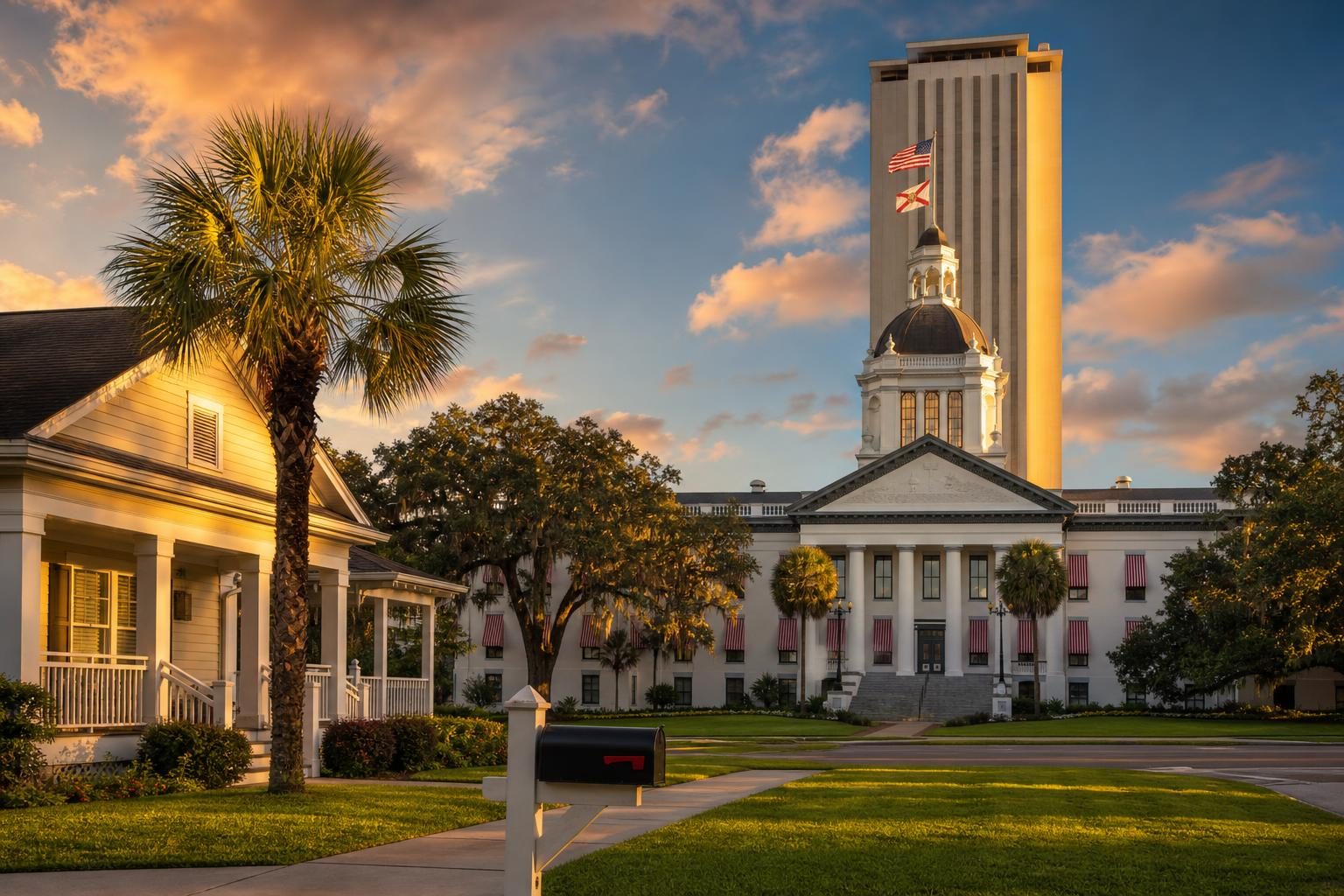
Key points
- Amendment 3 passed with about 62% and raises the non-school homestead exemption to $150,000 in 2027 and $250,000 in 2028.
- DeSantis wants a pre-January special session to pass implementing rules and a Taxpayer Bill of Rights against replacement fees.
- Incoming legislative leaders have not committed to a pre-January session.
- Local governments face billions in lost revenue, while school taxes are left outside the larger exemption.
Gov. Ron DeSantis wants the Florida Legislature back in Tallahassee before he leaves office so the property tax relief voters approved on Nov. 3 is written into law and working by Jan. 1, with guardrails to keep cities and counties from clawing the money back through new fees [2]. Amendment 3 passed with about 62 percent of the vote, clearing the 60 percent bar required for a change to the state constitution [1].
No dates have been set, and the Legislature's incoming leaders have not committed to the governor's timetable [2][3].
What Voters Approved
Amendment 3 raises the homestead exemption on the non-school portion of property tax bills from $50,000 to $150,000 in 2027 and then to $250,000 in 2028, according to WUSF [1]. The homestead exemption covers Floridians who own the home they live in as their primary residence, so year-round homeowners benefit most. School taxes are carved out of the larger exemption [1].
The measure also reaches beyond homesteads. For non-homestead property such as rental homes and businesses, it cuts in half the current 10 percent cap on how much a property's assessed value can rise each year [1]. Newcomers will have to wait: people who move to Florida starting next year will not receive the expanded exemption until their fifth year of claiming the existing one [1].
A state economic analysis projected local governments could lose nearly $5 billion at first, about $9 billion the following year, and close to $12 billion a year once the change is fully in place, WUSF reported [1].
What DeSantis Is Asking For
At a Tallahassee news conference the day after the election, DeSantis said a special session would let lawmakers pass implementing legislation along with what he calls a Taxpayer Bill of Rights, aimed at stopping local governments from replacing lost property tax revenue with new fees or assessments, the Florida Phoenix reported [2]. On the deadline, he told reporters "we will do it by January 1" [2].
DeSantis also said he wants to work with legislators on a pool of state money that could be awarded as grants to help smaller counties cover core needs, a response to rural counties that warned they would struggle to function if Amendment 3 passed [2]. He said the House and Senate would set the dates [2].
For homeowners who voted for relief, the fee question is the heart of the matter: a tax cut quietly replaced by a new charge on the same household is not much of a tax cut.
Lawmakers, Local Governments and Schools Weigh In
The governor's timetable has not yet won over the incoming leadership. The amendment takes effect Jan. 1, days before Gov.-elect Byron Donalds is sworn in, which leaves open whether the implementing work happens under DeSantis or his successor [2].
Before the election, Boyd had said the work could wait until lawmakers reconvene in January, the Florida Phoenix reported [2]. Former state Sen. Jeff Brandes, who opposed the amendment, said he sees no reason for a special session and suggested the implementing bill could simply be the first bill of the 2027 session [2].
Democrats are also skeptical. Incoming House Democratic Leader Christine Hunschofsky told the Florida Phoenix she hopes there will be no special session, said she understood neither Garrison nor Boyd had decided to call one, and argued the law would be better reviewed during the regular session that begins in March [3]. She also said she was troubled by how quickly lawmakers approved the governor's proposal earlier this year [3].
Local governments are already running the numbers. Central Florida Public Media reported that cities and counties across the region are grappling with the losses, including Oviedo, which expects about $9.2 million less each year and has floated a fire fee as one possible offset [4]. That is the kind of replacement charge the governor's proposal targets.
School districts are in a different position, since school taxes are outside the larger exemption [1]. On the same ballot, voters in 26 of the 27 counties with school tax referendums approved raising or renewing taxes for their schools, with Suwannee County the lone exception, WUSF reported [5]. University of Central Florida political scientist Aubrey Jewett said the results show voters still stand behind their local schools even while worried about affordability [5].
For homeowners, the bottom line is that the larger exemption arrives with the 2027 tax year and grows again in 2028 [1]. What remains open is whether lawmakers write the rules in a special session under DeSantis or wait for Donalds, and how firmly they shut the door on new fees that could eat into the savings voters approved.
Sources
Should Florida ban new data centers until it studies power and water use?
- Yes
- No, bring the jobs
- Only near neighborhoods
More in Florida & Southeast News
DeSantis Says It's Too Soon for 2028 Talk and Urges Republicans to Face What Went Wrong in the Midterms
Overnight on Sunshine State Report with Tomás Ortega
Exonerated Former Inmates Ask Governor-Elect Donalds to Pause Executions as Florida Nears a 50-Year High
Last night on Sunshine State Report with Tomás Ortega
Florida Bars Voucher Dollars From Private Schools Tied to Designated Terror Groups
Yesterday on Sunshine State Report with Tomás Ortega
Were you there?
If you were at the scene, or this story touched your life, tell us what you saw and what it was like.
Discussion 0
Sign in or create a free account to join the discussion.
No comments yet. Start the discussion.